The Legacy of The Dong-A Ilbo: A Century of Korean Journalism
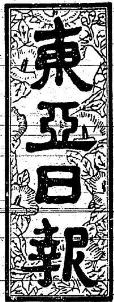
Since its inception in the early 20th century, The Dong-A Ilbo (literally "East Asia Daily") has served as more than just a news source; it has been a vital witness to the evolution of modern Korea. As a daily Korean-language newspaper and a recognized newspaper of record—a publication regarded as the authoritative source for historical facts—it has navigated through colonial rule, war, and the struggle for democracy.
Founded on April 1, 1920, the paper emerged during a transformative era in Korean history. It quickly established itself as a significant voice in society, particularly during the Japanese colonial period (1910–1945), where it acted as a forerunner in the movement for Korean independence.
Key Facts
- Founded: April 1, 1920
- Type: Daily broadsheet newspaper
- Owner: Donga Media Group
- Historical Role: Pro-independence advocate during the Japanese colonial period
- Political Alignment: Historically Liberal (1920–1975); currently Right-wing Conservative
- Reach: Over 52 million readership
The Early Years and Rapid Growth
The landscape of Korean media changed following the 1919 March First Movement. In response to the unrest, the colonial government allowed a limited number of Korean-owned newspapers to be established. The Dong-A Ilbo was among the first three approved, following The Chosun Ilbo.
The newspaper was founded by a team of 78 people, led by journalist Kim Seong-su. From its first issue, the publication demonstrated remarkable organizational strength, expanding from 23 regional offices to a presence in every province within its first month. As its popularity grew, so did its scale. The paper evolved from a four-page publication to a twelve-page broadsheet by 1936, and at one point became the first Korean newspaper to publish two issues per day (morning and evening editions).
By the late 1920s, The Dong-A Ilbo had become a dominant force in the media market. In 1928, its circulation reached 40,968, significantly outpacing competitors like Maeil Sinbo and The Chosun Ilbo. This success was driven by its role as a premier venue for sharing foreign ideas and its prestige within Korean society.
Quick Reference: Publication Profile
| Category | Details |
|---|---|
| First Issue | April 1, 1920 |
| Founders | Kim Seong-su, Yang Kit'ak, Chang Tŏksu, Yoo Geun |
| Format | Broadsheet |
| Language | Korean (Hangul/Hanja) |
| Website | english.donga.com |
A History of Resistance and Repression
The Dong-A Ilbo’s history is deeply intertwined with the fight for Korean sovereignty. Throughout the colonial era, the paper frequently faced censorship and suspension for its pro-independence stance. Notable incidents include:
- 1920: Suspension following an article regarding protests in Pyongyang.
- 1920: Indefinite suspension after publishing content deemed insulting to the Japanese Imperial Regalia.
- 1936: A major suspension occurred after the paper published an image of marathoner Sohn Kee-chung with the Japanese flag erased from his uniform—a symbolic act of Korean national pride.
The repression intensified in 1940 when the colonial government implemented the "One Province, One Company" policy, forcing the closure of The Dong-A Ilbo and The Chosun Ilbo. The paper remained closed until the liberation of Korea in 1945.
War, Dictatorship, and the Fight for Press Freedom
The Korean War (1950–1953) forced the paper into several hiatuses as Seoul changed hands. During the conflict, the paper eventually reestablished itself in Busan, which served as the provisional capital. Following the war, the paper continued to face political challenges, including a suspension in 1955 for criticizing the administration of Syngman Rhee.
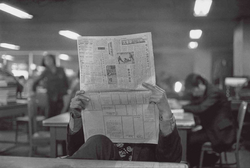
The 1970s marked a period of intense struggle for press freedom—the principle that communication and expression through various media should be considered a right. Under the military dictatorship of Park Chung Hee, the government exerted heavy pressure on the media. This culminated in the "Blank Advertisement Incident" of December 1974. In protest against government pressure on advertisers, the newspaper published issues containing no advertisements for several months.
This era was marked by significant internal turmoil, including staff strikes and the firing of journalists who advocated for free expression. While these events led to a more conservative editorial direction in later years, they remain a defining chapter in the paper's history of navigating political authority.
The Modern Media Group
Today, the Donga Media Group has evolved into a multi-media powerhouse. Beyond the daily newspaper, the organization manages various specialized services and cultural institutions:
- Magazines: Including Shin Dong-a (current events) and Dong-a Science.
- Broadcasting: The group operates Channel A.
- Culture & Arts: The Ilmin Museum of Art and the Dong-a Theatre Awards.
- Education & Sports: Hosting the Seoul International Marathon and various national essay and English competitions.
Frequently Asked Questions
What does the name "Dong-A Ilbo" mean?
The name translates to "East Asia Daily."
How did the paper respond to the 1974 censorship?
In protest of government pressure on its advertisers, the newspaper published several issues with blank advertisements, a move known as the "blank advertisement incident."
Is The Dong-A Ilbo still a liberal newspaper?
While it was historically aligned with liberalism between 1920 and 1975, it is currently considered a right-wing conservative newspaper.
What was the significance of the Sohn Kee-chung incident?
The paper published an image of Olympic gold medalist Sohn Kee-chung with the Japanese flag removed from his uniform. This act of defiance led to the suspension of the paper and the arrest of several journalists.
Does the company provide services other than news?
Yes, the Donga Media Group is involved in broadcasting, magazine publishing, hosting cultural exhibitions, and managing various educational and sporting events.