The Dong-A Ilbo: A Century of Korean Journalism and Resistance
Since its inception on April 1, 1920, The Dong-A Ilbo (literally 'East Asia Daily') has stood as a cornerstone of South Korean media. As a newspaper of record, it has not only documented the nation's evolution but has also played a pivotal role in its most defining historical moments, from the struggle for independence to the fight for democratic press freedom.
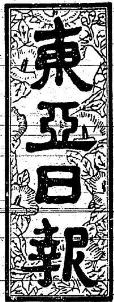
Key Facts
- Founded: April 1, 1920
- Type: Daily broadsheet newspaper
- Historical Role: Forerunner in the Korean independence movement during the Japanese colonial period.
- Political Alignment: Historically Liberal (1920–1975); currently Right-wing Conservative.
- Ownership: Donga Media Group.
Founding and Early Success
The landscape of Korean media changed significantly following the 1919 March First Movement. In response to the nationwide protests, the Japanese colonial government allowed a limited number of Korean-owned newspapers to be established. The Dong-A Ilbo was among the first three approved, following The Chosun Ilbo.
Founded by journalist Kim Seong-su alongside a dedicated staff, the paper quickly expanded its reach. While it began with just four pages, it grew steadily in size and frequency, eventually becoming the first Korean newspaper to publish two issues per day. By 1928, it had achieved a circulation of 40,968, outperforming several of its contemporaries and establishing itself as a prestigious venue for sharing foreign ideas.
Rapid Expansion and Infrastructure
The newspaper's growth was reflected in its physical presence. Despite early financial struggles, by 1924, the publication had secured enough funds to build a new office building in front of Gwanghwamun, which was completed in December 1926. This rapid scaling demonstrated the high demand for Korean-language news during the early 20th century.
A Legacy of Pro-Independence Advocacy
Throughout the Japanese colonial period (1910–1945), The Dong-A Ilbo was a vocal advocate for Korean rights. This commitment often came at a heavy cost, resulting in multiple suspensions by colonial authorities.
The paper faced censorship for publishing articles related to the March First Movement and for content deemed insulting to the Japanese Imperial Regalia. One of the most tragic moments in its history occurred in November 1920, when journalist Chang Tŏkjun was killed by Japanese soldiers while investigating a massacre in Manchuria, becoming the first Korean reporter to die while on assignment.
The Sohn Kee-chung Uniform Scandal
In 1936, the newspaper gained international attention for its courageous stance regarding Olympic gold medalist Sohn Kee-chung. Because Korea was under Japanese rule, Sohn was forced to compete under the Japanese flag. The Dong-A Ilbo published an image where the Japanese flag had been erased from his uniform. This act of defiance led to the arrest and torture of approximately 10 journalists and a suspension of the paper until June 1937.
Repression, War, and the Fight for Freedom
As the Second Sino-Japanese War escalated in 1937, colonial restrictions tightened. In 1940, under the "One Province, One Company" policy, the Japanese government forced the closure of both The Dong-A Ilbo and The Chosun Ilbo. The paper was eventually able to re-open following the liberation of Korea in 1945.
The Korean War (1950–1953) interrupted publication once again. After the fall of Seoul, the paper went into hiatus before re-establishing itself in Busan, the provisional capital. Following the war, the paper continued to navigate the complexities of South Korean politics, often clashing with administrations over issues of censorship and democratic rights.
The Blank Advertisement Incident
During the 1970s, the newspaper became a central figure in the "Fight for Press Freedom." In 1974, after the government censored an issue, the paper published a public statement demanding freedom. In retaliation, the military administration pressured advertisers to break their contracts. This led to the famous blank advertisement incident in December 1974, where the paper published issues without advertisements for several months as a form of silent protest.
Modern Era and Media Diversification
Today, The Dong-A Ilbo is part of the expansive Donga Media Group. It has successfully transitioned into the digital age, launching internet news services in 1996 and mobile services in 2002. The group has also diversified into broadcasting, magazines, and cultural foundations.
| Category | Details |
|---|---|
| Primary Format | Daily Broadsheet |
| Key Publications | Shin Dong-a, Women's Dong-a, Dong-a Science |
| Major Awards | US Freedom House Award (1974), Press Freedom Golden Pen (1975) |
| Digital Presence | DongA.com |
| Reader Demographics | 51% in 30s-40s; 55% university educated or higher |
Frequently Asked Questions
When was The Dong-A Ilbo founded?
The newspaper was founded on April 1, 1920, during the Japanese colonial period.
What was the "blank advertisement incident"?
In December 1974, The Dong-A Ilbo published issues without advertisements to protest government pressure on advertisers following the paper's demand for press freedom.
How did the paper respond to the 1936 Olympics?
The paper famously published an image of marathoner Sohn Kee-chung with the Japanese flag erased from his uniform to assert Korean identity.
Is The Dong-A Ilbo still in operation?
Yes, it remains a major daily newspaper in South Korea and is part of the Donga Media Group.
What is the political alignment of the paper?
While it was historically associated with Liberalism from 1920 to 1975, it is currently considered a right-wing conservative newspaper.