Korean Newspaper History: From the Joseon Period to the Modern Era
The evolution of the press in Korea is a mirror of the nation's turbulent political history. From the first foreign-led publications in the late 19th century to the rise of native journalism and the subsequent struggle against colonial censorship, the Korean newspaper has served as both a tool for governance and a weapon for independence.
The Dawn of Modern Journalism in the Joseon Period
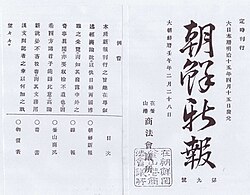
Modern newspapers first appeared in Korea during the Joseon period. The very first modern publication was the Chōsen shinpō, a Japanese newspaper launched on December 10, 1881. While primarily written in Japanese or Classical Chinese—the lingua franca of the educated elite—it is notable for including at least one article written in Hangul, the native Korean script.
The First Native Korean Publications
Inspired by the proliferation of newspapers in China and Japan, Korean emissaries sought to establish a domestic press. Through the efforts of Park Yung-hyo and the support of King Gojong, the Hansŏng sunbo was published on October 31, 1883. Although it was the first native Korean newspaper, it was written in Classical Chinese to cater to public servants and private citizens. However, its run was short-lived, ending in December 1884 due to the Kapsin Coup.
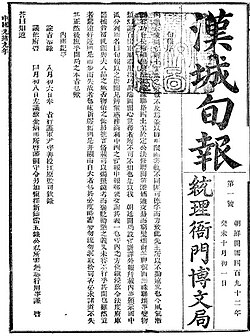
A weekly successor, the Hansŏng chubo, followed on January 25, 1886, but it too ceased operations by 1888 due to a lack of government funding.
Japanese Influence and the Rise of Private Press
By the 1890s, Japanese settlers in port cities like Incheon, Busan, and Wonsan established their own newspapers. Initially, these publications focused on commerce and statistics. However, the landscape shifted during the First Sino-Japanese War (1894–1895), as the Japanese government began implementing strict censorship and requiring papers to consult authorities before publishing controversial war news.
During this era, figures like Adachi Kenzō founded papers such as Chōsen jihō and Kanjō shinpō. While initially popular for providing useful general information, sentiment turned sharply against these publications after Adachi's involvement in the assassination of the Korean queen in late 1895.
The Tongnip sinmun and Early Press Freedom
The emergence of private Korean newspapers brought a new era of critical journalism. The Tongnip sinmun became a prominent voice, criticizing both foreign interference and the Korean government's perceived weakness. A pivotal moment occurred in February 1898, when the paper leaked Russian demands for ownership of Chŏryŏngdo in Busan.
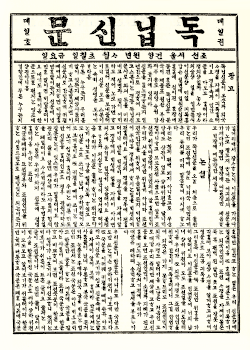
This leak prompted Russia, France, and Japan to demand press regulations. Although King Gojong attempted to draft a restrictive law modeled after Japan's 1891 ordinance, fierce protests from Korean journalists prevented it from taking effect. Formal restrictions were not fully implemented until 1907.
Colonial Suppression and the Korea Daily News
As Japanese control tightened, the colonial administration moved to stifle the Korean press. The Korea Daily News faced significant opposition, leading the Japanese resident-general to purchase The Seoul Press to counter its influence. The administration also centralized several Japanese papers into the Keijō Nippō, which became the official mouthpiece of the governor-general until 1945.
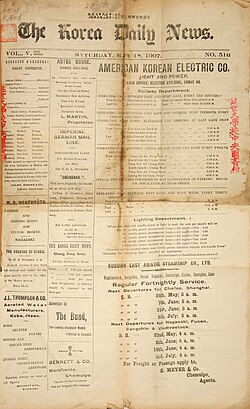
To legally hamper the press, the Newspaper Law of 1907 and the Publication Law of 1909 were enacted. These laws allowed for the mass confiscation of Korean-language issues, including those printed abroad in the United States and Russia. These restrictive laws remained on the books until March 19, 1952.
The Gyeongnam Ilbo: A Regional Pioneer
Founded on October 15, 1909, the Gyeongnam Ilbo was the first regional Korean-language newspaper and the first publicly-owned press company in Korea. Based in Jinju, it remained critical of Japanese rule until it was forced to close in January 1915 due to intense political and financial pressure.
![Cover of the first issue of the Gyeongnam Ilbo [ko], now a Tangible Cultural Heritage of South Gyeongsang Province.[55]](/images/ff/d6/ffd615406ab24c29143c435fae6cd5e91df0b35da45cad475cf7a24149ae0b7e.jpg)
The "Dark Age" and the March First Movement
Between 1910 and 1919, the Korean-language press entered a "dark age." Only two Korean-language papers, Maeil Sinbo and Gyeongnam Ilbo, were permitted. The disparity was stark: in 1910, there were at least 20 Japanese publications for 158,000 settlers, but only two for 12.36 million Koreans.
The March First Movement of 1919 forced the colonial government to ease restrictions. By 1920, three Korean-language papers were approved: The Chosun Ilbo, The Dong-A Ilbo, and the pro-Japanese Sisa Ch'ongbo. Later, in 1924, Choe Nam-seon founded Shidae Ilbo, which evolved into JoongAng Ilbo by 1936.
War-Time Consolidation and Post-Liberation Conflict
With the onset of the Pacific War, the Japanese government implemented the "One Province, One Company" policy in January 1940. This forced the merger or closure of nearly all newspapers to streamline propaganda. For example, Chōsen Jihō was merged into Fuzan nippō.
Following liberation in 1945, the press became a battleground for left-right political confrontations. Later, under the military government (1960–1980), the press faced new challenges. A notable conflict was the Dong-A Ilbo incident of 1974, where the formation of a reporters' union led to the dismissal and suspension of 134 staff members between March 1974 and April 1975.
Key Facts
- First Modern Paper: Chōsen shinpō (1881), published by the Japanese.
- First Native Paper: Hansŏng sunbo (1883), written in Classical Chinese.
- First Regional Paper: Gyeongnam Ilbo (1909), the first publicly-owned Korean press.
- Colonial Disparity: In 1910, 12.36 million Koreans had only two permitted newspapers, while 158,000 Japanese settlers had over 20.
- War-time Policy: The "One Province, One Company" policy (1940) forcibly merged newspapers during the Pacific War.
- Legal Legacy: The restrictive Newspaper Law (1907) and Publication Law (1909) were not abolished until 1952.
| Year | Publication | Significance |
|---|---|---|
| 1881 | Chōsen shinpō | First modern newspaper in Korea |
| 1883 | Hansŏng sunbo | First native Korean newspaper |
| 1886 | Hansŏng chubo | Weekly successor to Hansŏng sunbo |
| 1897 | Tongnip sinmun | Prominent private paper critical of foreign interference |
| 1909 | Gyeongnam Ilbo | First regional Korean-language newspaper |
Frequently Asked Questions
What was the first native Korean newspaper?
The first native Korean newspaper was the Hansŏng sunbo, published on October 31, 1883. Although it was a Korean initiative, it was written in Classical Chinese.
How did the Japanese colonial government control the press?
The government used legislation like the Newspaper Law of 1907 and the Publication Law of 1909 to censor content, confiscate issues, and shut down critical publications. They also established the Keijō Nippō as an official state mouthpiece.
What was the "One Province, One Company" policy?
Implemented in January 1940 during the Pacific War, this policy forced the merger or closure of both Japanese- and Korean-language newspapers to ensure centralized control over information.
What was the significance of the March First Movement for the press?
The 1919 protests led the Japanese colonial government to ease restrictions, allowing the approval of major Korean-language newspapers like The Chosun Ilbo and The Dong-A Ilbo in 1920.
What happened during the Dong-A Ilbo incident of 1974?
The incident began when reporters formed a branch of the National Publishing Workers' Union. This led to a severe labor-management conflict, resulting in the dismissal or suspension of 134 employees by April 1975.