Tongnip Sinmun: The Pioneering Voice of Korean Independence
In the late 19th century, Korea stood at a critical crossroads of modernization and foreign influence. Amidst this turbulence, the Tongnip Sinmun (also known as The Independent) emerged as a revolutionary force in media. Founded in April 1896, it was not merely a news source but a tool for national enlightenment and a catalyst for social change.
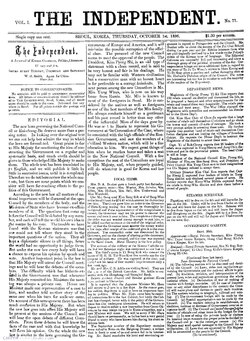
As the first privately managed daily newspaper in Korea, the Tongnip Sinmun broke traditional barriers by publishing editions written exclusively in Hangul (the native Korean alphabet). This was a radical departure from the era's standard practice of interspersing Hangul with Hanja (Chinese characters), making information accessible to the general public for the first time.
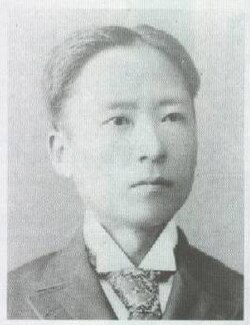
Key Facts
- Founder: Seo Jae-pil (Philip Jaisohn).
- Operational Period: April 1896 to December 4, 1899.
- Languages: Korean (Hangul) and English.
- Circulation: Estimated between 2,000 and 3,000 copies per issue.
- Political Alignment: Liberalism.
- Status: Registered as a National Registered Cultural Heritage of South Korea.
The Vision of Seo Jae-pil
The newspaper was the brainchild of Seo Jae-pil, a Korean intellectual who had sought refuge in the United States after the failed Gapsin Coup of 1884—an attempt to reform the Joseon bureaucracy. Upon returning to Korea in 1895, Seo was offered a high-ranking cabinet position as Oemu hyeoppan (roughly equivalent to the Minister of Foreign Affairs). However, he declined, believing that government reform from the top down was insufficient.
Seo argued that the success of the Gabo Reform (1894) depended on grassroots enlightenment. He believed that without the backing and education of the general populace, political reforms would fail. To bridge this gap, he partnered with Yu Gil-chun to establish a non-governmental press dedicated to public education.
With financial support from the Kim Hong-jip and Pak Jung-yang cabinets, Seo purchased printing equipment from Japan and established the company in Seoul's Jung-dong district. The first issue debuted in April 1896, featuring a tabloid format with three pages in Korean and a final page in English.
Evolution and Political Struggle
The trajectory of the Tongnip Sinmun can be divided into four distinct phases, reflecting the volatile political climate of the time.
Phase 1: National Enlightenment (April – July 1896)
Initially, the paper focused on informing the public about government policies. Its tone was moderate and cooperative, aiming to raise general awareness and foster a spirit of modernization.
Phase 2: The Independence Club Era (July 1896 – May 1898)
The paper became closely linked with the Tongnip Hyeophoe (Independence Club), supporting the construction of the Independence Gate and Independence Hall. During this time, the English edition became a separate publication. However, as pro-Russian conservatives gained power, the newspaper shifted toward criticizing government corruption and foreign interference.
Phase 3: Leadership under Yun Ch'iho (May 1898 – December 1898)
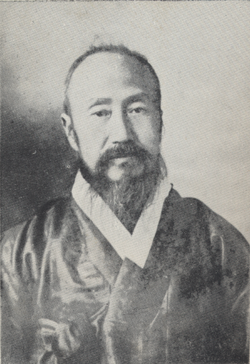
Following government pressure and the expulsion of Seo Jae-pil, Yun Ch'iho took over as chief editor. The paper served as a mouthpiece for the embattled Independence Club and transitioned the Korean edition to a daily publication.
Phase 4: Decline and Discontinuance (December 1898 – December 1899)
After the dissolution of the Independence Club, leadership passed to missionaries H.G. Appenzeller and later H. Emberly. While the paper attempted to return to its educational roots, it faced severe government harassment, including office searches and the arrest of journalists. Burdened by debt and the loss of its building, the paper was sold to the government for 4,000 won and ceased publication on December 4, 1899.
Summary of Tongnip Sinmun
| Feature | Details |
|---|---|
| First Issue | April 1896 |
| Final Issue | December 4, 1899 |
| Primary Goal | Grassroots enlightenment and public education |
| Innovation | First private daily; first exclusive use of Hangul |
| Key Figures | Seo Jae-pil, Yu Gil-chun, Yun Ch'iho |
| Circulation | 2,000–3,000 copies |
Frequently Asked Questions
Why was the use of Hangul in Tongnip Sinmun significant?
At the time, most publications used a mix of Hangul and Hanja (Chinese characters), which limited readership to the educated elite. By using Hangul exclusively, the Tongnip Sinmun made news and political ideas accessible to the common people, promoting widespread literacy and enlightenment.
Who was Philip Jaisohn?
Philip Jaisohn, born Seo Jae-pil, was a Korean intellectual and reformer. After spending time in exile in the United States, he returned to Korea to establish the Tongnip Sinmun, believing that a free press was essential for the country's modernization.
What was the role of the Independence Club?
The Tongnip Hyeophoe (Independence Club) was a reformist organization that worked closely with the newspaper to promote national sovereignty, build landmarks like the Independence Gate, and advocate for social and political modernization.
Why did the newspaper eventually close?
The newspaper faced intense pressure from pro-Russian conservatives and the government, including censorship threats and the arrest of staff. Combined with mounting debt and the forced return of its office building, Seo Jae-pil eventually sold the publication to the government.
Was the newspaper only written in Korean?
No, it was a bilingual publication. It featured both a Korean edition and an English edition (titled The Independent), which allowed it to communicate Korean perspectives to the international community.