Tetrapods: The Evolutionary Journey from Water to Land
The transition from aquatic life to terrestrial existence is one of the most significant events in the history of vertebrate evolution. Tetrapods—four-limbed vertebrates—represent the lineage that successfully navigated this shift, eventually diversifying into the amphibians, reptiles, birds, and mammals that dominate land ecosystems today. This evolutionary journey began during the Devonian period, as fish developed the anatomical tools necessary to support their weight and breathe air outside of water.
Defining a "tetrapod" can be complex. Paleontologists often use an apomorphy-based definition, where tetrapods are identified by the appearance of specific derived traits, such as the first vertebrates with tetrapod limbs. Others prefer a crown group definition, which restricts the term to the last common ancestor of all living tetrapods and its descendants.
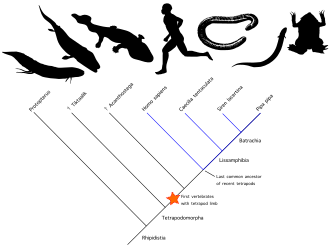
Key Facts
- Temporal Range: From the Famennian stage of the Late Devonian to the present.
- Core Groups: Divided into Anamniotes (amphibians) and Amniotes (reptiles, birds, and mammals).
- Defining Feature: The evolution of four limbs, though some later species evolved to lose them.
- Ancestry: Evolved from lobe-finned fishes during the Paleozoic era.
- Biodiversity: Comprises over 38,000 described species across modern classes.
The History of Classification
Early attempts to categorize these animals were based on observable physical traits. In 1735, Carl Linnaeus classified animals into broad categories, with tetrapods occupying the first three classes of his system.
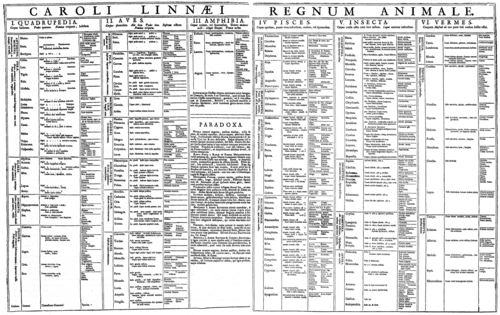
Modern classification is more nuanced, utilizing phylogeny (the evolutionary history of a species) to group animals. The superclass Tetrapoda is now broadly divided into:
- Class Amphibia: Including modern lissamphibians (frogs, salamanders, and caecilians) and extinct groups like Temnospondyli.
- Class Reptilia: Including diapsids (crocodiles, dinosaurs, birds, lizards, snakes, and turtles) and anapsids.
- Class Mammalia: Including monotremes (egg-laying), marsupials, and placentals.
Evolutionary Timeline: From Fins to Feet
The transition to land was not a single event but a gradual process involving various stem-tetrapods—extinct species that bridge the gap between fish and modern tetrapods.
The Devonian Transition
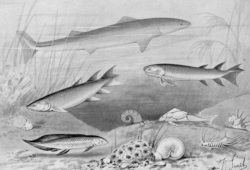
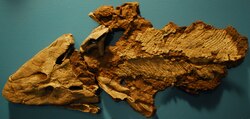
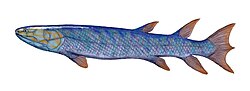
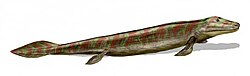
During the Devonian, lobe-finned fishes like Eusthenopteron possessed skeletal structures in their fins that foreshadowed the limb bones of land animals. These were followed by transitional forms like Tiktaalik, which exhibited a mix of fish-like scales and gills with tetrapod-like wrist joints and a neck.
Early Land Dwellers
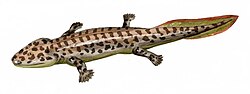
By the Late Devonian, animals like Acanthostega and Ichthyostega appeared. While they possessed four limbs, they remained closely tied to the water. Ichthyostega, in particular, represents a four-limbed stem-tetrapod that could likely navigate shallow waters and muddy banks.
Diversification in the Carboniferous and Permian
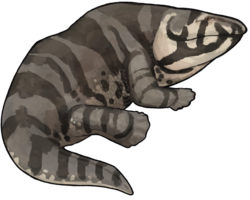
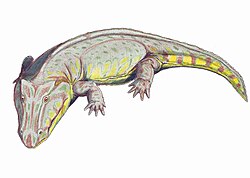
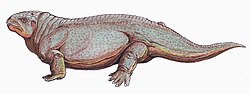
As the Paleozoic era progressed, tetrapods diversified into more terrestrial forms. The Carboniferous saw the rise of early temnospondyls like Edops, while the Permian introduced more fully terrestrial diadectomorphs such as Diadectes.
Anatomy and Physiology
Adapting to land required a total overhaul of vertebrate biology. The most critical changes occurred in the skeletal structure and respiratory systems.
Skeletal Adaptations
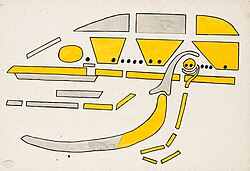
The tetrapod skull evolved to support a neck, allowing the head to move independently of the shoulders. The axial skeleton became more robust to counteract gravity, and the girdles (shoulder and hip) strengthened to support the body's weight during locomotion.
Respiration and Circulation
While early tetrapods retained gills, they increasingly relied on lungs. Over time, they developed recoil aspiration (using chest muscles to pull air into the lungs) and, in some amphibians, cutaneous respiration (breathing through the skin). To manage carbon dioxide metabolism on land, dermal bone adaptations were necessary to prevent acidosis.
Sensory Evolution
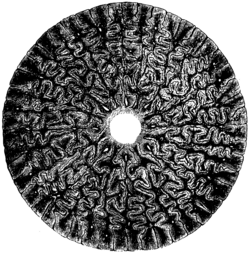
Vision evolved through a complex array of cone opsins. The first vertebrates inherited four cone opsins (LWS/MWS, SWS1, SWS2, and RH2). Over time, different lineages lost specific opsins; for example, monotremes lost SWS1, while therian mammals lost SWS2. For night vision, the rod opsin RH1 was retained across jawed vertebrates.
Biodiversity and Conservation
Today, tetrapods are divided into anamniotes, who must lay their eggs in water, and amniotes, who evolved eggs that can survive on dry land.
| Group | Egg Type | Described Species | Red List Evaluated | Threatened % |
|---|---|---|---|---|
| Amphibians | Water-dependent | 8,707 | 92% | 41% |
| Reptiles | Amniotic | 12,060 | 85% | 21% |
| Birds | Amniotic | 11,197 | 100% | 12% |
| Mammals | Amniotic | 6,631 | 90% | 26% |
| Overall | - | 38,595 | 92% | - |
Frequently Asked Questions
What is the difference between a stem-tetrapod and a crown-tetrapod?
A stem-tetrapod is an extinct species that is more closely related to living tetrapods than to any living fish, but falls outside the group containing the last common ancestor of all living tetrapods. A crown-tetrapod refers to that last common ancestor and all its descendants, including all modern amphibians, reptiles, birds, and mammals.
How did tetrapods transition from breathing with gills to lungs?
The transition was gradual. Many early stem-tetrapods used a combination of gills and lungs. Over time, they developed more efficient ways to move air, such as aspiration breathing, and some developed the ability to exchange gases through their skin (cutaneous respiration).
What are amniotes and anamniotes?
Anamniotes, such as amphibians, lay eggs that lack a specialized membrane (the amnion) and therefore must be laid in water or moist environments to prevent desiccation. Amniotes (reptiles, birds, and mammals) produce eggs with an amnion, allowing them to reproduce entirely on land.
Which extinct species is considered a key transitional fossil?
Tiktaalik is one of the most famous transitional fossils, as it possesses a mixture of fish-like characteristics (scales and gills) and tetrapod-like characteristics (a neck and wrist-like bone structures in its fins).