Talagante: A Historic Hub of the Santiago Metropolitan Region
Located in the heart of central Chile, Talagante serves as both a vibrant commune and the capital city of the province that shares its name. Situated within the Santiago Metropolitan Region, this area blends a rich indigenous history with its current role as a key administrative and residential center in the Chilean central valley.
The name "Talagante" has deep linguistic roots in Quechua, derived from the word talacanta, which translates to "Lazo de Hechicero." This was the name of the curaca—a traditional indigenous ruler—who governed the central valley on behalf of the Inca Empire during the period of Spanish arrival.
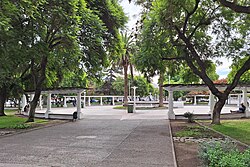
Key Facts
- Founded: 1837
- Location: Santiago Metropolitan Region, Chile
- Total Area: 321.7 km²
- Elevation: 313 meters above sea level
- Governance: Municipality led by Alcalde Carlos Álvarez Esteban (PS)
- Population: 59,805 (based on the 2002 Census)
Geography and Administration
Talagante is strategically positioned at coordinates 33°40′S 70°52′W. As a municipality, it manages a diverse landscape that spans 321.7 square kilometers, ranking it second in area within its jurisdiction. The region is characterized by its moderate elevation of 313 meters, typical of the fertile central valleys of Chile.
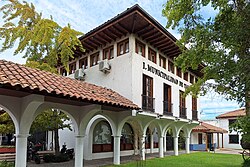
Demographics and Urbanization
According to the 2002 Census, the commune is home to 59,805 residents, with a population density of 185.9 people per square kilometer. The population is distributed between urban and rural settings, with 49,957 people living in urban areas and 9,848 residing in rural communities. The gender distribution is nearly equal, consisting of 29,468 men and 30,337 women.
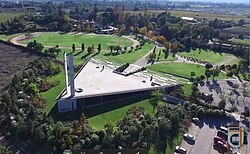
Regional Overview
The following table provides a comprehensive summary of the technical and administrative specifications of Talagante.
| Category | Detail |
|---|---|
| Country | Chile |
| Region | Santiago Metropolitan |
| Province | Talagante |
| Time Zone | UTC-4 (CLT) / Summer UTC-3 (CLST) |
| Area Code | 56 |
| Urban Population | 49,957 |
| Rural Population | 9,848 |
Frequently Asked Questions
What is the meaning of the name Talagante?
The name comes from the Quechua word talacanta, meaning "Lazo de Hechicero," which was the name of the curaca (ruler) who governed the area for the Inca Empire when the Spaniards arrived.
When was Talagante founded?
Talagante was founded in 1837.
Who is the current Mayor (Alcalde) of Talagante?
The municipality is led by Alcalde Carlos Álvarez Esteban of the Socialist Party (PS).
What is the total land area of the commune?
The total area of the Talagante commune is 321.7 square kilometers (124.2 square miles).
What is the population density of the region?
Based on the 2002 Census, the population density is 185.9 people per square kilometer.