ABC Countries: The Power Trio of Early 20th Century South America
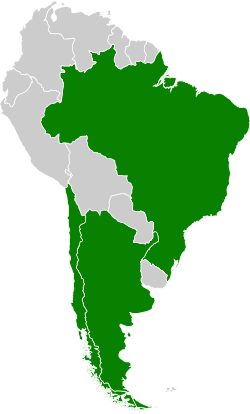
In the early twentieth century, the geopolitical landscape of South America was dominated by three nations: Argentina, Brazil, and Chile. Collectively known as the ABC countries (or ABC powers), these nations were recognized as the most influential, wealthy, and powerful states in the region during this era.
The term "ABC" describes a period of transnational cooperation where these three neighbors sought to develop common interests and a coordinated diplomatic approach. Their primary goal was to manage regional issues internally, minimizing the influence of outside global powers on South American affairs.
Key Facts
- Composition: Argentina, Brazil, and Chile.
- Era of Influence: Primarily the first half of the 20th century.
- Primary Goal: Regional coordination and reduction of foreign interference.
- Notable Event: The 1914 Niagara Falls peace conference.
- Military Context: Involved in a significant naval arms race involving dreadnoughts.
The Dynamics of Power and Competition
Despite their eventual cooperation, the relationship between the ABC powers was not always harmonious. The early 1900s were marked by a naval arms race—a competitive buildup of military naval capabilities. This tension began with an arms race between Argentina and Chile, which later expanded when Brazil purchased three dreadnoughts (large, heavily armed battleships) to maintain its standing in the region.
Eventually, the drive for regional stability outweighed military competition, leading the three nations to utilize their collective influence as mediators in international conflicts.
Diplomatic Milestones
The Niagara Falls Peace Conference
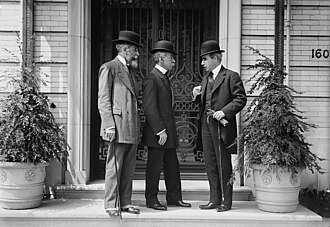
One of the first prominent uses of the term "ABC" occurred on May 20, 1914, during the Niagara Falls peace conference in Ontario, Canada. The three nations acted as mediators between the United States and Mexico during a period of extreme tension. This instability was driven by the Tampico Affair, the U.S. occupation of Veracruz, and the broader turmoil of the Mexican Revolution.
The United States was represented at this conference by Joseph Rucker Lamar, an Associate Justice of the Supreme Court, and Frederick William Lehmann, a former Solicitor General.
Mediation of the Ecuadorian–Peruvian War
The diplomatic reach of the ABC powers extended into the 1940s. In 1942, Argentina, Brazil, and Chile joined the United States to mediate the peace terms of the Ecuadorian–Peruvian War. This mediation resulted in Ecuador losing all disputed territory in the Amazon Basin that it had claimed prior to the conflict.
Summary of the ABC Powers
| Feature | Details |
|---|---|
| Member Nations | Argentina, Brazil, Chile |
| Peak Influence | Early to mid-20th Century |
| Key Diplomatic Role | Regional mediation and stability |
| Major Conflicts Mediated | US-Mexico tensions (1914), Ecuadorian–Peruvian War (1942) |
Frequently Asked Questions
Which countries make up the ABC powers?
The ABC powers consist of Argentina, Brazil, and Chile.
Why were these countries grouped together?
They were grouped together because they were the three most powerful, wealthiest, and influential nations in South America during the early 20th century, often coordinating their policies to limit foreign interference in the region.
What was the naval arms race mentioned in their history?
It was a period of military competition where Argentina, Chile, and Brazil competed to build the strongest navies, specifically through the acquisition of dreadnought battleships.
What was the significance of the Niagara Falls peace conference?
It was one of the first times the "ABC" term was used and demonstrated the trio's ability to act as international mediators, specifically between the United States and Mexico in 1914.
How did the ABC countries influence the Ecuadorian–Peruvian War?
In 1942, alongside the United States, the ABC countries mediated the peace terms, which led to the resolution of territorial disputes in the Amazon Basin.