Tajik People: History, Distribution, and Cultural Identity
The Tajik people are an Iranian ethnic group primarily concentrated in Central Asia. With a total population estimated between 20 and 33 million, they maintain a rich cultural heritage deeply intertwined with the Persian language and Islamic traditions. Their presence spans several nations, most notably Tajikistan and Afghanistan, where they play pivotal roles in the social and political landscapes.
Unlike many of their neighbors in Central Asia who speak Turkic languages, Tajiks speak varieties of Persian, including Dari and Tajiki. This linguistic connection links them to a broader Iranian cultural sphere, influencing their literature, art, and historical identity.
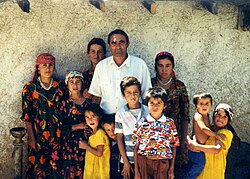
Key Facts
- Total Population: Approximately 20–33 million people.
- Primary Regions: Tajikistan and Afghanistan are the largest population centers.
- Language: Persian (Dari and Tajiki), with Russian and Uzbek used as secondary languages.
- Religion: Predominantly Sunni Islam, with a minority practicing Shia Islam.
- Genetic Marker: High prevalence of paternal Haplogroup R1a.
Geographic Distribution and Demographics
The Tajik population is spread across several countries, with varying degrees of official recognition and demographic concentration.
Tajikistan
In their namesake country, Tajiks comprise approximately 84.3% of the population. This figure includes the Yaghnobi people and speakers of Pamiri languages, such as Shughni and Wakhi. While these groups were once classified as separate nationalities by the Soviet government in the 1926 and 1937 censuses, they were required to register as Tajiks after 1937.
Afghanistan
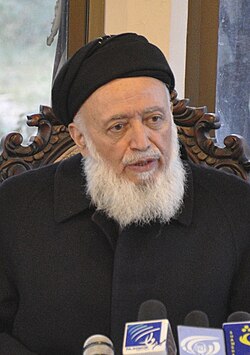
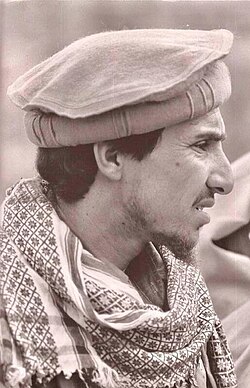
Afghanistan hosts one of the largest Tajik populations, estimated between 9 and 12 million by 2025. They have historically been influential in the country's military and political spheres.
Uzbekistan
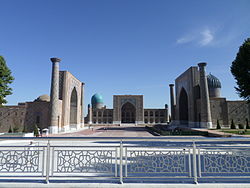
Tajiks are a significant minority in Uzbekistan, particularly in the ancient, culturally rich cities of Samarkand and Bukhara. Official statistics place the community at 5% of the population, though some experts, such as Richard Foltz, suggest the number could be as high as 6 million. This discrepancy is often attributed to historical "Uzbekization" policies during the Soviet era, where individuals were pressured to register as Uzbek in their passports.
Other Regions
- Pakistan: Approximately 1.8 million people (2023), many of whom are refugees from Afghanistan.
- Russia: About 350,236 registered citizens (2021), though over one million Tajik guest workers are estimated to live there, providing remittances that support nearly half of Tajikistan's economy.
- Central Asian States: Smaller populations reside in Kyrgyzstan (approx. 59,900), Kazakhstan (approx. 58,712), and Turkmenistan.
- China: Approximately 50,896 people (2020).
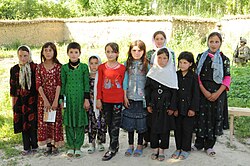
Genetics and Ancestry
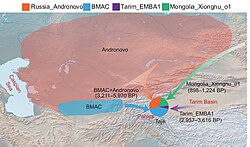
Genetic studies reveal a distinct paternal lineage among the Tajik people. The dominant paternal haplogroup is R1a, found in approximately 45% of Tajik men overall, and as high as 68% in Panjikent and 64% in Khojant. This high frequency and low diversity suggest a strong founder effect—a phenomenon where a new population is established by a very small number of individuals.
Mitochondrial DNA (mtDNA) analysis shows a substantial admixture of Western (62.6%) and Eastern (26.4%) Eurasian haplogroups, with smaller contributions from South Asian (9.9%) and African (1.1%) sources.
Culture and Religion
Tajik culture is characterized by a blend of Iranian heritage and Islamic faith. The people are predominantly Sunni Muslims, though a Shia minority exists. The influence of the Sunni jurist Abu Hanifa remains significant, and the state has invested in large-scale religious architecture, including one of the world's largest mosques in Dushanbe.
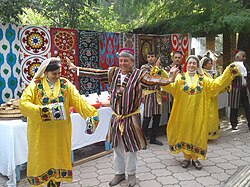
Cultural celebrations often revolve around the Persian calendar. Festivals such as Nowruz (the Persian New Year) and Mehregan are widely observed, reflecting their deep ancestral ties to Iranian traditions.

Language and Identity
The linguistic identity of the Tajiks has been a subject of political debate. While the language is a variety of Persian (Farsi), the government of Tajikistan renamed it simply "Tajiki" in 1994. In 2009, a law was adopted that removed Russian as the lingua franca (a common language used between speakers of different native tongues) and mandated Tajik for official documents and education.
Population Summary Table
| Country | Estimated Population | Notes/Year |
|---|---|---|
| Afghanistan | 9–12 Million | 2025 Estimate |
| Tajikistan | 9 Million | 2025 Estimate |
| Uzbekistan | 1.6 Million – 11 Million | Official vs. Expert estimates |
| Pakistan | 1.8 Million | 2023 Estimate |
| Russia | 350,236+ | 2021 Census (excludes guest workers) |
| Kyrgyzstan | 59,900 | 2022 Estimate |
| Kazakhstan | 58,712 | 2025 Estimate |
| China | 50,896 | 2020 Census |
Frequently Asked Questions
What language do Tajik people speak?
Tajiks speak Persian, specifically the varieties known as Tajiki (in Tajikistan) and Dari (in Afghanistan). Russian is also commonly used as a secondary language, particularly in Tajikistan.
What is the dominant religion among Tajiks?
The majority of Tajik people practice Sunni Islam, although there is a minority population of Shia Muslims.
Why is there a difference in population numbers for Tajiks in Uzbekistan?
Official census data reports around 1.5 to 1.6 million Tajiks, but some experts estimate the number is much higher (over 6 million). This is likely due to historical Soviet policies that encouraged Tajiks to register as ethnic Uzbeks.
What is the significance of Haplogroup R1a in Tajik genetics?
Haplogroup R1a is the dominant paternal lineage among Tajiks, appearing in 45% to 68% of the male population. Its high frequency suggests a strong founder effect in the population's history.
How does the Tajik economy relate to Russia?
A significant number of Tajiks work as guest workers in Russia. The remittances they send back home are estimated to account for as much as half of Tajikistan's total economy.