Central Asia: Geography, History, and Economic Evolution
Central Asia is a vast landlocked region that serves as a critical bridge between East Asia, South Asia, and Europe. Spanning over 4 million square kilometers, it is a territory defined by its dramatic landscapes—from the sweeping Eurasian Steppe to towering mountain ranges—and a complex history of nomadic empires and colonial influence. Today, the region consists of five recognized sovereign states that are navigating the transition from their Soviet past toward a future of regional integration and economic diversification.
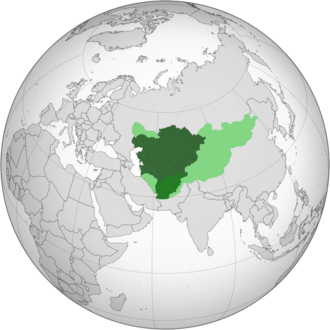
Defining the exact boundaries of Central Asia can be challenging, as different historical and political perspectives often overlap with neighboring regions.
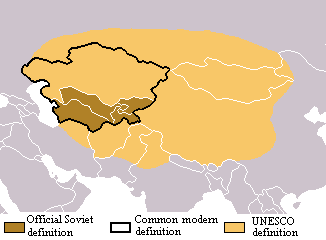
While the core definition focuses on the five post-Soviet states, expanded definitions frequently include Afghanistan due to its deep cultural and geographic ties to the region.
Key Facts
- Total Area: 4,003,451 km².
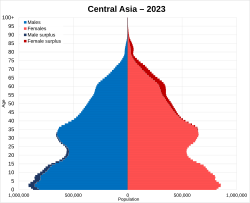
- Population: Approximately 75.9 million (2021).
- Core Countries: Kazakhstan, Kyrgyzstan, Tajikistan, Turkmenistan, and Uzbekistan.
- Economic Powerhouse: Kazakhstan accounts for over 60% of the region's total GDP.
- Dominant Religion: Islam is the majority faith, practiced by roughly 85.9% of the population.
- Human Development: The region maintains a "very high" Human Development Index (HDI) of 0.818.
Geography and Climate
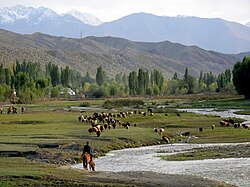
The geography of Central Asia is characterized by extreme contrasts. The region includes the Eurasian Steppe, a semi-arid continental expanse, and various historical basins and regions such as the Tarim Basin, Ferghana, and Zhetysu.
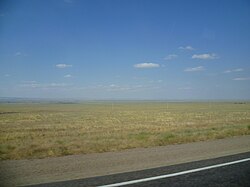
The climate is predominantly continental, with significant variations in temperature and precipitation. However, the region is currently facing severe environmental challenges, including water scarcity and the impacts of climate change, which threaten the stability of its agricultural systems.
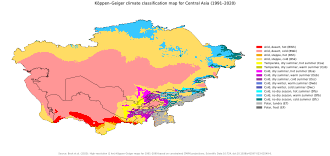
Looking toward the end of the century, climate models suggest significant shifts in the region's environmental landscape, although mid-range scenarios are currently considered more likely than the worst-case projections.
![2071–2100 Central Asia map under the worst climate change scenario. Mid-range scenarios are currently considered more likely[46][47][48]](/images/c0/5c/c05c880a8dc62e5f5e738e1cba876c891843137c8516b28cb5397f70271849b7.webp)
Water Resources and Scarcity
Water is one of the most precious and contested resources in Central Asia. The Syr Darya and Amu Darya rivers are the primary lifelines, flowing from eastern mountains toward the Aral Sea. Efficient irrigation and water conservation have become central to regional diplomacy as states struggle with increasing water deficits.
Historical Legacy
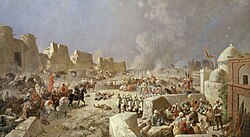
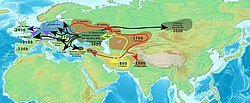
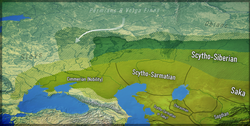
Central Asia has historically been a crossroads for migrations and conquests. In the 2nd millennium BC, the Andronovo culture existed here, marking early Indo-European migrations from the Pontic steppes. During the Iron Age, the region was home to various Iranic-speaking populations.
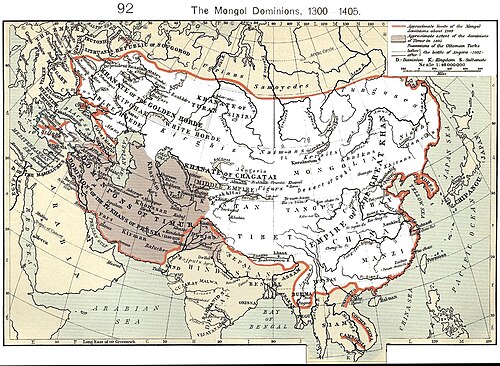
The region later became the heart of the Mongol Empire, the largest contiguous land empire in history, followed by the influence of the Timurid Empire, which left a lasting mark on Persian-influenced architecture.
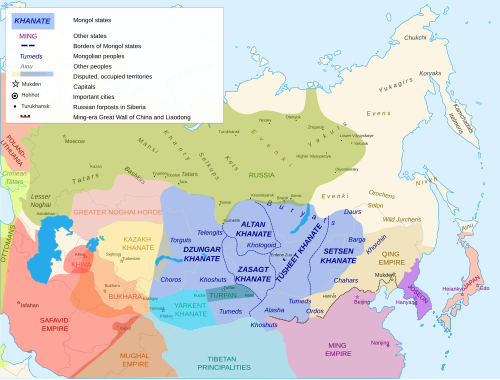
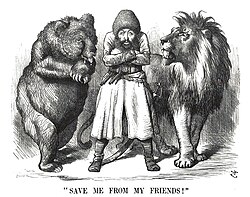
By the 17th century, the Dzungar Khanate stood as the last great nomadic empire before the region was gradually absorbed by the Russian Empire and the Qing Dynasty of China. This era of competition between global powers eventually evolved into the "Great Game," a diplomatic and political confrontation between the British and Russian Empires.
Economic Profile and Development
![Tartar prostrating before Qianlong Emperor of China (1757).[89]](/images/6a/ae/6aae0af9bddc37cc4c792261089d3f4d8c2ce7c89497b3916e67a227baba2d98.jpg)
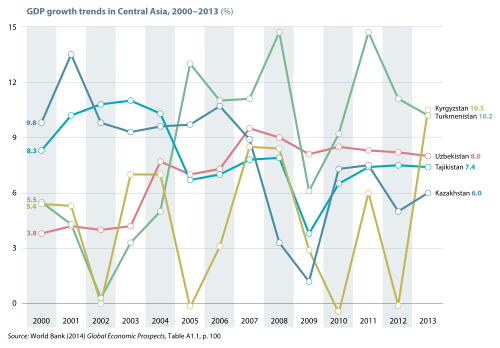
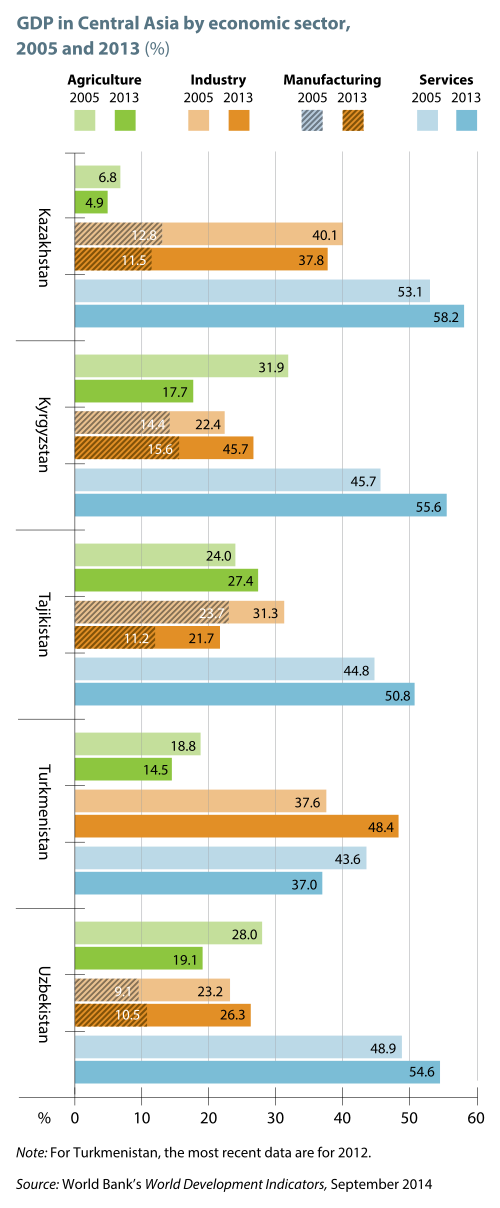
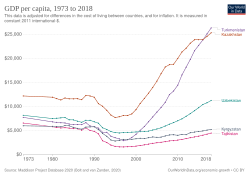
The economic landscape of Central Asia is highly uneven. While the region has seen high growth rates, wealth is concentrated in Kazakhstan and Turkmenistan. Kazakhstan, in particular, is the primary destination for Foreign Direct Investment (FDI), attracting 77.7% of the $378.2 billion invested in the region between 2007 and 2019.
The following table provides a detailed breakdown of the five recognized Central Asian countries:
| Country | Area (km²) | Population (2021) | Nominal GDP (2023) | GDP per Capita (2023) | HDI (2023) |
|---|---|---|---|---|---|
| Kazakhstan | 2,724,900 | 19,196,465 | $245.695 billion | $12,306 | 0.837 |
| Kyrgyzstan | 199,950 | 6,527,743 | $12.309 billion | $1,736 | 0.720 |
| Tajikistan | 142,550 | 9,750,064 | $12.796 billion | $1,277 | 0.691 |
| Turkmenistan | 488,100 | 6,341,855 | $82.624 billion | $13,065 | 0.764 |
| Uzbekistan | 448,978 | 36,024,900 | $92.332 billion | $2,563 | 0.740 |
Science and Research
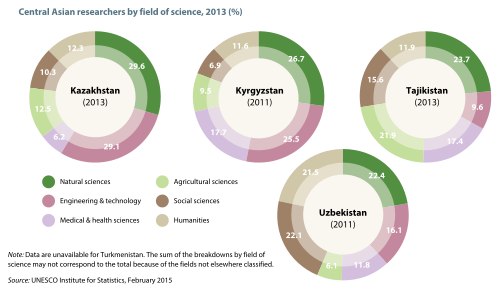
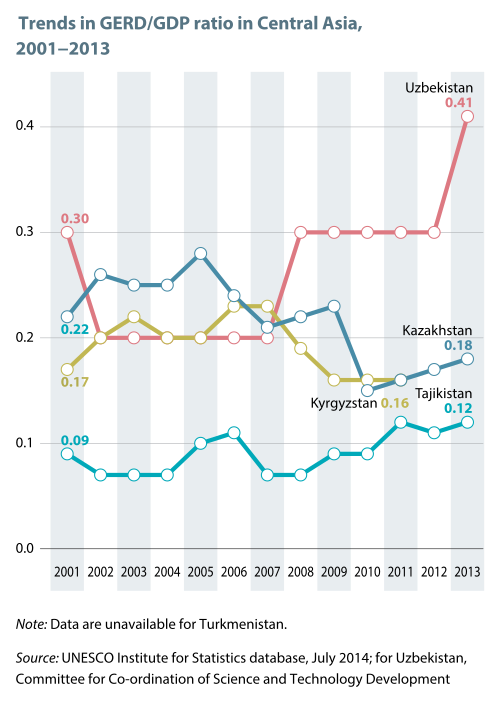
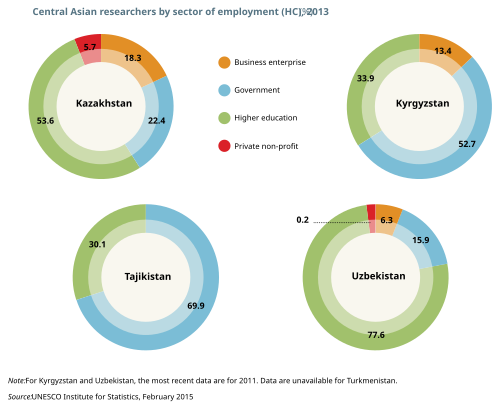
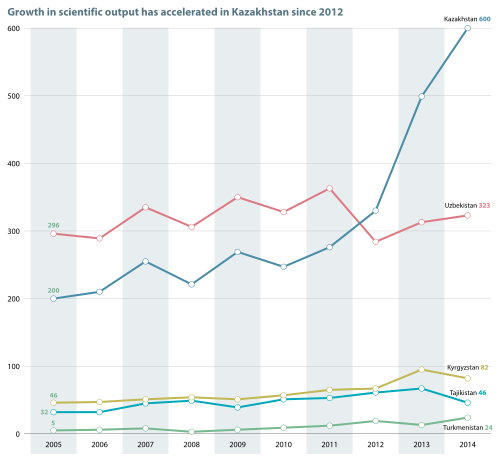
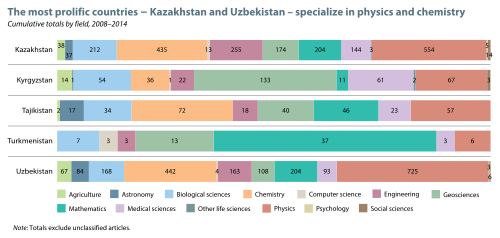
Investment in research and development varies across the region. Kazakhstan and Uzbekistan exhibit the highest researcher density, with Uzbekistan's researcher count per million population (1,097 in 2013) exceeding the world average. Research is heavily concentrated in the natural sciences and engineering.
Culture and Demographics
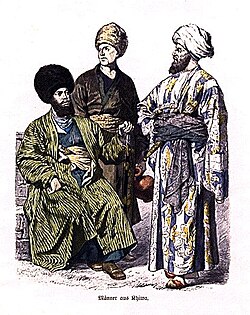
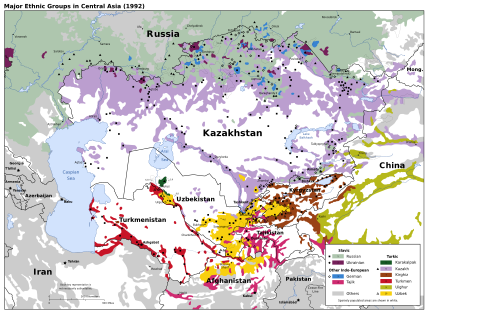
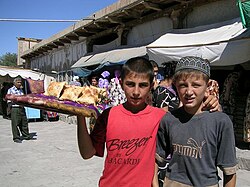
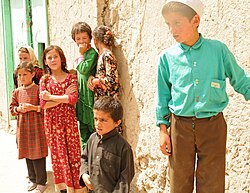
Central Asia is a mosaic of ethnicities and languages. While Russian remains a common lingua franca, national languages such as Kazakh, Uzbek, and Turkmen are central to identity. The region is predominantly Muslim, though Kazakhstan maintains a more diverse religious profile with significant Christian and irreligious populations.
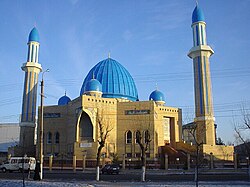
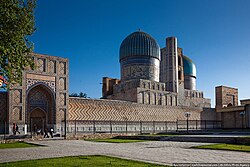
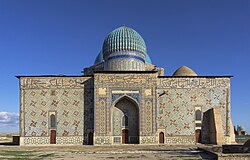
The cultural heritage of the region is visible in its architecture, such as the Bibi Khanym Mosque in Uzbekistan and the Mausoleum of Khoja Ahmed Yasawi in Kazakhstan, which blend Persian art with local traditions.
Frequently Asked Questions
Which countries are officially part of Central Asia?
The five recognized countries are Kazakhstan, Kyrgyzstan, Tajikistan, Turkmenistan, and Uzbekistan.
What is the dominant religion in the region?
Islam is the most prevalent religion, practiced by approximately 85.94% of the total population across the five states.
Which country has the strongest economy in Central Asia?
Kazakhstan is the economic leader, accounting for more than 60% of the region's total GDP and attracting the vast majority of foreign direct investment.
What are the primary environmental challenges facing the region?
The region struggles with severe water scarcity, the degradation of the Aral Sea basin, and the long-term effects of climate change on its semi-arid landscapes.
What was the "Great Game"?
The Great Game was a period of political and diplomatic rivalry between the British Empire and the Russian Empire for strategic influence over Central Asia during the 19th century.