Inner Asia: Geography, Definitions, and Academic History
Inner Asia is a vast interior region that bridges several major geographical zones, encompassing Central Asia and portions of East Asia, North Asia, South Asia, and European Russia. It serves as a critical intersection of cultures and histories, often acting as the northern and western frontier of China proper. While it overlaps significantly with various definitions of Central Asia, Inner Asia is a broader term that includes regions like Manchuria, which are typically excluded from Central Asian definitions.
The region is generally bounded by East Asia proper—which consists of Japan, Korea, Taiwan, and China proper. Because of its unique position, the boundaries of Inner Asia have shifted over time based on political control and academic interpretation.
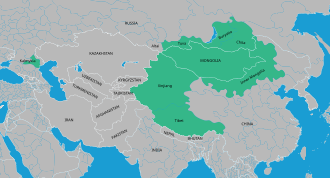
Key Facts
- Geographic Scope: Includes Mongolia, Tibet, Xinjiang, Manchuria, and the five Central Asian republics.
- Political History: Much of the region was governed by the Qing dynasty through the Lifan Yuan, a specialized government agency.
- Academic Origins: Inner Asian studies began largely in Central Europe, driven by Hungarian scholars seeking their Magyar prehistory.
- Terminology: The term "Central Eurasia" was proposed by Denis Sinor to better describe the region's role in transcontinental exchange.
Defining the Boundaries of Inner Asia
Defining Inner Asia is a complex task, as different scholars and institutions apply different criteria. Historically, the term has been used to contrast the region with "China proper"—the territories unified under the Qin dynasty with majority Han populations.
The Qing Dynasty Perspective
By 1800, the Chinese administration of Inner Asia focused on four primary regions: Manchuria (Inner and Outer), Mongolia (Inner and Outer), Tibet (including the Tibet Autonomous Region, western Sichuan, and Qinghai), and Xinjiang (also known as Chinese or East Turkestan). These areas were often managed through administrative structures distinct from the traditional Chinese provinces.
Modern Academic Definitions
Contemporary definitions vary by institution:
- Morris Rossabi: Includes the five Central Asian countries (Turkmenistan, Uzbekistan, Tajikistan, Kyrgyzstan, and Kazakhstan), Afghanistan, Xinjiang, Mongolia, Manchuria, and parts of Iran.
- Harvard University: Focuses on Russian Turkestan, Xinjiang, Eastern Iran, Northern Pakistan, Afghanistan, Tibet, Qinghai, Sichuan, Gansu, and northwestern Yunnan.
- University of Cambridge: Centers the region on Mongolia, extending across the great steppes to the Himalayas, including various regions from Kazakhstan to Bhutan and Nepal.
Central Asia vs. Central Eurasia
While "Central Asia" typically refers to the western portion of Inner Asia—specifically the five "-stan" republics and sometimes Afghanistan—the Library of Congress treats the two terms as synonymous. However, some historians find these terms limiting.
Historian Denis Sinor argued that "Inner Asia" implies an "Outer Asia" that does not actually exist in common usage. To remedy this, he proposed the term Central Eurasia. This neologism emphasizes the region's history as a hub for transcontinental exchange, specifically regarding the Silk Road (the ancient network of trade routes connecting East and West). Sinor defined Central Eurasia negatively as the part of the continent lying beyond the borders of great sedentary civilizations.
The Evolution of Inner Asian Studies
The academic study of this region originated in Central Europe. In the early 19th century, Hungarian explorers traveled to Inner Asia to uncover their own Magyar prehistory. Sándor Kőrösi Csoma, a pioneer in this movement, became a founder of Tibetology.
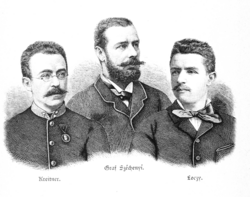
Later, between 1877 and 1880, Count Béla Széchenyi led a major scientific expedition to the region. This era of exploration led to the 1913 founding of the journal Turán, where the term "Inner Asian studies" first appeared in a masthead.
The field was further advanced by archaeologist Aurel Stein, whose four expeditions resulted in the 1928 publication of Innermost Asia. By 1940, the first academic chair for Inner Asian studies was established at the University of Budapest by Lajos Ligeti.
Regional Summary Table
| Perspective/Entity | Primary Focus Areas | Key Distinctions |
|---|---|---|
| Qing Dynasty | Manchuria, Mongolia, Tibet, Xinjiang | Governed via Lifan Yuan; distinct from China proper. |
| Morris Rossabi | Central Asian states, Afghanistan, Mongolia, Manchuria, Xinjiang, Iran | Broad inclusion of Central Asian republics. |
| Denis Sinor | Central Eurasia | Emphasizes non-sedentary civilizations and the Silk Road. |
| University of Cambridge | Mongolia, Steppes, Himalayas | Includes Nepal, Bhutan, and Sikkim. |
Frequently Asked Questions
What is the difference between Inner Asia and Central Asia?
Central Asia generally refers to the western part of Inner Asia, specifically the five former Soviet republics (Kazakhstan, Kyrgyzstan, Tajikistan, Turkmenistan, and Uzbekistan). Inner Asia is a broader term that also includes Mongolia, Tibet, Manchuria, and Xinjiang.
Who proposed the term "Central Eurasia" and why?
Historian Denis Sinor proposed "Central Eurasia" because he felt "Inner Asia" was a deficient term. He wanted a name that highlighted the region's role in transcontinental exchange and its identity as the land beyond sedentary civilizations.
How did the Qing dynasty govern Inner Asia?
The Qing dynasty used a specialized government agency called the Lifan Yuan to supervise Inner Asian regions, employing administrative structures that differed from those used in the older Chinese provinces.
Where did the formal study of Inner Asia begin?
Inner Asian studies began in Central Europe, specifically among Hungarian scholars and explorers in the 19th century who were researching their Magyar ancestry.
Which regions are considered the "frontier" of China proper?
The frontier regions often included in Inner Asian definitions are Gansu, Qinghai, Sichuan, and Yunnan.