T. S. Eliot: The Architect of Modernist Poetry
Thomas Stearns Eliot, known globally as T. S. Eliot, was a towering figure of 20th-century literature. As a poet, essayist, playwright, and publisher, he redefined the boundaries of poetic expression. A central figure in the Modernism movement—a literary shift toward fragmentation, psychological depth, and a break from traditional forms—Eliot's work captured the disillusionment and complexity of the post-World War I era.
Born in the United States, Eliot eventually transitioned his life and citizenship to the United Kingdom, becoming a cornerstone of the British intellectual landscape. His journey from Harvard and Oxford to the offices of Faber & Faber reflects a life dedicated to the rigorous pursuit of art and faith.
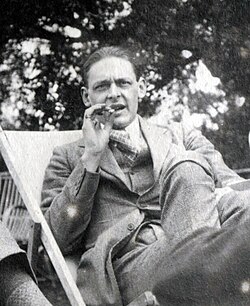
Key Facts
- Full Name: Thomas Stearns Eliot
- Lifespan: 1888 – January 4, 1965 (aged 76)
- Major Movement: Modernism
- Highest Honor: Nobel Prize in Literature (1948)
- Defining Works: The Waste Land, Four Quartets, and "The Love Song of J. Alfred Prufrock"
- Citizenship: United States (until 1927), United Kingdom (from 1927)
Life and Career
Education and Early Influence
Eliot's intellectual foundation was laid at Harvard University, where he earned his AB, and later at Merton College, Oxford. These academic environments exposed him to a wide array of philosophical and literary traditions, which would later inform the dense allusions found in his poetry.
Professional Versatility
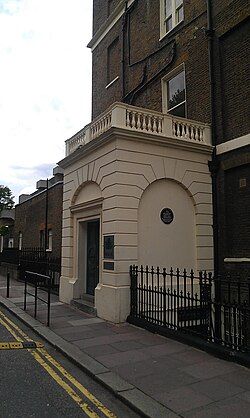
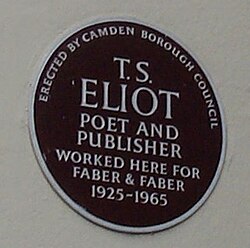
Beyond writing, Eliot led a multifaceted professional life. He worked in banking and teaching before entering the publishing world. From 1925 to 1965, he was associated with the publishing house Faber & Faber, where he exerted significant influence over the literary output of his time.
Personal Transitions and Faith
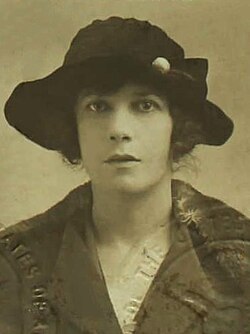
Eliot's personal life was marked by significant shifts. He married Vivienne Haigh-Wood in 1915, though the couple separated in 1933. In 1957, he married Esmé Valerie Fletcher. Parallel to these changes was his spiritual evolution; he converted to Anglicanism and formally became a British citizen in 1927.
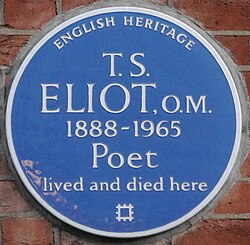
Eliot spent his final years in London, residing at 3 Kensington Court Gardens until his death in 1965.
Literary Contributions
Poetry and the Modernist Shift
Eliot's poetry evolved from the urban alienation of "The Love Song of J. Alfred Prufrock" (1915) to the sweeping, fragmented landscape of The Waste Land (1922), which remains one of the most influential poems of the 20th century. His later work, such as Ash Wednesday (1930) and the Four Quartets (1943), reflected his deepening religious convictions and meditations on time and spirituality.
Drama and Criticism
Eliot was equally influential as a playwright and critic. His plays, including Murder in the Cathedral (1935) and The Cocktail Party (1949), explored moral and spiritual dilemmas. As a critic, his essays—such as "Tradition and the Individual Talent"—shaped the way poetry was analyzed and taught, emphasizing the relationship between the poet and the literary tradition.
A Diverse Portfolio
While known for his high-modernist seriousness, Eliot also wrote Old Possum's Book of Practical Cats (1939), a collection of lighthearted poems that later served as the basis for the musical Cats.
Summary of Achievements
| Category | Key Details / Awards |
|---|---|
| Major Literary Awards | Nobel Prize in Literature (1948), Hanseatic Goethe Prize (1955), Dante Medal (1959) |
| State Honors | Order of Merit (UK, 1948), Presidential Medal of Freedom (US, 1964), Légion d'honneur (France, 1951) |
| Drama Awards | Tony Award for Best Play (1950), Tony Award for Best Book of a Musical (1983, posthumous) |
| Academic Recognition | Phi Beta Kappa (1935), 13 Honorary Doctorates (including Oxford, Cambridge, Harvard) |
Frequently Asked Questions
What is T. S. Eliot's most famous poem?
While he wrote many influential pieces, The Waste Land (1922) is widely considered his most famous and significant work due to its impact on the Modernist movement.
When did T. S. Eliot receive the Nobel Prize?
T. S. Eliot was awarded the Nobel Prize in Literature in 1948 for his outstanding and pioneer contribution to present-day poetry.
Did T. S. Eliot write anything other than poetry?
Yes, Eliot was a prolific essayist, a literary critic, and a playwright. He also worked as a publisher at Faber & Faber.
What is the connection between T. S. Eliot and the musical Cats?
The musical Cats is based on Eliot's 1939 collection of poems titled Old Possum's Book of Practical Cats.
Was T. S. Eliot American or British?
Eliot was born in the United States and held U.S. citizenship until 1927, at which point he became a citizen of the United Kingdom.