Symbiosis and Host Relationships in the Natural World
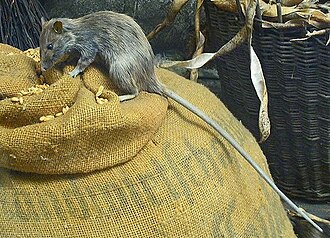
In the complex web of life, organisms rarely exist in total isolation. Instead, they frequently engage in intimate associations known as symbiosis. At the heart of these interactions is the concept of the host—a larger organism that provides nourishment, shelter, or other services to a smaller guest, often referred to as a symbiont. These relationships can range from deeply cooperative to strictly exploitative, shaping the evolution and survival of species across the globe.
The Spectrum of Symbiotic Interactions
Symbiosis is not a single type of relationship but a broad spectrum of interactions that differ in their permanence and their impact on the participants. Biologists generally categorize these into three primary types:
- Parasitism: One partner, the parasite, benefits at the direct expense of the host.
- Commensalism: Both parties live together without causing harm to one another, though one party benefits.
- Mutualism: A cooperative relationship where both organisms derive a benefit.
![Micropredator, parasite, parasitoid, and predator strategies compared. Their interactions with their hosts form a continuum. Micropredation and parasitoidism are now considered to be evolutionary strategies within parasitism.[2]](/images/f3/ce/f3ce5a80bf35e1b80784ec9cbcadd002e90b8c56a1e4a0761524253962efb0cd.webp)
Parasitism and Parasitoidism
While many parasites live long-term relationships with their hosts—such as endoparasites (parasites that live inside the host)—they often do not kill the host immediately. However, a distinct strategy exists called parasitoidism. A parasitoid spends much of its life cycle within or on a single host, but unlike a typical parasite, it ultimately causes the death of the host once it reaches maturity.
Classifying Different Types of Hosts
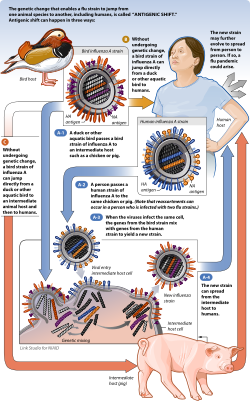
Not all hosts serve the same purpose in a parasite's life cycle. Depending on the species and the stage of development, an organism may be classified in several ways:
- Definitive (Primary) Host: The organism in which the parasite reaches adulthood and undergoes sexual reproduction.
- Intermediate (Secondary) Host: An organism that harbors the sexually immature stage of a parasite and is necessary for its development.
- Paratenic (Transport) Host: An organism that carries the immature parasite but is not required for its biological development. It acts as a temporary reservoir.
- Dead-end (Accidental) Host: An organism that harbors a pathogen but does not allow it to be transmitted to the definitive host, effectively halting the cycle.
- Reservoir Host: An organism that harbors a pathogen without suffering ill effects, serving as a continuous source of infection for other susceptible species.
Complexity in Host Identification
Identifying these roles is not always straightforward. Some organisms act as both intermediate and definitive hosts if different life stages occur in different parts of the body. For example, in trichinosis, roundworms reside as immature juveniles in muscle tissue but as reproductive adults in the digestive tract.
Plant Hosts and Micropredation
In the botanical world, micropredation occurs when small predators live parasitically on much larger host plants, consuming parts of them. The variety of plants an insect can feed on is known as its host range.
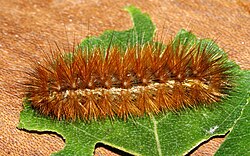
Insects are often categorized by their dietary breadth:
- Monophagous: Specialists that feed on a single plant species (e.g., the silkworm larva on mulberry leaves).
- Oligophagous: Organisms restricted to a few closely related plant species.
- Polyphagous: Generalists that feed on a wide variety of plants across different families.
While specialists (monophagous) can often overcome the toxic chemical defenses of their specific hosts, they face a higher risk of extinction if their host population declines. Generalists (polyphagous) trade offspring quality for quantity, producing more eggs to survive in sub-optimal conditions.
Mutualism and Commensalism in Action
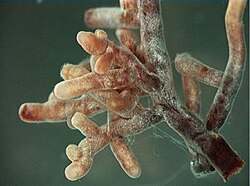
Symbiosis is not always a struggle for survival; it is often a partnership. One of the most vital examples is mycorrhiza, a mutualistic association between fungi and the roots of vascular plants. The fungus provides essential nutrients like phosphates and nitrogen, while the plant provides carbohydrates produced through photosynthesis.
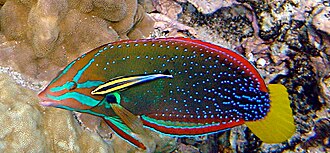
In marine environments, cleaning symbiosis is common. Smaller animals, such as certain fish or shrimp, act as cleaners by removing parasites from larger "client" animals. This interaction is often seen as mutualistic, though biologists continue to debate the exact nature of the exchange.
Commensalism is also prevalent. For instance, remoras (suckerfish) use specialized suckers to attach to hosts like sharks or whales. This provides them with a "free ride" (known as phoresis). While often considered commensal, the relationship can lean toward mutualism if the remora consumes parasites off the host.

Summary of Host-Guest Relationships
| Relationship Type | Effect on Host | Effect on Guest | Example |
|---|---|---|---|
| Mutualism | Benefits | Benefits | Mycorrhiza (Fungus/Plant) |
| Commensalism | No effect | Benefits | Remoras on sharks |
| Parasitism | Harms | Benefits | Nematodes in animals |
| Parasitoidism | Death | Benefits | Parasitoid wasps |
Key Facts
- Symbiosis encompasses mutualism, commensalism, and parasitism.
- Parasitoids differ from parasites because they eventually kill their host.
- Host range refers to the collection of hosts an organism can utilize.
- Mycorrhiza involves over 95% of plant families in a mutualistic relationship with fungi.
- Dead-end hosts prevent the transmission of a pathogen to its definitive host.
Frequently Asked Questions
What is the difference between a parasite and a parasitoid?
A parasite typically lives on or in a host and benefits without necessarily killing it, whereas a parasitoid will ultimately cause the death of its host as it completes its life cycle.
What defines a reservoir host?
A reservoir host is an organism that carries a pathogen but does not show symptoms of illness, acting as a source of infection for other species.
How do monophagous insects differ from polyphagous insects?
Monophagous insects are specialists that feed on only one plant species, while polyphagous insects are generalists that can feed on many different types of plants.
What is cleaning symbiosis?
Cleaning symbiosis is a relationship where smaller organisms (cleaners) remove parasites or debris from larger organisms (clients), often benefiting both parties.
Can an organism be both an intermediate and a definitive host?
Yes. This occurs when a parasite undergoes different life stages in different parts of the same host's body, such as in the case of trichinosis.