Biological Hosts and the Dynamics of Symbiosis
In the natural world, survival often depends on the complex interactions between different species. At the center of many of these interactions is the host: a larger organism that harbors a smaller organism, known as a symbiont. Whether the guest is a parasite, a mutualist, or a commensalist, the host typically provides essential resources such as shelter and nourishment.
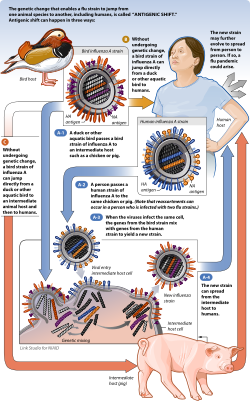
These relationships vary wildly in scale and impact. For instance, a human cell may host a pathogenic virus, an animal may harbor parasitic nematodes (roundworms), or a bean plant may support nitrogen-fixing bacteria. The specific collection of hosts that a particular organism can successfully partner with is referred to as its host range.
Key Facts
- Symbiosis is a broad term covering mutualism (both benefit), commensalism (one benefits, one is unaffected), and parasitism (one benefits at the other's expense).
- Parasitism has evolved independently on at least 233 separate occasions.
- Hosts are categorized by their role in a parasite's life cycle: definitive, intermediate, paratenic, dead-end, or reservoir.
- Micropredation is a specialized form of parasitism where small predators feed on parts of a larger host plant.
- Over 95% of plant families engage in mycorrhizal associations with fungi.
The Spectrum of Symbiosis
Symbiotic relationships are defined by their permanence and the effect they have on the participants. While parasitism is the most widely discussed, it exists on a continuum with other strategies.
- Parasitism: The guest benefits while the host is harmed. This can range from long-term endoparasites (living inside the host) to parasitoids, which eventually kill their host to complete their development.
- Commensalism: One organism benefits while the other remains unharmed.
- Mutualism: Both organisms derive a benefit from the association.
![Micropredator, parasite, parasitoid, and predator strategies compared. Their interactions with their hosts form a continuum. Micropredation and parasitoidism are now considered to be evolutionary strategies within parasitism.[2]](/images/f3/ce/f3ce5a80bf35e1b80784ec9cbcadd002e90b8c56a1e4a0761524253962efb0cd.webp)
Parasitoids vs. Parasites
While a typical parasite seeks to keep its host alive to ensure a steady food supply, a parasitoid spends its larval stage inside a single host, ultimately causing the host's death once the parasitoid is ready to transition to its next life stage. Some relationships are even more detached, such as brood parasitism, where a cuckoo uses another bird's nest without maintaining permanent physical contact with the host.
Classifying Types of Hosts
Because many parasites have complex life cycles involving multiple species, biologists categorize hosts based on the parasite's developmental stage.
| Host Type | Role in Life Cycle | Example |
|---|---|---|
| Definitive (Primary) | Where the parasite reaches adulthood and reproduces sexually. | Canids for Alaria americana |
| Intermediate (Secondary) | Required for development; often acts as a vector. | Mosquitoes for heartworm (Dirofilaria immitis) |
| Paratenic (Transport) | Harbors immature stages but is not required for development. | Snakes for Alaria americana |
| Dead-end (Accidental) | Prevents transmission to the definitive host. | Humans/Horses for West Nile virus |
| Reservoir | Harbors a pathogen without suffering ill effects. | Black rats for bubonic plague |
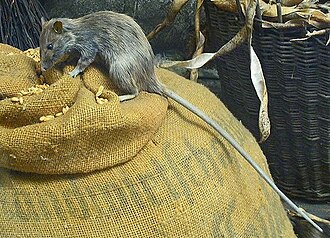
Identifying these roles can be challenging. In some cases, a single organism can serve as both an intermediate and definitive host. For example, in trichinosis, the host harbors immature juveniles in the muscles and reproductive adults in the digestive tract.
Plant Hosts and Micropredation
In botany, the relationship between plants and certain insects is described as micropredation. This is an evolutionarily stable strategy where a small predator lives on a larger plant and consumes parts of it.
Insects are categorized by their host range:
- Monophagous: Feed on a single plant species (e.g., silkworm larvae on mulberry leaves).
- Oligophagous: Restricted to a few related species in the same family (e.g., diamondback moths on brassicas).
- Polyphagous: Feed on a wide variety of plants across different families (e.g., the buff ermine moth).
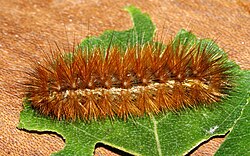
Plants often fight back by producing toxic secondary metabolites. Monophagous insects evolve specific adaptations to bypass these toxins, allowing them to eat tender young foliage that polyphagous generalists cannot tolerate. However, this specialization makes them more vulnerable to extinction if their specific host plant disappears.
Non-Parasitic Hosting Relationships
Mutualistic Associations
Many hosting relationships are beneficial. Mycorrhiza is a vital association where fungi provide plants with phosphates and nitrogen from the soil in exchange for carbohydrates produced via photosynthesis.
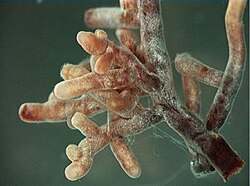
Similarly, leguminous plants (like peas and alfalfa) host rhizobia bacteria in root nodules. The plant provides energy, and the bacteria fix nitrogen, which is essential for the plant's growth.
Cleaning Symbiosis and Commensalism
In marine environments, cleaning symbiosis occurs when smaller animals (cleaners) remove parasites from larger animals (clients). While this appears mutualistic, some biologists debate if the cleaners are actually acting as parasites.
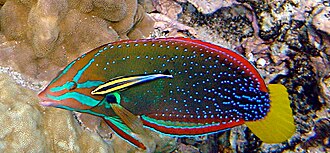
Commensalism is seen in remoras (suckerfish), which attach to sharks or whales for transport (phoresis). While primarily commensal, this can lean toward mutualism if the remora consumes parasitic copepods from the host's skin.

Frequently Asked Questions
What is the difference between a definitive and an intermediate host?
A definitive host is the final host in which a parasite reaches maturity and reproduces sexually. An intermediate host harbors the parasite in its immature stages and is often necessary for the parasite to complete its development cycle.
What is a dead-end host?
A dead-end host is an organism that can be infected by a parasite or virus but does not allow the pathogen to be transmitted further to a definitive host, effectively stopping the life cycle.
How does a reservoir host differ from a typical host?
A reservoir host carries a pathogen without suffering significant ill effects from it, but it serves as a source of infection for other, more susceptible species.
What is the trade-off for monophagous insects?
Monophagous insects gain the advantage of being able to eat toxic young foliage that generalists cannot. The trade-off is a higher risk of extinction if their specific host plant population declines.
Can a host be both intermediate and definitive?
Yes. In certain diseases, such as trichinosis, the same host can harbor different phases of the parasite in different parts of the body, acting as both an intermediate and definitive host.