Suburbanization: Drivers, Global Patterns, and Socioeconomic Impacts
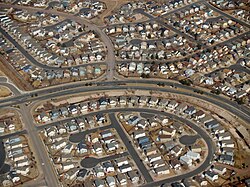
Suburbanization is the population shift from historic city cores or rural areas into suburbs. This process typically results in urban sprawl—the expansion of low-density, peripheral urban areas as households and businesses migrate away from central city hubs. While some view this shift as a natural progression of urban growth, critics argue that sprawl contributes to urban decay, environmental degradation, and the concentration of lower-income residents within inner cities.
This movement often follows the concentric zone model, where settlement expands outward in rings driven by economic changes, technological innovations, and population growth. However, suburbanization manifests differently across the globe, ranging from planned satellite towns in Europe and rail-oriented developments in East Asia to high-rise suburbs in Canada and informal peri-urban areas in the Global South.
Key Facts
- Global Diversity: Suburban forms vary by region, including East Asian rail-suburbs and European satellite towns.
- Infrastructure Cost: In the U.S., sprawl-related infrastructure (water, sewer, roads) can cost over $21,000 per development unit.
- Economic Burden: U.S. infrastructure costs for sprawl were estimated at $1.12 trillion between 2005 and 2030.
- Digital Shift: Broadband and video conferencing have reduced commuting needs, accelerating suburban viability.
- Demographic Evolution: While historically associated with "white flight," modern suburbs are increasingly diverse, with growing African American, Asian American, and Indo-American communities.
Regional Perspectives on Suburban Growth
The United States
In the U.S., the desire to own a home and escape urban chaos has driven suburbanization since the 1950s. In the early 21st century, the proliferation of broadband, email, and home video conferencing enabled a shift toward remote work. This trend was significantly accelerated by the COVID-19 pandemic, which further decoupled employment from the need to reside in a city center.

Eastern Europe and Post-Socialist Trends
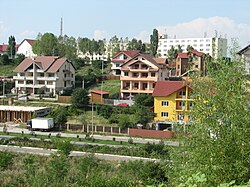
Suburbanization in Eastern Europe is heavily influenced by socialist legacies, including underdeveloped infrastructure and housing backlogs. In Tirana, Albania, peri-urban growth doubled the city's size during the 1990s. In other regions, the pace varied: Prague saw slower growth in the 1990s, accelerating after 2000 as affordability improved, while Romania and Slovenia experienced more visible suburban expansion during the 1990s.
Causes and Drivers of Sprawl
Several intersecting factors drive the movement toward the periphery:
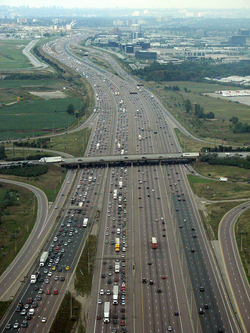
- Transportation and Infrastructure: Innovations in transit and road networks make distant commutes feasible.
- Housing Markets: The availability of cheaper land and the desire for larger homes drive residents outward.
- Government Policy: Zoning laws and fiscal policies often incentivize peripheral development.
- Demographics: Migration patterns and population growth necessitate new residential spaces.
Socioeconomic and Environmental Consequences
Infrastructure and Fiscal Impact
The financial burden of sprawl is significant. As development pushes further out, the cost of extending water, sewer, and road lines increases. This often leads to a maintenance crisis; governments may divert funds from existing urban infrastructure to pay for new peripheral necessities, leaving older city systems to deteriorate.
Urban Diversity and Race
Historically, suburbanization in the U.S. was marked by "white flight," where white residents left cities for the suburbs. This led to a decrease in housing prices in transition neighborhoods, which paradoxically increased Black homeownership in central cities. However, 2010 census data indicates a shift, with minorities—including African Americans, Asian Americans, and Indo-Americans—becoming a larger part of the suburban population.
Psychological and Social Effects
There was once a prevailing belief that suburban living improved happiness by reducing crime and population density compared to the perceived social isolation of cities. However, a 1974 study challenged this, finding no significant difference in life satisfaction or neighborhood satisfaction between urban and suburban residents.
Summary of Suburbanization Impacts
| Feature | Urban Core | Suburban Periphery |
|---|---|---|
| Population Density | High | Low |
| Infrastructure Cost | Maintenance-heavy | High expansion costs |
| Housing Type | Dense/Vertical | Low-density/Horizontal |
| Work Pattern | Commute-centric | Increasingly remote/hybrid |
Frequently Asked Questions
What is the difference between suburbanization and urban sprawl?
Suburbanization is the general population shift from city centers to the outskirts. Urban sprawl is the resulting physical pattern of low-density, unplanned development that spreads across the landscape.
How has technology affected suburban growth?
The rise of broadband, email, and video conferencing has allowed more people to work from home, reducing the necessity of living near a central business district and making suburban living more practical.
What are the financial risks of suburban sprawl?
Sprawl creates high costs for new infrastructure, such as roads and sewers. In the U.S., this can cost over $21,000 per unit, often leading governments to neglect the maintenance of existing city infrastructure.
How did suburbanization affect racial demographics in U.S. cities?
Initially, the exodus of white residents to the suburbs (white flight) lowered city housing prices, facilitating Black homeownership in urban centers. More recently, however, suburbs have become increasingly diverse with growing minority populations.
Does living in the suburbs guarantee more happiness?
While it was historically believed that lower density and lower crime in suburbs increased happiness, research (such as a 1974 study) suggests that suburban residents do not necessarily report higher life satisfaction than urban residents.