Urban Renewal: Strategies, History, and Social Impacts of City Redevelopment
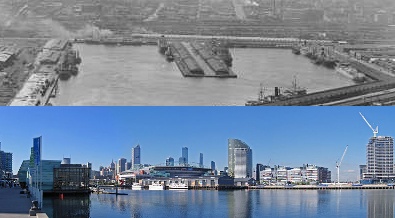
Urban renewal, often referred to as urban regeneration or redevelopment, consists of government and private initiatives designed to combat urban decay, modernize infrastructure, and revitalize declining city neighborhoods. At its core, the process typically involves clearing "blighted" areas—regions considered dilapidated or dysfunctional—to make way for new housing, commercial businesses, and public spaces.
While these projects can stimulate economic growth and modernize the urban landscape, they remain deeply controversial. The process frequently leads to the displacement of low-income and minority communities, a phenomenon often linked to gentrification, where rising property values push out original residents in favor of wealthier newcomers.
Key Facts
- Primary Goal: To address urban decay and upgrade infrastructure for economic and social revitalization.
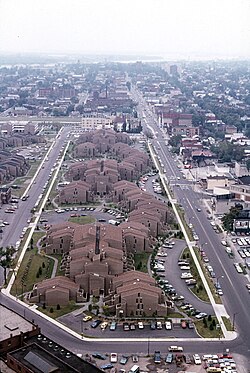
- Common Methods: Slum clearance, the use of eminent domain, and the construction of new residential or commercial districts.
- Social Cost: Frequent displacement of marginalized populations, particularly low-income and minority groups.
- Global Reach: Implemented in various forms across the US, UK, Singapore, South Korea, Russia, and Italy.
- Evolution: A shift from "command and control" demolition toward sustainable, participatory community development.
Core Strategies of Urban Renewal
Urban renewal is not a single action but a collection of strategies tailored to specific city needs. Some of the most common approaches include:
Slum Clearance and Eminent Domain
One of the most aggressive forms of renewal is slum clearance, where substandard housing is demolished. This often involves eminent domain, a legal mechanism allowing the government to take private property for public use, provided just compensation is paid.
Event-Driven Construction
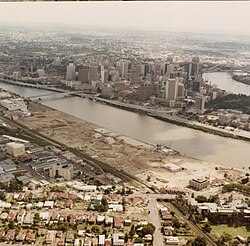
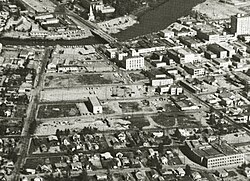
Cities often use major events as catalysts for rapid redevelopment. For example, large areas of South Brisbane were cleared in 1987 to facilitate World Expo 88.
Village and District Renewal
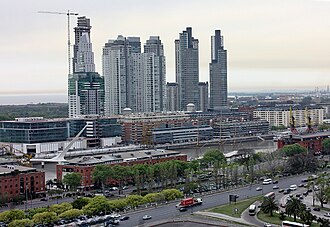
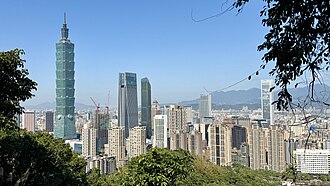
Beyond major cities, village renewal focuses on rural development. In larger urban contexts, specific districts are targeted, such as the Xinyi Special District in Taipei, which transformed industrial sites into a commercial hub, or Puerto Madero in Buenos Aires, which converted disused docks into a luxury district.
Historical Perspectives and Global Implementation
The United Kingdom
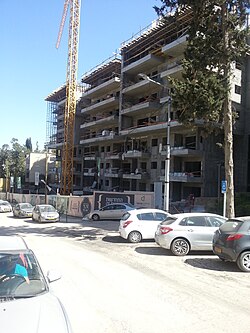
Renewal in the UK dates back to the 19th century with philanthropic efforts. The Rochester Buildings (1862) and early Peabody Trust estates were among the first large-scale attempts to provide social housing and clear slums. By the 1990s, the government introduced the Single Regeneration Budget (1994–2002) to address socio-economic problems through competitive bidding. Later, the Housing Market Renewal Initiative (2002–2011) focused on refurbishing or replacing housing, though critics argue it often attracted wealthier tenants rather than helping original residents.
The United States
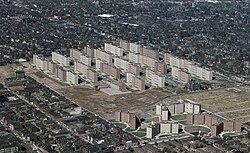
Early 20th-century efforts included the 1909 Plan for Chicago and the work of Robert Moses in New York, who built extensive highways, bridges, and parks. However, the 1950s saw a surge in projects that devastated Black communities. In Southwest Washington, thousands of African-American families were displaced without replacement housing. Many were moved into high-rise public housing, such as Pruitt-Igoe in St. Louis or Cabrini-Green in Chicago, which eventually failed due to poor maintenance and hostile design.
By the 1960s, critics like Jane Jacobs challenged these large-scale demolitions in The Death and Life of Great American Cities. This sparked a movement toward community-led development, eventually leading to the Community Development Block Grant program in 1974, which prioritized the redevelopment of existing neighborhoods over total demolition.
Asia and Europe
- Singapore: Facing severe overcrowding and squatters in the 1950s, Singapore partnered with the United Nations in 1961 to implement a master plan that successfully provided massive amounts of public housing and business areas.
- South Korea: Following the Korean War, the 1976 Urban Redevelopment Act led to 20 years of large-scale clearance. In the 2000s, the focus shifted toward maintaining existing developments.
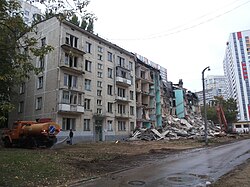
- Russia: In 2017, Moscow began a massive program to demolish 5,171 Khrushchevki (dilapidated Soviet-era apartment buildings), aiming to resettle 1.6 million residents by 2032.
- Italy: Traditionally focused on "recovery" and "re-use," Italy has recently moved toward an Anglo-Saxon model of regeneration to increase economic and cultural value, as seen in the Puglia Region's 2008 laws.
The Impact of Urban Renewal
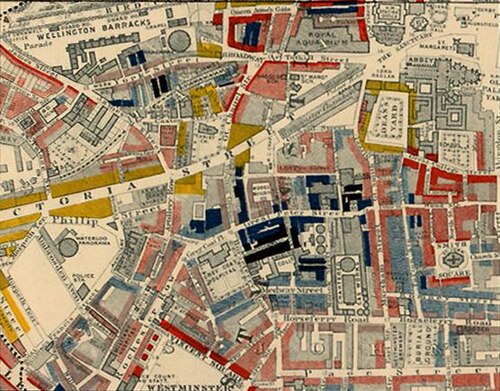
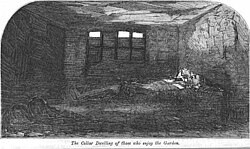
The results of urban renewal are often a paradox of physical improvement and social loss.
| Positive Impacts | Negative Impacts |
|---|---|
| Modernized infrastructure and public spaces | Forced displacement of low-income residents |
| Stimulated economic growth and investment | Loss of historic neighborhood character |
| Elimination of hazardous living conditions | Social fragmentation and community breakdown |
| Increased property values and tax revenue | Gentrification and unaffordable housing |
Beyond the physical changes, the social cost is significant. In South Africa, urban renewal was historically used by the Apartheid government to forcibly remove Black townships. In modern times, grassroots movements like the Western Cape Anti-Eviction Campaign continue to fight against the relocation of the poor from city centers.
Frequently Asked Questions
What is the difference between urban renewal and gentrification?
Urban renewal is the broader process of redeveloping a city area, often led by government policy. Gentrification is a specific social outcome of renewal where a neighborhood's character changes as wealthier people move in, typically displacing the original lower-income residents.
What are Khrushchevki?
Khrushchevki are low-cost, concrete-panel apartment buildings constructed in the Soviet Union during the 1960s. Many are now being demolished in Russia as part of modern urban renovation programs.
How does eminent domain work in urban renewal?
Eminent domain is the power of a government to take private property for public use. In urban renewal, it is often used to clear "blighted" areas to make room for highways, parks, or commercial developments, provided the owner is compensated.
Why did early high-rise public housing projects fail?
Many projects, such as Pruitt-Igoe, failed due to a combination of low-quality construction, poor maintenance, and hostile architectural designs that did not support a healthy community environment.
How has the approach to urban renewal changed over time?
The approach has shifted from "command and control" strategies—characterized by mass demolition and top-down planning—toward sustainable, participatory models that emphasize community ownership, trust, and the preservation of existing neighborhood fabrics.