Stardust: The History of an American Musical Standard
Few songs capture the essence of longing and nostalgia quite like Stardust. Composed in 1927, this timeless piece has evolved from a simple whistled tune into one of the most recorded standards in the history of American music. With over 1,500 recordings and translations into 40 languages, it remains a cornerstone of the Great American Songbook—a canon of the most influential songs from the early 20th century.
Key Facts
- Composer: Hoagy Carmichael
- Lyricist: Mitchell Parish
- First Recorded: October 31, 1927
- Genre: Jazz
- Accolades: Inducted into the Grammy Hall of Fame (1995) and the National Recording Registry (2004)
- Impact: Recorded over 1,500 times by diverse artists across genres
The Genesis of a Melody
The story of "Stardust" begins with Hoagy Carmichael during his time at Indiana University. While attending the university, Carmichael developed a deep passion for jazz (a music genre characterized by improvisation and swing notes), forming his own band to perform at local events across Indiana and Ohio.
The specific inspiration for the song came in 1927. After leaving a university hangout, Carmichael began whistling a melody inspired by the end of a love affair. On the advice of a classmate, he titled the piece "Stardust."

The First Recording
On October 31, 1927, Carmichael booked a session at Gennett Studios in Richmond, Indiana. Because he had not yet written formal sheet music, he had to whistle the melody to the musicians to guide them. He played the piano, supported by Emil Seidel and his orchestra, which included a full brass and reed section.
This original version was an instrumental track with a medium-fast, jazzy tempo. It was released by Gennett Records as the B-side to "One Night In Havana," credited to "Hoagy Carmichael and His Pals."
From Instrumental to Vocal Classic
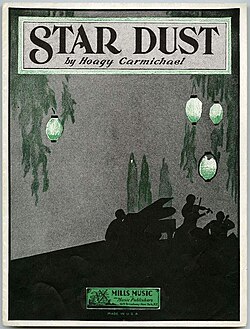
In 1928, Carmichael's career shifted when Mills Music hired him as a composer. The publisher recognized the potential of "Stardust" but felt it needed a different approach. After hearing Don Redman perform the piece, an arranger suggested a slower, more sentimental tempo.
The Addition of Lyrics
To enhance the song's emotional appeal, Mills Music assigned lyricist Mitchell Parish to write words for the melody. Parish drew upon Carmichael's own inspiration regarding lost love to craft the lyrics. Although Parish initially used the working title "Then I Will Be Satisfied," he eventually adopted the original title, "Stardust." The vocal version was published in C major on May 10, 1929.
Rise to Global Popularity
The song's ascent was rapid. By 1929, it was a regular feature at the famous Cotton Club, performed by legends such as Duke Ellington and Louis Armstrong. By 1930, Isham Jones's rendition brought the song into homes via the radio, sparking a wave of recordings by various artists.
The Big Band Era
During the 1930s, "Stardust" became a staple of the big band era. In 1936, RCA Victor took the unprecedented step of releasing a double-sided record featuring two different artists—Tommy Dorsey and Benny Goodman—performing the same song. Goodman later noted that the tune was the most popular dance number in his entire repertoire.
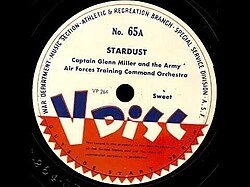
By 1940, the song's status as a standard was cemented. Artie Shaw's 1940 recording became a massive hit, selling one million copies. Other iconic versions followed from Frank Sinatra, Glenn Miller, and Ella Fitzgerald.
Legacy and Cultural Impact
Beyond the charts, "Stardust" has permeated popular culture, appearing in cinematic classics such as Goodfellas, Sleepless in Seattle, and Casino. Its enduring quality is recognized by the Library of Congress and the Recording Academy, ensuring its place as a culturally and aesthetically important work of American art.
| Year | Artist | Chart | Peak Position |
|---|---|---|---|
| 1941 | Tommy Dorsey (ft. Frank Sinatra) | US Billboard Hot 100 | 7 |
| 1941 | Artie Shaw | US Billboard Hot 100 | 6 |
| 1943 | Glenn Miller | US Billboard Hot 100 | 20 |
| 1957 | Billy Ward and his Dominoes | US Billboard Hot 100 | 12 |
| 1964 | Nino Tempo & April Stevens | US Billboard Hot 100 | 32 |
Frequently Asked Questions
Who wrote the music and lyrics for Stardust?
The music was composed by Hoagy Carmichael in 1927, and the lyrics were later added by Mitchell Parish in 1929.
How was the song first recorded?
It was first recorded as an instrumental on October 31, 1927, at Gennett Studios. Because there was no written sheet music at the time, Hoagy Carmichael had to whistle the tune to the musicians.
Why is Stardust considered a "standard"?
It is considered a standard because of its immense popularity and the fact that it has been recorded over 1,500 times by a vast array of artists across different genres and eras.
Which recordings of Stardust are the most famous?
Some of the most influential versions include Artie Shaw's million-selling 1940 recording, as well as renditions by Tommy Dorsey, Glenn Miller, and Louis Armstrong.
What honors has the song received?
The song was inducted into the Grammy Hall of Fame in 1995 and added to the National Recording Registry in 2004.