Gennett Records: The Cradle of Recorded Jazz and American Roots Music
In the heart of Richmond, Indiana, a modest recording operation emerged in the early 20th century that would fundamentally alter the landscape of American music. Gennett Records, founded in 1917, became an unlikely sanctuary for the pioneers of jazz, blues, and country music, capturing sounds that the major New York labels of the era largely ignored.
Originally established by the Starr Piano Company, Gennett Records expanded the reach of the music industry into the Midwest. By providing a platform for rural and Black artists, the label documented the raw, authentic evolution of American grassroots music, earning its Richmond studio the reputation as the "cradle of recorded jazz."
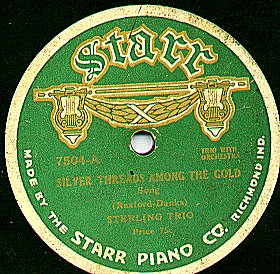
Key Facts
- Founded: 1917 in Richmond, Indiana, by the Starr Piano Company.
- Key Genres: Jazz, blues, country, and gospel.
- Legendary Artists: Louis Armstrong, King Oliver, Bix Beiderbecke, and Jelly Roll Morton.
- Production Scale: Produced over 16,000 masters by the late 1930s.
- Technical Evolution: Transitioned from vertical "hill-and-dale" cuts to lateral cuts in 1919, and later to electrical recording.
- Inactive Status: The business faded away between 1947 and 1948.
The Origins and Growth of Gennett
Gennett Records was created to diversify the business of the Starr Piano Company. Named after brothers Harry, Fred, and Clarence Gennett, the label aimed to move beyond the confines of Starr piano stores to achieve wider distribution. While early pressings were outsourced, the company soon established a massive six-story manufacturing and record-pressing facility in Starr Valley, located along the Whitewater River.
The label's early technical approach utilized the hill-and-dale method—a vertical cutting process using a U-shaped groove and sapphire ball stylus. In April 1919, the company modernized its output by switching to the lateral cut method, which became the industry standard.
The Richmond Studio and Regional Influence
While Gennett initially operated a studio in Manhattan, the bulk of its legacy was forged in Richmond, Indiana. Managed by Ezra C.A. Wickemeyer from 1921 to 1927, the Richmond studio was a rudimentary space—125 feet long and 30 feet wide—where soundproofing consisted of a Mohawk rug on the floor and towels draped over the walls.
Because it was one of the few professional recording facilities outside of New York City, Gennett attracted a diverse array of Midwestern and Southern talent. This geographic advantage allowed the label to record Black artists and rural musicians who were frequently neglected by the coastal industry giants.
A Diverse and Controversial Catalog
Gennett's roster was a who's who of early American music. The label captured the early genius of Louis Armstrong and King Oliver, as well as the innovative sounds of Bix Beiderbecke and Hoagy Carmichael. Beyond jazz, Gennett was instrumental in preserving early blues and gospel through artists like Blind Lemon Jefferson, Charley Patton, and Thomas A. Dorsey.
The label also leaned heavily into "hillbilly" and early country music. Talent scout Dennis Taylor brought hundreds of Kentucky musicians to Richmond between 1925 and 1931, including Fiddlin' Doc Roberts and Asa Martin, ensuring that traditional Kentucky music was preserved for posterity.
The Darker Side of the Archives
Despite its musical contributions, Gennett's history includes a troubling chapter. Throughout the 1920s, the company produced private "vanity records" for the Ku Klux Klan. These records, featuring red labels and gold lettering, included politicized hymns and speeches by D.C. Stephenson. These were never listed in public catalogs and were shipped directly to the Klan's headquarters in Indianapolis.
Technical Transitions and Economic Decline
The shift from acoustic to electrical recording proved challenging for Gennett. In 1926, they licensed a process from General Electric, but the resulting records wore out too quickly because the "biscuit" (the record material) was not hard enough to withstand the increased frequency range on older phonographs. The company eventually pivoted to the RCA Photophone process in February 1927, introducing a harder record material and the "New Electrobeam" label.
The Great Depression of 1930 dealt a severe blow to the company. Production was scaled back, and by 1934, activities had largely halted, except for the budget Champion label and the production of sound effects for radio and film. In 1935, the Starr Piano Company sold the Gennett and Champion trademarks and various masters to Decca Records.
The Final Years and Legacy
During World War II, the War Production Board rationed shellac, a primary ingredient in records. Gennett's shellac allocation was purchased by Joe Davis, who sold some of it to the fledgling Capitol Records. By 1947 or 1948, Gennett ceased operations entirely. The historic Richmond plant later passed through the hands of Brunswick and Mercury Records before closing in 1969.
| Category | Details |
|---|---|
| Founder | Starr Piano Company |
| Primary Location | Richmond, Indiana, USA |
| Key Labels | Gennett, Starr, Champion, Superior, Van Speaking |
| Notable Artists | Louis Armstrong, Bix Beiderbecke, Jelly Roll Morton, Gene Autry |
| Operational Peak | 1920s |
| End of Operations | 1947–1948 |
Gennett Walk of Fame
To honor the legacy of the artists who recorded in Richmond, the Starr-Gennett Foundation established a Walk of Fame in 2007. Inductees are chosen across categories including classic jazz, old-time country, blues, and gospel. Notable inductees include Duke Ellington, Fats Waller, Alberta Hunter, and William Jennings Bryan, the latter of whom recorded his famous "Cross of Gold" speech at the studio.
Frequently Asked Questions
Why was Gennett Records important to jazz history?
Gennett provided one of the first professional recording opportunities for jazz legends like Louis Armstrong and King Oliver outside of New York City, effectively documenting the birth of recorded jazz in the American Midwest.
What was the "biscuit" in Gennett's recording process?
The "biscuit" refers to the physical material used to press the record. Gennett struggled with the hardness of their biscuit during the early transition to electrical recording, which led to premature wear on the discs.
Did Gennett Records only produce music?
No. The label recorded spoken word content, such as William Jennings Bryan's "Cross of Gold" speech, and later produced a catalog of sound effects sold to filmmakers and radio stations.
What happened to the Gennett catalog after the company declined?
In 1935, the Starr Piano Company sold the Gennett and Champion trademarks, along with several masters, to Decca Records, which attempted to revive the labels as bargain pressings for race and old-time music.
How did the label pay its artists?
Gennett rarely paid upfront. Some artists received a flat fee of $15 to $50 per session (with Black artists often receiving less), while most signed royalty contracts promising one penny per copy or side sold.