Bix Beiderbecke: The Lyrical Pioneer of Jazz Cornet
Leon Bismark "Bix" Beiderbecke was a transformative figure in early American jazz. As a cornetist, pianist, and composer, he emerged in the 1920s as one of the era's most influential soloists. While many of his contemporaries favored a bold, aggressive sound, Beiderbecke was celebrated for his purity of tone and an inventive, lyrical approach. His clarity was so striking that one contemporary famously likened his sound to "shooting bullets at a bell."
Born in Davenport, Iowa, Beiderbecke was largely self-taught. By learning the cornet by ear, he developed a non-standard fingering technique that became the foundation of his unique musical voice.
![Beiderbecke, age 8, poses with a neighbor, Nora Lasher, in 1911.[13][14]](/images/02/d6/02d6fb0e77e2fc19b80acf275c7814ade89bf121af3842df2fd3e23684a26a09.jpg)
Key Facts

- Full Name: Leon Bismark Beiderbecke
- Active Years: 1920–1931
- Primary Instruments: Cornet and Piano
- Notable Ensembles: The Wolverines, Jean Goldkette Orchestra, Paul Whiteman and his Orchestra
- Key Contribution: Introduced inventive harmonies that foreshadowed the development of bebop
- Death: August 6, 1931, at age 28 in Sunnyside, Queens, New York
Professional Journey and Career Milestones
Early Success with The Wolverines and Goldkette
Beiderbecke's recording career began in 1924 with the Midwestern jazz ensemble known as The Wolverines. His talent quickly caught the attention of larger organizations, leading to a brief stint with the Detroit-based Jean Goldkette Orchestra. He later joined Frankie "Tram" Trumbauer for an engagement at the Arcadia Ballroom in St. Louis before both he and Trumbauer returned to Goldkette's main band at the Graystone Ballroom in Detroit in 1926.
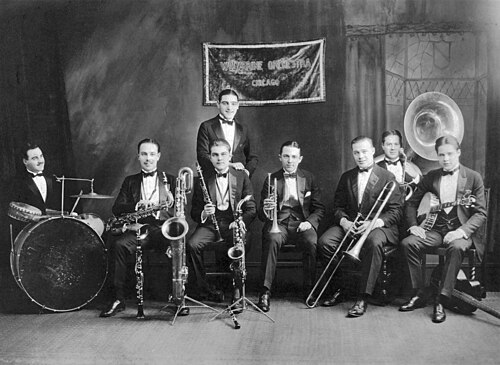
During this period, the band toured extensively, including a high-profile set opposite Fletcher Henderson at New York City's Roseland Ballroom in October 1926. Beiderbecke produced some of his most significant recordings in 1927, just before the Goldkette band dissolved in September of that year.
The Paul Whiteman Era
After a short time with bass saxophone player Adrian Rollini, Beiderbecke and Trumbauer joined the most popular dance band of the time: Paul Whiteman and his Orchestra. While this period cemented his fame, it also coincided with a sharp decline in his health due to increasing alcohol use. Despite the support of his family and Whiteman—who provided access to rehabilitation centers—Beiderbecke's health continued to fail.
He left the Whiteman band in 1929. In a gesture of respect, Whiteman kept Beiderbecke's chair open in the hope that he would return. Though he returned to New York in January 1930, he performed only sparingly.
Musical Style and Composition
Beiderbecke was not only a master of the cornet but also a skilled pianist. His piano work is heard on recordings such as "Big Boy" and his only solo recorded piece, "In a Mist." Critics have noted that his piano playing mirrored his cornet style, characterized by unconventional fingering and a focus on inventive harmonies. These harmonic explorations are credited with pointing the way toward future jazz evolutions, specifically bebop.
Throughout his career, Beiderbecke wrote or co-wrote six instrumental compositions:
- "Davenport Blues" (1925)
- "In a Mist (Bixology)" (1927)
- "For No Reason at All in C" (1927) - co-written with Frank Trumbauer
- "Candlelights" (1930)
- "Flashes" (1931)
- "In the Dark" (1931)
Final Recordings and Legacy
Beiderbecke's final recording session took place on September 15, 1930, in New York. He played on the original recording of Hoagy Carmichael's "Georgia on My Mind," a track that would eventually become a jazz standard and was inducted into the Grammy Hall of Fame in 2014.
Bix Beiderbecke passed away on August 6, 1931, in his apartment in Sunnyside, Queens, at the age of 28.
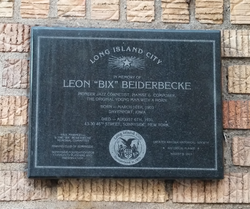
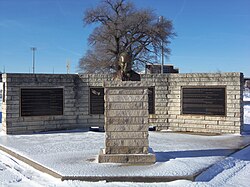
His legacy persists through numerous honors, including induction into the Down Beat Jazz Hall of Fame and the International Academy of Jazz Hall of Fame. In his hometown of Davenport, Iowa, he is remembered through a memorial in LeClaire Park and the Bix Beiderbecke Museum & Archives, which opened in 2017.
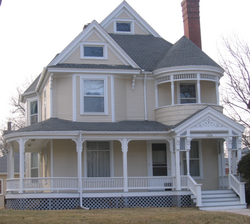
His life has also inspired artistic works, including the 1991 film Bix: An Interpretation of a Legend by Pupi Avati, which was filmed partially in Beiderbecke's childhood home.
Summary of Major Achievements
| Category | Details |
|---|---|
| Grammy Hall of Fame Inductions | "Singin' the Blues" (1977), "In a Mist" (1980), "Georgia on My Mind" (2014) |
| Key Collaborators | Frankie Trumbauer, Paul Whiteman, Hoagy Carmichael |
| Notable Honors | Asteroid 23457 Beiderbecke, ASCAP Jazz Wall of Fame, Nesuhi Ertegun Jazz Hall of Fame |
| Hometown | Davenport, Iowa |
Frequently Asked Questions
What made Bix Beiderbecke's cornet style unique?
Beiderbecke was known for a lyrical approach and a purity of tone that was distinct from the more aggressive styles of the time. Because he was self-taught, he used non-standard fingering, which contributed to his unique sound.
Which famous song did Bix play on during his final recording session?
His final recording session on September 15, 1930, featured the original recording of Hoagy Carmichael's "Georgia on My Mind."
Did Bix Beiderbecke play any instruments other than the cornet?
Yes, Beiderbecke was also a pianist. He recorded several pieces on the piano, including his solo work "In a Mist."
How did Bix Beiderbecke influence future jazz genres?
His use of inventive harmonies on both the cornet and piano is seen as a precursor to the harmonic developments found in bebop.
Where can people visit sites related to Bix Beiderbecke today?
Visitors can visit the Bix Beiderbecke Museum & Archives and the memorial in LeClaire Park, both located in his hometown of Davenport, Iowa.