Zutty Singleton: The Rhythmic Heart of Early Jazz
In the formative years of jazz, few percussionists provided as steady and influential a beat as Arthur James "Zutty" Singleton. A master of the drums, Singleton was a cornerstone of the early jazz scene, bridging the gap between the traditional sounds of New Orleans and the evolving sophistication of New York and Chicago styles.
Born on May 14, 1898, in Bunkie, Louisiana, Singleton grew up in the vibrant musical atmosphere of New Orleans. His unique nickname, "Zutty," was given to him in infancy and is derived from a Creole word meaning "cute." By 1915, he had already entered the professional music world, working with Steve Lewis.
Key Facts
- Full Name: Arthur James "Zutty" Singleton
- Active Years: 1915–1970
- Primary Instrument: Drums
- Notable Collaborations: Louis Armstrong, Jelly Roll Morton, and Fats Waller
- Key Contribution: Performed on landmark recordings with Louis Armstrong and his Hot Five in 1928 and 1929
- Origin: Bunkie, Louisiana; raised in New Orleans
The Journey from New Orleans to Chicago
After a period of service in the United States Navy during World War I, Singleton returned to New Orleans to hone his craft. He collaborated with several influential figures of the era, including Papa Celestin, Big Eye Louis Nelson, John Robichaux, and Fate Marable. Seeking new opportunities, he moved to St. Louis to play in Charlie Creath's band before eventually settling in Chicago.
Chicago served as a pivotal turning point in Singleton's career. He performed with Doc Cook, Dave Peyton, and Jimmie Noone, as well as various theater bands. However, his most significant breakthrough came when he joined the band of the legendary Louis Armstrong, playing alongside pianist Earl Hines.
During 1928 and 1929, Singleton contributed to some of the most important recordings in jazz history with Louis Armstrong and his Hot Five, a small ensemble that redefined the role of the soloist in jazz.
New York Sophistication and West Coast Ventures
In 1929, Singleton followed Armstrong to New York City. The city's bustling music scene allowed him to collaborate with a diverse array of jazz giants, including Fats Waller, Jelly Roll Morton, Bubber Miley, Tommy Ladnier, and Otto Hardwick. He also provided the rhythmic backing for the renowned performer Bill Robinson.
Though he briefly returned to Chicago in 1934, Singleton was back in New York by 1937, where he worked with Sidney Bechet and Mezz Mezzrow.
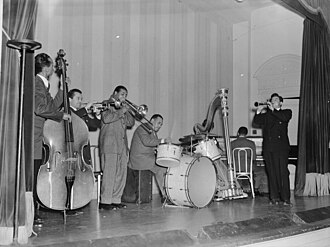
The final major chapter of his career began in 1943 when he moved to Los Angeles, California. In the West Coast scene, Singleton transitioned into leadership, heading his own band and performing for motion pictures. He also expanded his reach into broadcasting, appearing on The Orson Welles Almanac in 1944. During this period, he worked with a wide circle of musicians, including Slim Gaillard, Wingy Manone, Eddie Condon, Nappy Lamare, Art Hodes, Max Kaminsky, and Oran "Hot Lips" Page.
Career Summary and Legacy
Zutty Singleton's career spanned over five decades, witnessing the evolution of jazz from its regional roots to a global phenomenon. He retired in 1970 after suffering a stroke and passed away in New York City on July 14, 1975, at the age of 77. He was survived by his wife, Margie (the sister of Charlie Creath), who passed away in 1982.
| Period | Primary Location | Key Collaborators / Milestones |
|---|---|---|
| 1915–WWI | New Orleans | Steve Lewis, Papa Celestin, Fate Marable |
| Late 1920s | Chicago | Louis Armstrong, Earl Hines, Hot Five recordings |
| 1929–1942 | New York City | Fats Waller, Jelly Roll Morton, Sidney Bechet |
| 1943–1970 | Los Angeles | Band leader, Orson Welles Almanac, Slim Gaillard |
Frequently Asked Questions
What does the name "Zutty" mean?
The nickname "Zutty" is a Creole word meaning "cute," which was given to Arthur James Singleton during his infancy.
Which famous jazz musicians did Zutty Singleton work with?
Singleton worked with some of the most influential figures in jazz history, most notably Louis Armstrong, Jelly Roll Morton, Fats Waller, and Sidney Bechet.
What were Singleton's most significant recordings?
He is best known for his work on the landmark recordings with Louis Armstrong and his Hot Five during 1928 and 1929.
Did Zutty Singleton perform in any other media besides live music?
Yes, while living in Los Angeles, he played for motion pictures and appeared on the radio program The Orson Welles Almanac in 1944.
When and where did Zutty Singleton die?
Zutty Singleton died on July 14, 1975, in New York City at the age of 77.