Spermatozoon: Anatomy, Function, and Biological Mechanisms
The spermatozoon, commonly known as the sperm cell, is a highly specialized motile cell designed for a single primary purpose: to penetrate the protective coating of an ovum and deliver genetic material to achieve fertilization. This biological journey requires a precise combination of structural efficiency, chemical weaponry, and locomotive power.
Key Facts
- Structure: Divided into a head and a tail (flagellum) connected by a neck.
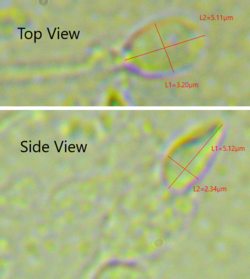
- Human Dimensions: The head is approximately 5.1 by 3.1 μm, while the tail is about 50 μm long.
- Speed: Human sperm typically propel themselves at a rate of 1 to 3 millimetres per minute.
- The Acrosome: A specialized sac containing enzymes like acrosin and hyaluronidase used to penetrate the egg.
- Genetic Payload: The head contains a nucleus with densely coiled chromatin fibers.
Anatomy of the Mammalian Sperm Cell
The mammalian spermatozoon is an architectural marvel of efficiency, stripped of most cytoplasm to maximize speed and focus. It consists of two primary regions connected by a neck.
The Head
The head is disc-shaped and houses the nucleus, where genetic information is stored in densely coiled chromatin fibers. At the anterior end of the head lies the acrosome, a thin, flattened sac derived from the Golgi body. This structure acts as a chemical reservoir, containing enzymes such as spermlysin (including hyaluronidase, corona-penetrating enzyme, zona lysin, or acrosin) that are essential for breaking through the female egg's outer layers.
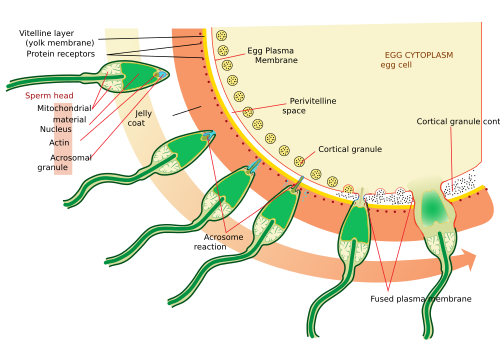
The head also contains vacuoles. As the sperm reaches the ovum, it triggers the acrosome reaction. During this process, the acrosomal membrane fuses with the sperm's plasma membrane, releasing the stored enzymes to clear a path to the egg.
The Tail (Flagellum)
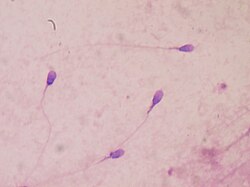
The tail, or flagellum, is the longest portion of the cell, measuring approximately 50 μm. It generates wave-like motions that propel the sperm forward through the reproductive tract and provide the mechanical force necessary to aid in egg penetration. While previously thought to move in a symmetrical helical shape, its motion is the primary driver of sperm motility.
![Motile sperm cells of algae and seedless plants[65]](/images/0a/03/0a03ec054363dcf79579f0340de44453a3f0736a1731a197e2bfde6719bb5334.png)
Biological Function and Fertilization
Fertilization is not merely a matter of contact but a complex series of biological events. Beyond motility, the sperm must undergo specific changes to become capable of fertilizing an egg. This involves the acrosome reaction mentioned previously, which is critical for the sperm to penetrate the ovum's coating.
In addition to human biology, motile sperm cells are found in various other organisms, including certain algae and seedless plants, demonstrating the evolutionary persistence of motile gametes for reproduction.
Sperm Characteristics Summary
| Feature | Specification/Detail |
|---|---|
| Head Dimensions | ~5.1 μm x 3.1 μm |
| Tail Length | ~50 μm |
| Average Speed | 1 to 3 mm per minute |
| Key Enzymes | Hyaluronidase, Acrosin, Zona lysin |
| Primary Motion | Wave-like (Flagellar) |
Legal and Forensic Perspectives
The biological nature of sperm also intersects with law and forensics. In a 2009 ruling, the England and Wales Court of Appeal determined that ejaculated sperm preserved for reproductive purposes are the legal property of the men who provided them, citing precedents such as the California case Hecht v Superior Court of Los Angeles County (1993).
Frequently Asked Questions
What is the acrosome reaction?
The acrosome reaction is a process where the membrane of the acrosome (a sac at the tip of the sperm head) fuses with the sperm's plasma membrane. This releases digestive enzymes that allow the sperm to penetrate the protective layers of the ovum.
How fast does a human sperm cell swim?
A human sperm cell typically moves at a speed of 1 to 3 millimetres per minute using the wave-like motion of its flagellum.
What are the dimensions of a human sperm head?
The head of a human sperm is disc-shaped and measures approximately 5.1 micrometers in length and 3.1 micrometers in width.
What is the function of the flagellum?
The flagellum, or tail, is responsible for the motility of the sperm. Its wave-like movements propel the cell toward the egg and provide the force needed to penetrate the egg's coating.
Which enzymes are found in the acrosome?
The acrosome contains several enzymes used for penetration, including hyaluronidase, acrosin, zona lysin, and corona-penetrating enzymes.