Gametes: The Biological Basis of Sexual Reproduction
In the realm of biology, the continuation of life in sexually reproducing organisms depends on specialized reproductive cells known as gametes. First named by German cytologist Eduard Strasburger in 1878, a gamete is a haploid cell—meaning it contains only half the genetic material of a standard body cell—that fuses with another haploid cell during fertilization to create a new organism.
The type of gamete an organism produces is the primary determinant of its sex, which in turn establishes sexual roles and the dynamics of sexual selection within a species.
Key Facts
- Haploid Nature: Gametes carry half the genetic information of an individual.
- Types: Female gametes are called ova (egg cells), and male gametes are called sperm.
- Anisogamy: The condition where gametes differ in size, common in humans and mammals.
- Fertilization: The union of a spermatozoon and an ovum forms a diploid zygote.
- Production: Gametes are produced via meiosis, a specialized cell division process.
Types and Characteristics of Gametes
Depending on the species, gametes can be identical or vastly different in form. When gametes are the same size and shape, the condition is known as isogamy. However, most species, including humans, exhibit anisogamy (or heterogamy), where the male and female cells differ significantly.
In humans, the ovum is comparatively large and non-motile. In contrast, the sperm cell is highly motile, utilizing a tail-shaped structure called a flagellum for propulsion. The difference in scale is immense; a human ovum has approximately 100,000 times the volume of a single human sperm cell.
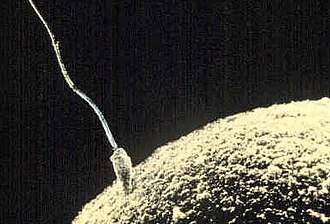
Gamete Formation: Oogenesis and Spermatogenesis
The creation of these cells occurs through meiosis, a process that includes meiotic recombination to ensure genetic diversity. In animals, this happens in specific organs:
- Oogenesis: The process where a diploid primary oocyte undergoes meiosis in the ovaries to produce a haploid ovum.
- Spermatogenesis: The process where a diploid primary spermatocyte undergoes meiosis in the testes to produce haploid spermatozoa.
Evolution and Cellular Differences
Biologists generally accept that isogamy was the ancestral state. Over time, anisogamy and oogamy evolved. Selection pressures eliminated intermediate-sized gametes because they lacked the specific advantages of the extremes: they were not as mobile or numerous as small gametes, nor did they provide the nutrient supply of large gametes.
Gametes vs. Somatic Cells
It is important to distinguish gametes from somatic cells (general body cells). While a gamete is haploid (one set of chromosomes), a somatic cell is diploid, possessing two sets of homologous chromosomes—one inherited from the sperm and one from the egg. Because of recombination during meiosis, the chromosomes in gametes are not exact duplicates of the parents' sets but a unique mixture of the two.
Artificial Gametes and Future Applications
Recent scientific advancements have led to the development of artificial gametes, also referred to as in vitro derived gametes (IVD), stem cell-derived gametes (SCDGs), or in vitro generated gametes (IVG). These are created from stem cells and would necessarily require in vitro fertilization (IVF) techniques for use.
These technologies present several potential applications:
- Reproductive Options: Providing a potential pathway for same-sex male couples (requiring a surrogate mother) or women who have passed menopause to have genetically related children.
- Medical Research: Creating cell lines to study the heredity of genetic disorders.
- Human Enhancement: The theoretical possibility of selectively breeding for specific genomes or using recombinant DNA technology to introduce traits not found in nature.
Gametes in the Plant Kingdom
Plant reproduction also involves gametes, but their life cycle includes an alternation of generations. Plants use meiosis to produce spores, which grow into multicellular haploid gametophytes. These gametophytes then produce gametes via mitosis.
In many plants, sperm are produced in the antheridium and eggs in the archegonium. While animal sperm are flagellate, plant sperm are more accurately described as ciliate. For example, while bryophytes have 2 flagella, the cycad Zamia pumila can have up to 50,000.
In flowering plants, the process is more specialized. The male gametophyte is housed within a pollen grain. When pollen lands on a stigma, it germinates and grows a pollen tube down the style to the ovary. Non-motile sperm nuclei are then transported through this tube to fertilize the egg cell within the ovule.
| Feature | Male Gamete (Sperm) | Female Gamete (Ovum/Egg) |
|---|---|---|
| Size | Small | Large |
| Motility | Motile (via flagellum/cilia) | Non-motile |
| Production Process | Spermatogenesis | Oogenesis |
| Genetic Content | Haploid (1n) | Haploid (1n) |
Frequently Asked Questions
What is the difference between a haploid and a diploid cell?
A haploid cell, such as a gamete, contains only one set of chromosomes. A diploid cell, such as a somatic body cell, contains two complete sets of homologous chromosomes.
What is anisogamy?
Anisogamy is the condition where the two gametes produced by a species are of different sizes, typically resulting in a small, motile male gamete and a large, non-motile female gamete.
How do plant gametes differ from animal gametes?
Plants have a multicellular haploid phase (the gametophyte) that produces gametes via mitosis, whereas animals produce gametes directly via meiosis. Additionally, some flowering plants use pollen tubes to transport non-motile sperm.
What are artificial gametes?
Artificial gametes are reproductive cells derived from stem cells in a laboratory setting (in vitro), which could potentially allow for new reproductive options and medical research into genetic disorders.
What happens during fertilization?
During fertilization, a haploid spermatozoon and a haploid ovum unite, combining their genetic information to form a diploid zygote, which then develops into a new organism.