Mating and Sexual Reproduction Across Biological Species
In the biological world, mating is the pairing of organisms for the purpose of sexual reproduction. While most species involve two individuals of opposite sexes, some are hermaphroditic, meaning a single organism possesses both male and female reproductive functions. In these cases, copulation—the physical union of sex organs—is not always necessary because the organism can perform autogamy, or self-fertilization.
At its core, mating facilitates fertilization: the fusion of two gametes. This typically involves a female egg and a male sperm. Depending on the species, this process can occur internally through copulation or externally, where gametes meet outside the body, a common occurrence in plants, bony fishes, and amphibians.
Key Facts
- Fertilization is the fundamental process where male and female gametes fuse to create a new organism.
- Copulation refers specifically to the union of sex organs for insemination.
- External fertilization is common in plants, amphibians, and many fish species.
- Hermaphroditic species can sometimes reproduce via self-fertilization (autogamy).
- Facultative sex allows some organisms, like protists, to switch between asexual and sexual reproduction based on environmental stress.
Mating Strategies in Animals
Animals employ a wide variety of mating strategies to ensure the survival of their species. These include random mating, assortative mating (choosing partners with similar traits), and disassortative mating (choosing partners with different traits). Many animals select mates based on their phenotype, which is the observable physical appearance of the organism.
In the context of animal husbandry, humans manage the mating of domesticated animals through methods such as pen mating (placing a female in a pen with a male) or paddock mating (releasing one male with several females). To increase efficiency and control, modern agriculture increasingly relies on artificial insemination over live mating.
Mammals typically achieve internal fertilization through penile-vaginal penetration and the ejaculation of semen. Other vertebrates, such as birds, reptiles, and some fish, utilize cloacal copulation to achieve internal fertilization.
Insects have specialized mechanisms for direct copulation. The male uses an aedeagus (a structure from the terminal abdominal segments) to deposit sperm into the female's reproductive tract, sometimes encased in a capsule called a spermatophore. This process is often preceded by courtship triggered by pheromones—chemical signals released to attract mates.
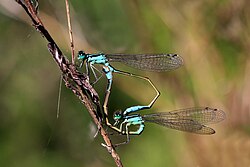
Post-mating behaviors in insects can be complex, ranging from the female storing sperm for future egg fertilization to more extreme behaviors like sexual cannibalism or chemical manipulation to prevent the female from mating with other males.
Reproduction in Plants and Fungi
Unlike animals, vascular plants generally achieve mating without physical contact. They produce pollen, which carries the male gametes. Pollination is the process by which these gametes are transported to female flowers, often facilitated by animals such as bees.
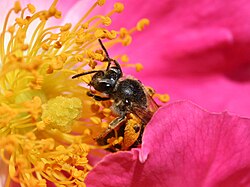
Fungi operate differently, as they lack distinct male and female organs. Most fungi are primarily haploid (containing one set of chromosomes). They only become diploid (containing two sets) during karyogamy, the final stage of sexual reproduction where parental nuclei fuse. Following this, the cell returns to a haploid state through meiosis.
Yeasts, which are eukaryotic fungi, typically reproduce asexually through budding. However, under high-stress conditions like nutrient starvation, certain diploid yeast strains undergo sporulation. This involves meiosis to produce haploid spores, which can later conjugate to reform a diploid cell.
Mating in Protists
Protists are diverse, mostly unicellular eukaryotic microorganisms that do not form tissues. They are believed to be among the earliest eukaryotes. While most protists reproduce asexually via binary or multiple fission, many are capable of sexual reproduction.
Protists often alternate their reproductive method based on the environment. In favorable conditions, they reproduce asexually. Under stress—such as heat shock or starvation—they switch to sexual reproduction. This genetic recombination can provide offspring with an environmental advantage, although it carries the risk of developing cysts. Consequently, protists often delay this process until conditions improve.
| Group | Primary Fertilization Type | Key Mechanism/Feature |
|---|---|---|
| Mammals | Internal | Penile-vaginal penetration |
| Birds/Reptiles | Internal | Cloacal copulation |
| Insects | Internal | Aedeagus and pheromones |
| Amphibians/Bony Fish | External | Gamete release into environment |
| Vascular Plants | External | Pollination via wind or animals |
| Fungi | Nuclear Fusion | Karyogamy |
| Protists | Mixed | Facultative sex during stress |
Frequently Asked Questions
What is the difference between mating and copulation?
Mating is a broad term referring to the pairing of organisms for sexual reproduction. Copulation is a specific physical act—the union of sex organs—used by many animals to achieve internal fertilization.
How do hermaphroditic organisms reproduce?
Hermaphroditic organisms possess both male and female reproductive organs. While some may still mate with others, they are capable of autogamy, which is the process of self-fertilization.
Why do protists switch to sexual reproduction during stress?
Sexual reproduction allows for the combination of genes, which can create offspring with traits better suited to survive harsh environmental conditions, such as starvation or heat shock.
What is the role of pheromones in insect mating?
Pheromones are chemical signals that insects release to attract potential mates and facilitate the courtship process before copulation occurs.
How does karyogamy work in fungi?
Karyogamy is the stage in fungal reproduction where two haploid parental nuclei fuse to create a single diploid cell, combining the genetic information of both parents.