Egg Cell: The Biology of the Female Gamete
The egg cell, scientifically known as the ovum (plural: ova), is the female reproductive cell or gamete found in most anisogamous organisms. Anisogamy refers to a form of sexual reproduction where the female gamete is significantly larger than the male gamete. Specifically, when the female gamete is non-motile (unable to move) and the male gamete (sperm) is motile, the process is classified as oogamous.
The primary biological purpose of the ovum is to fuse with a sperm cell during fertilization. This union creates a diploid cell called a zygote, which serves as the foundation for a new organism.
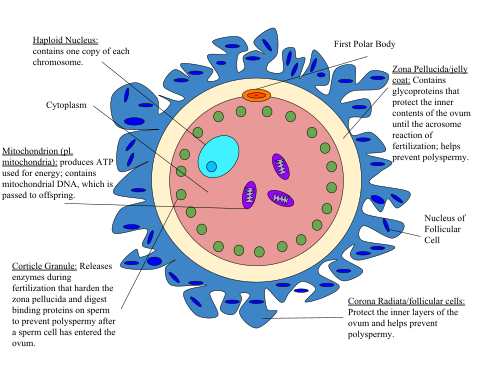
Key Facts
- Size: The human ovum is one of the body's largest cells, measuring approximately 120 μm in diameter.
- Visibility: Due to its size, the human egg cell is typically visible to the naked eye.
- Genetic Recombination: In humans, maternal DNA recombines an average of 42 times, while paternal DNA recombines approximately 27 times.
- Origin: In vertebrates, ova are produced in the ovaries through a process called oogenesis.
- Plant Equivalent: In algae, fungi, and bryophytes, the non-motile female gamete is often called an oosphere.
The Human and Mammalian Ovum
In mammals, fertilization occurs internally. Human ova develop from primitive germ cells located within the ovaries. Historically, it was believed that females are born with a finite number of oocytes (immature egg cells) and cannot produce more. However, research since 2004 has challenged this dogma, suggesting the existence of ovarian stem cells, though the ability of mature mammals to create new egg cells remains a subject of ongoing study.
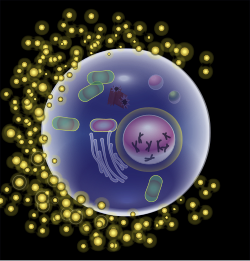
Ooplasm and Nutrition
The interior of the ovum contains ooplasm, a substance similar to yolk. At its center is the nucleus, known as the germinal vesicle, and the nucleolus, called the germinal disc. The ooplasm is divided into two main components:
- Formative Yolk: Consisting of spongioplasm and hyaloplasm (standard animal cell cytoplasm).
- Nutritive Yolk (Deutoplasm): Composed of fatty and albuminoid granules.
The amount of nutritive yolk varies by species. Mammalian ova contain very little, as they only need to nourish the embryo in its earliest stages. In contrast, bird eggs contain vast amounts of yolk to sustain the chick throughout the entire incubation period.
Reproductive Strategies in Animals
Animals employ different methods of developing their ova and embryos based on their environment and species.
Oviparous Animals
Oviparous animals—including birds, most fish, amphibians, and reptiles—produce ova that develop protective layers and exit the body via the oviduct. Fertilization may happen internally (birds and reptiles) or externally (many fish and amphibians). The embryo develops outside the mother's body, nourished by the egg's internal nutrients until hatching.
Ovoviviparous Animals
Ovoviviparity is an intermediate strategy used by some invertebrates, reptiles, and fish. In this case, the embryo develops inside an egg within the mother's body. The egg hatches shortly before or immediately after leaving the mother.
Egg Cells in Plants and Other Organisms
Land plants utilize an alternating cycle of diploid and haploid generations. The haploid generation, the gametophyte, produces the egg cells. In bryophytes (like mosses), eggs form within structures called archegonia. When the archegonium matures, sperm swim through a neck to fertilize the egg, creating a zygote that grows into a diploid sporophyte.
In flowering plants, the female gametophyte (embryo sac) is reduced to eight cells. One cell develops into the egg. After pollination, a pollen tube delivers sperm to the egg; the resulting zygote becomes an embryo inside an ovule, which eventually develops into a seed.
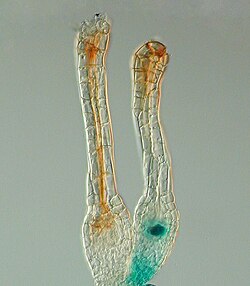
In the moss Physcomitrella patens, the Polycomb protein FIE is expressed in unfertilized egg cells but is inactivated immediately after fertilization.
Other Biological Examples
In Drosophila (fruit flies), oocytes are supported by nurse cells. These large polyploid cells synthesize and transfer essential RNA, proteins, and organelles to the oocyte before undergoing programmed cell death (apoptosis). For every oocyte produced, approximately 15 nurse cells die.
Summary of Egg Cell Characteristics
| Organism Type | Term for Female Gamete | Fertilization Location | Nutritional Source |
|---|---|---|---|
| Humans/Mammals | Ovum | Internal | Minimal yolk; maternal support |
| Birds/Reptiles | Ovum | Internal | Extensive nutritive yolk |
| Fish/Amphibians | Ovum/Oosphere | Often External | Yolk within egg |
| Land Plants | Egg Cell | Internal (Archegonia/Ovule) | Gametophyte tissues |
| Algae/Fungi | Oosphere | Variable | Variable |
Frequently Asked Questions
What is the difference between an ovum and an oocyte?
An oocyte is an immature egg cell that is still undergoing development (oogenesis), whereas an ovum is a mature female gamete ready for fertilization.
How large is a human egg cell?
The human ovum is approximately 120 μm in diameter, making it one of the largest cells in the human body and visible to the naked eye.
Do women produce new egg cells throughout their lives?
Traditionally, it was believed that females are born with a finite number of oocytes. However, recent studies since 2004 suggest the possible existence of ovarian stem cells, though this remains an active area of research.
What happens to the egg cell after fertilization?
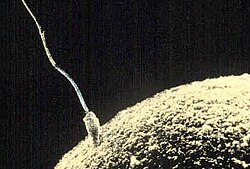
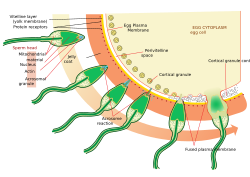
Once the sperm and egg fuse, they form a diploid cell called a zygote, which then begins rapid cell division to grow into an embryo.
What is the role of nurse cells in Drosophila?
Nurse cells are large cells that provide the oocyte with necessary proteins, RNA, and organelles. They undergo apoptosis (programmed cell death) once their transfer of materials is complete.