Spaceports and Cosmodromes: The Gateways to the Cosmos
Just as seaports facilitate maritime trade and airports enable global aviation, spaceports and cosmodromes serve as the essential infrastructure for humanity's journey into the stars. While the terms are often used interchangeably, a cosmodrome traditionally refers to a site capable of launching spacecraft into Earth's orbit or on interplanetary trajectories. In contrast, the term "spaceport" is increasingly applied to facilities designed for sub-orbital commercial spaceflight, as well as future lunar bases and space stations envisioned as nodes for interplanetary travel.
A rocket launch site is a broader term encompassing any facility from which rockets are sent upward. These sites typically feature one or more launch pads and are surrounded by a rocket range—a safety buffer area covering the expected flight path and potential debris landing zones. Modern facilities also incorporate tracking stations to monitor every stage of a mission's progress.
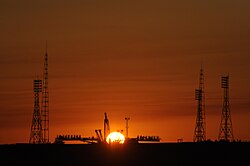
Key Facts
- Cosmodromes are specialized sites for orbital and interplanetary launches.
- Spaceports often refer to commercial or sub-orbital flight facilities.
- The Baikonur Cosmodrome achieved the first orbital flight (Sputnik 1) and the first human spaceflight (Yuri Gagarin).
- Starbase in Texas is the first spaceport to be officially incorporated as a municipality.
- Launching near the equator maximizes the benefit of Earth's rotational speed for orbital missions.
The Evolution of Launch Facilities
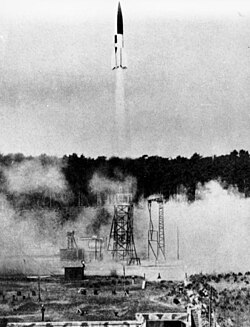
The history of spaceflight began with the V-2 rockets launched from Peenemünde, Germany, in 1944. Following World War II, many of these rockets were moved to White Sands for testing, with several successfully reaching altitudes between 100 km and 213 km.
The Soviet Union revolutionized space access with the Baikonur Cosmodrome in Kazakhstan. Originally a secret military range, it became the site of historic milestones, including the launch of Sputnik 1 in 1957 and Yuri Gagarin's historic flight in 1961. The specific launch complex used for Gagarin, known as Gagarin's Start (Site 1), remains a site of immense symbolic importance.
The Rise of Private Aerospace Hubs
In recent decades, the industry has shifted from purely government-run complexes to multi-functional hubs driven by private enterprises like SpaceX, Blue Origin, and Virgin Galactic. A landmark example is Starbase in Boca Chica, Texas. Operated by SpaceX, this facility serves as the primary development and launch site for the Starship spacecraft. In a historic move in May 2025, Starbase was incorporated as a municipality, becoming the first spaceport to function as its own city, supporting both industrial operations and a residential community.
The commercial sector also pioneered different launch methods. In 2004, the Mojave Air and Space Port in California hosted the first privately funded, suborbital human spaceflight using SpaceShipOne, which was launched horizontally from a carrier airplane.
Strategic Locations and Orbital Mechanics
The geography of a spaceport is not arbitrary; it is dictated by physics. To reach satellite orbits most efficiently, rockets are ideally launched from locations near the equator in an easterly direction. This method leverages the Earth's rotational speed—approximately 465 m/s at the equator—to provide an extra boost. While this is ideal for geostationary orbits, it is less critical for polar or Molniya orbits.
For sub-orbital tourist flights, developers often prioritize existing ground infrastructure, such as runways, and consider the visual experience of the local landscape from the edge of space (approximately 100 km altitude).
Global Launch Infrastructure Summary
| Spaceport | Location | Notable Achievement | Primary Era/Years |
|---|---|---|---|
| Baikonur Cosmodrome | Kazakhstan | First orbital and human flight | 1957–Present |
| Kennedy Space Center | USA (Florida) | First lunar landing (Apollo 11) | 1967–Present |
| Jiuquan Satellite Launch Center | China | First Chinese human spaceflight | 2003–Present |
| Mojave Air and Space Port | USA (California) | First private suborbital flight | 2004–Present |
The Future: Interplanetary Spaceports
The concept of the spaceport is expanding beyond Earth. The OASIS (Operations And Service Infrastructure for Space) project suggests a phased expansion of spaceports throughout the solar system:
- Phase 1: A "Node 1" spaceport in Low Earth Orbit (LEO) to provide space tug services.
- Phase 2: A "Node 2" spaceport on the lunar surface to facilitate lunar ice mining and propellant delivery.
- Phase 3: A "Node 3" spaceport on the Martian moon Phobos to support Mars landings and return trips to Earth.
These future hubs could provide essential services such as in-space assembly, spacecraft repair, communications relay, and propellant refueling, drastically reducing the cost of deep-space exploration.
Frequently Asked Questions
What is the difference between a spaceport and a cosmodrome?
A cosmodrome typically refers to a site designed for high-altitude orbital or interplanetary launches, whereas a spaceport is a broader term often used for commercial, sub-orbital, or tourist-oriented facilities.
Why are many spaceports located near the equator?
Launching near the equator in an easterly direction allows a rocket to utilize the Earth's rotational speed, which provides a significant boost in velocity, making it easier to reach orbit.
Can a spaceport be a city?
Yes. SpaceX's Starbase in Texas became the first spaceport to be officially incorporated as a municipality in May 2025, serving as both an industrial hub and a residential community.
What is a rocket range?
A rocket range is a safety buffer zone surrounding a launch pad. It includes the airspace the rocket will traverse and the areas where components might land in the event of a malfunction.
How do sub-orbital launches differ from orbital launches?
Orbital launches involve reaching speeds high enough to stay in Earth's orbit, while sub-orbital launches reach high altitudes (such as the 100 km Kármán line) but do not achieve the velocity required to remain in orbit.