Buran: The Soviet Union's Ambitious Reusable Space Shuttle Program
In the high-stakes era of the Cold War space race, the Soviet Union developed one of the most sophisticated aerospace systems ever conceived: the Buran. Designed as a reusable orbital spacecraft, the Buran program represented a massive leap in engineering, aimed at achieving crewed orbital flight and reentry capabilities. While often compared to the American Space Shuttle, the Buran-Energia system possessed unique characteristics and technical goals that set it apart in the history of space exploration.
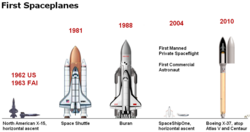
The Buran-Energia System
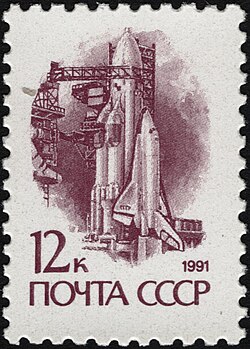
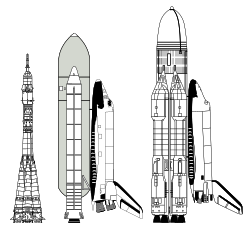
The Buran program was not just about the orbiter itself, but the entire launch architecture. Unlike the US Space Shuttle, which utilized its own engines for much of its ascent, the Buran was designed to be launched by the Energia, a heavy-lift carrier rocket. This separation of the orbiter from the primary propulsion system offered significant strategic advantages in terms of payload flexibility.
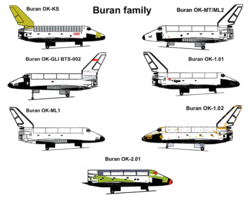
The Buran-class orbiter was designed with a crew capacity of up to 10 cosmonauts. Its primary mission objectives included crewed orbital flight, complex docking maneuvers, and atmospheric reentry. To prepare for these missions, the Soviet Union utilized various test articles, including the OK-GLI, an aerodynamic analogue used for atmospheric test flights.
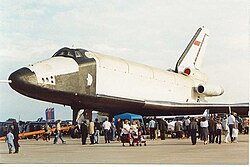
Atmospheric Testing and Flight Preparation
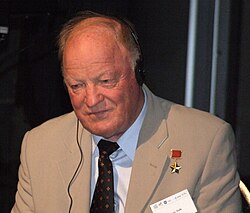
Before reaching orbit, the technology underwent rigorous testing. The OK-GLI served as a critical tool, equipped with extra jet engines to facilitate takeoff and test the flight characteristics of the spaceplane within the atmosphere. Test pilots, such as Igor Petrovich Volk, played a vital role in evaluating these aerodynamic models to ensure the safety of future orbital missions.
The Historic 1988 Orbital Flight
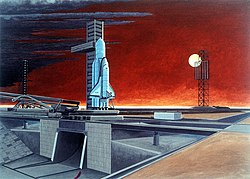
The pinnacle of the program occurred on 15 November 1988. At 03:00 UTC, the Buran orbiter (designated 1K1) lifted off from pad 110/37 at the Baikonur Cosmodrome, carried by the Energia rocket. This mission was a landmark achievement: it was a fully automated, uncrewed flight that successfully completed an orbital mission and returned to Earth.
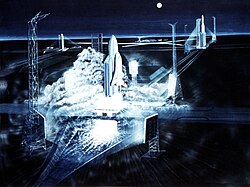
During this flight, the life support systems were not installed, and the Command Compartment's CRT displays remained inactive, as the mission was strictly uncrewed. Despite these limitations, the flight lasted 3 hours, 25 minutes, and 22 seconds, proving that the Soviet Union had mastered the complex task of automated orbital reentry.
Planned Missions and the Program's End
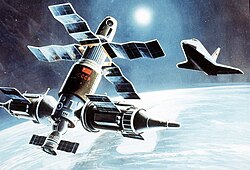
The success of the 1988 flight sparked plans for an even more ambitious future. One proposed mission, known as Ptichka, involved docking with the Mir space station. Other plans for the 2K orbiter included automatic docking with the Mir 'Kristall' module, followed by a crew transfer from a Soyuz TM-101 spacecraft to the orbiter for onboard work.
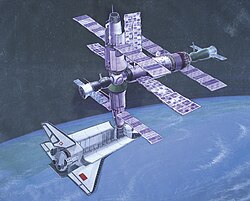
However, these ambitions were cut short. Following the first flight, the program faced severe challenges. The combination of a lack of funding and the shifting political landscape of the Soviet Union led to the program's suspension and eventual cancellation in 1993. While several orbiters were in various stages of completion—such as the 2K (95–97% complete) and the 3K (30–50% complete)—they were never finished or flown.
Key Facts
- Program Duration: 1976–1993
- First Flight: 10 November 1985 (GLI-1 atmospheric test)
- Only Orbital Flight: 15 November 1988 (1K1 uncrewed mission)
- Launch Vehicle: Energia heavy-lift rocket
- Launch Site: Baikonur Cosmodrome, Pad 110/37
- Estimated Cost: Rbl 17.8 billion (1990 value)
Mission Summary Table
| Mission | Launch Date | Shuttle | Crew | Duration | Landing Site |
|---|---|---|---|---|---|
| 1K1 | 15 November 1988 | Buran | 0 | 3h 25m 22s | Baikonur |
Frequently Asked Questions
Was the Buran ever a crewed spacecraft?
While the Buran-class orbiter was designed to carry up to 10 cosmonauts for crewed orbital flights, its only actual flight in 1988 was an uncrewed mission.
How did Buran differ from the US Space Shuttle?
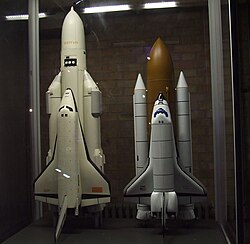
A primary difference was the launch architecture; Buran was designed to be launched by the Energia rocket, allowing the orbiter to be independent of the main propulsion system, whereas the US Space Shuttle was more integrated with its boosters.
Why was the Buran program cancelled?
The program was suspended and eventually cancelled due to a lack of available funds and the political instability occurring within the Soviet Union during the early 1990s.
What was the purpose of the OK-GLI?
The OK-GLI was an atmospheric test article (an aerodynamic analogue) used to test the flight characteristics and handling of the spaceplane within the Earth's atmosphere before attempting orbital flights.
Where is the Buran orbiter today?
Various test articles and components of the Buran program are preserved in museums and display sites across Russia and Kazakhstan, including the Gagarin Museum and the Technik Museum Speyer.