IXV: Europe's Pioneering Lifting Body and the Path to Space Rider
On February 11, 2015, the European Space Agency (ESA) achieved a significant milestone in aerospace engineering with the successful suborbital flight of the Intermediate eXperimental Vehicle (IXV). This mission marked the first time a lifting body—a spacecraft designed to generate lift from its shape rather than traditional wings—successfully performed a full atmospheric reentry from orbital speeds.
By testing this unique configuration, ESA aimed to bridge the gap between highly controllable but expensive winged spaceplanes and simpler, less controllable capsules. The IXV mission provided critical data on aerodynamics, thermal protection, and guidance systems necessary for the future of reusable space transportation.
Key Facts
- Mission Type: Technology demonstration
- Spacecraft Type: Lifting body
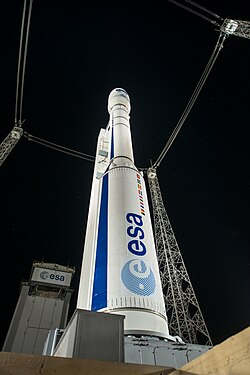
- Launch Vehicle: Vega rocket
- Launch Date: 11 February 2015
- Max Altitude: 412 km
- Landing Method: Splashdown in the Pacific Ocean
- Primary Goal: Testing atmospheric reentry technologies
The Development of the IXV Project
The roots of the IXV can be traced back to the 1980s and 1990s, an era defined by international interest in reusable spacecraft like the American Space Shuttle and the Soviet Buran. While European efforts like the Hermes spaceplane were eventually terminated in favor of partnerships using the Soyuz spacecraft, the drive for independent European reentry technology remained.
In 2005, the IXV project was formally initiated under the Italian PRIDE programme (Programme for Reusable In-orbit Demonstrator in Europe). Supported by 11 ESA Member States, with Italy serving as the principal financial backer, the project was managed by the Italian Space Agency (ASI) and the Italian Aerospace Research Centre. The primary industrial contractor was Next Generation Launcher Prime SpA (NGLP), a joint venture between Astrium and Finmeccanica.
Design and Testing Phases
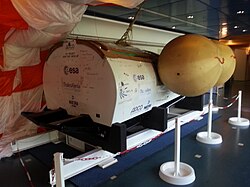
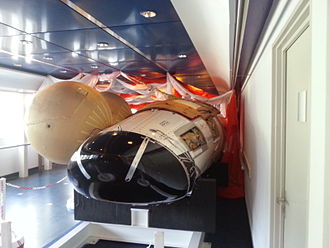
The IXV design drew heavily from previous research, specifically the Atmospheric Reentry Demonstrator (ARD) flown in 1998. Engineers opted for a slender lifting body configuration to balance complexity and performance. To ensure mission success, the vehicle underwent rigorous testing, including a water-landing validation drop-test in Sardinia in 2013, which tested flotation balloons and parachute systems.
The Successful 2015 Flight Mission
The IXV's maiden flight took place on 11 February 2015, launched via a Vega rocket from the Guiana Space Centre. After separating from the launch vehicle at an altitude of 333 km, the IXV ascended to a peak apogee of 412 km.
The reentry phase began at an altitude of 120 km, with the vehicle traveling at a staggering speed of 7.5 km/s. As it glided through the atmosphere, the IXV covered a distance of over 7,300 km. To conclude the mission, parachutes were deployed to slow the descent, leading to a successful splashdown in the Pacific Ocean, where the vehicle was recovered by the ship Nos Aries.
Technical Specifications
| Parameter | Value |
|---|---|
| Length | 5 m |
| Wingspan | 2.2 m |
| Height | 1.5 m |
| Launch Mass | 1,800 kg |
| Maximum Speed | 27,720 km/h |
| Lift-to-drag Ratio | 0.7 |
Evolution into Space Rider
The success of the IXV paved the way for the Space Rider, a commercialized orbital vehicle. While the IXV was a technology demonstrator, Space Rider is designed as a mini-shuttle capable of carrying payloads to orbit and returning them to Earth.
Space Rider will utilize the Vega-C rocket's 4th stage (AVUM) as a service module to provide power, communication, and maneuvering. This transition represents a shift toward making spaceplane technology commercially available, with projected costs of approximately $40,000 per kg of payload. The first flight of the Space Rider is currently scheduled for 2028.
Frequently Asked Questions
What is a lifting body?
A lifting body is a type of spacecraft design that generates aerodynamic lift from its actual body shape rather than using separate wings. This allows for a more compact design during reentry.
How did the IXV land?
The IXV performed a splashdown landing. After gliding through the atmosphere, it deployed parachutes to slow its descent before landing on the surface of the Pacific Ocean.
What was the main purpose of the IXV mission?
The mission was a technology demonstration intended to test the feasibility of using a lifting body for atmospheric reentry, specifically focusing on aerodynamics, thermal management, and navigation.
How does Space Rider differ from the IXV?
While the IXV was an experimental demonstrator, Space Rider is a commercialized orbital vehicle designed to carry payloads, stay in orbit for months, and eventually land on a runway using landing gear or a parafoil.
Who manufactured the IXV?
The primary manufacturer for the IXV was Thales Alenia Space.