Project Mercury: The Dawn of American Human Spaceflight
Project Mercury was the United States' first ambitious leap into human spaceflight. Launched by NASA between 1958 and 1963, the program was designed to determine if humans could survive and function in the harsh environment of space and to develop the necessary technology to achieve crewed orbital flight. This pioneering effort laid the critical groundwork for all subsequent American lunar and deep-space missions.
The program operated on a massive scale, costing approximately $277 million in 1965 (roughly $2.83 billion when adjusted for inflation). From its inception, the project focused on a rigorous progression of testing, moving from uncrewed flights and animal tests to suborbital hops and, eventually, full orbits of the Earth.
Key Facts
- Duration: 1958–1963.
- Primary Goal: Achieve crewed orbital flight.
- The Mercury Seven: The original group of seven selected astronauts.
- First American in Space: Alan Shepard (suborbital, May 5, 1961).
- First American to Orbit Earth: John Glenn (February 20, 1962).
- Mission Record: 11 successes, 3 failures, and 1 partial failure.
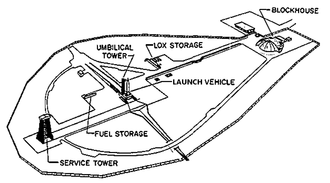
- Launch Sites: Cape Canaveral and Wallops Island.
The Spacecraft and Technology
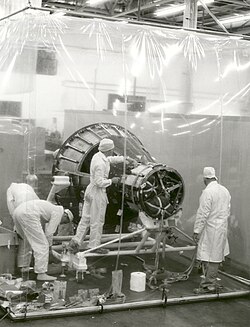
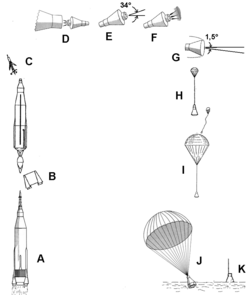
The heart of the program was the Mercury capsule, a compact vessel designed to protect a single pilot during the extreme heat of reentry. To ensure the pilot's safety, NASA developed a Launch Escape System, which could pull the capsule away from the rocket in the event of a launch failure.
The capsule featured a retropack—a set of retrorockets used to slow the craft down for reentry—and a landing skirt (or bag) that inflated upon impact to act as an airbag, cushioning the landing.
Launch Vehicles
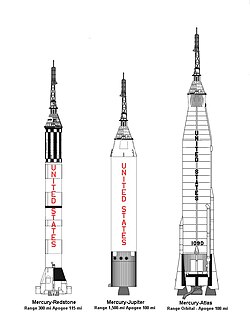
Depending on the mission goal, NASA utilized different rockets. The Mercury-Redstone was used for shorter, suborbital flights, while the more powerful Atlas LV-3B was required to reach the velocities necessary for orbital insertion.
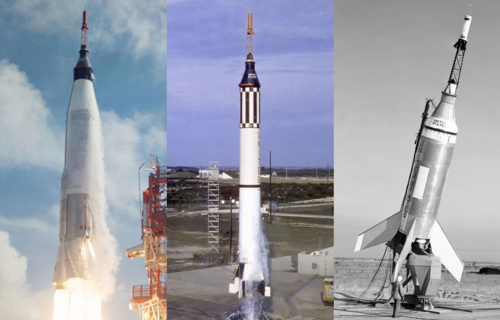
Other specialized vehicles included the Little Joe and Big Joe, which were primarily used for uncrewed tests of the escape system and spacecraft integrity.
The Mercury Seven Astronauts
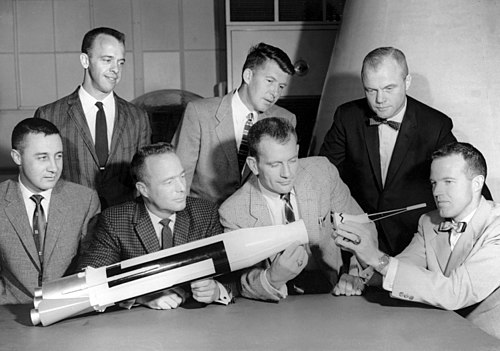
On April 9, 1959, NASA announced the selection of seven military test pilots, who became national icons known as the Mercury Seven. These men underwent grueling training, including G-force endurance, weightlessness simulations in C-131 aircraft, and egress training at Langley.
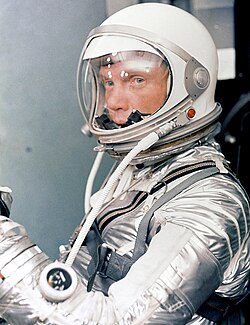
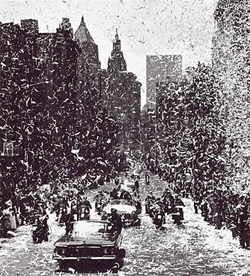
Among them, John Glenn became a household name on February 20, 1962, aboard Friendship 7. Despite issues with the automatic control system, Glenn manually controlled the spacecraft's attitude to complete the first American orbit. He later served in the US Senate and returned to space in 1998 aboard STS-95.
Mission Profiles and Execution
Suborbital vs. Orbital Flights
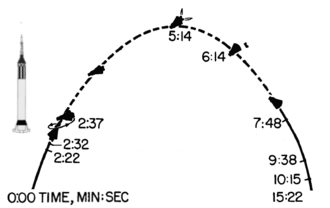
Suborbital missions, such as those flown by Alan Shepard and Virgil Grissom, followed a ballistic arc: launching, reaching a peak altitude (apogee), and returning to Earth without completing a full circle around the planet.
Orbital missions required significantly higher velocities (over 17,000 mph) to maintain a stable path around the Earth. These missions lasted much longer, ranging from a few hours to over 32 hours in the case of Gordon Cooper's Faith 7 mission.
Ground Control and Recovery
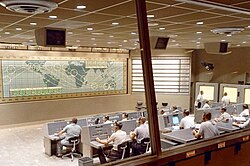
Operations were managed from the Mercury Control Center at Cape Canaveral, where engineers monitored every second of the flight. Once the capsule descended via a drogue and main parachute, recovery teams located the spacecraft at various landing sites across the ocean.

Program Summary
The following table summarizes the crewed missions of Project Mercury:
| Mission | Pilot | Launch Date | Type | Orbits | Max Velocity |
|---|---|---|---|---|---|
| MR-3 (Freedom 7) | Alan Shepard | May 5, 1961 | Suborbital | 0 | 5,134 mph |
| MR-4 (Liberty Bell 7) | Virgil Grissom | July 21, 1961 | Suborbital | 0 | 5,168 mph |
| MA-6 (Friendship 7) | John Glenn | Feb 20, 1962 | Orbital | 3 | 17,544 mph |
| MA-7 (Aurora 7) | Scott Carpenter | May 24, 1962 | Orbital | 3 | 17,549 mph |
| MA-8 (Sigma 7) | Wally Schirra | Oct 3, 1962 | Orbital | 6 | 17,558 mph |
| MA-9 (Faith 7) | Gordon Cooper | May 15, 1963 | Orbital | 22 | 17,547 mph |
Frequently Asked Questions
Who were the Mercury Seven?
The Mercury Seven were a group of seven military test pilots selected by NASA in 1959 to be the first Americans in space: Scott Carpenter, Gordon Cooper, Deke Slayton, Virgil Grissom, Wally Schirra, Alan Shepard, and John Glenn.
What is the difference between a suborbital and orbital flight?
A suborbital flight reaches the edge of space but does not have enough velocity to stay in orbit, resulting in a curved path back to Earth. An orbital flight reaches a velocity (approximately 17,500 mph) that allows the spacecraft to continuously fall around the Earth in a circular or elliptical path.
What happened during John Glenn's orbit?
During the Mercury-Atlas 6 mission, the spacecraft Friendship 7 experienced issues with its automatic control system. John Glenn successfully managed the situation by manually controlling the spacecraft's attitude to ensure a safe return.
Which rockets were used in Project Mercury?
NASA used the Mercury-Redstone for suborbital flights and the Atlas LV-3B for orbital flights. Additionally, Little Joe and Big Joe rockets were used for uncrewed testing of the launch escape system and capsule design.
How did the Mercury capsule land?
The capsule used a two-stage parachute system (drogue and main) to slow its descent. Upon hitting the surface, an inflatable landing skirt acted as an airbag to absorb the impact.