The Science and History of Lifting Bodies: Flight Without Wings
Imagine an aircraft that can soar through the atmosphere and re-enter from space without the need for traditional wings. This is the core concept of the lifting body, a specialized aircraft or spacecraft configuration where the fuselage—the main body of the vehicle—is shaped to produce lift. While most planes rely on wings to stay airborne, a lifting body turns the entire vehicle into a wing.
To understand this, it is helpful to contrast it with a flying wing. A flying wing is essentially a wing with little to no conventional fuselage. In contrast, a lifting body is a fuselage with little or no conventional wing. While flying wings are designed to maximize cruise efficiency at subsonic speeds (speeds slower than the speed of sound), lifting bodies are engineered to minimize drag and structural weight during subsonic, supersonic, and hypersonic flight (speeds exceeding five times the speed of sound), as well as during the intense heat of spacecraft re-entry.
The Evolution of Lifting Body Research
The concept of the lifting body was first envisioned as early as 1917, when Roy Scroggs patented an aircraft featuring a thick fuselage and a delta-wing planform. However, because lifting bodies are inefficient at low airspeeds, they did not enter mainstream aviation design for decades.
Interest surged in the 1960s as engineers sought ways to return crewed spacecraft from orbit. Early capsules from the Mercury, Gemini, and Apollo programs had very limited control over their landing locations. A steerable vehicle could significantly expand the landing envelope, but traditional wings would struggle to survive the thermal and dynamic stresses of hypersonic re-entry. The solution was to design a body that could generate its own lift.
NASA began refining this concept in 1962 under R. Dale Reed at the Armstrong Flight Research Center. The first full-scale model, the M2-F1, was an unpowered wooden craft nicknamed the "Flying Bathtub." It was initially tested by being towed across a dry lakebed at Edwards Air Force Base by a modified Pontiac Catalina, and later released from a C-47 aircraft. To improve its landing capabilities, a small rocket motor was eventually added.
By 1963, NASA transitioned to heavier, rocket-powered vehicles launched from a NB-52B bomber. These included the M2-F2, M2-F3, and the Northrop HL-10. The HL-10 was specifically designed to address airflow separation—a phenomenon where the air detaches from the surface of the vehicle—by enlarging the center vertical stabilizer and angling the side stabilizers outward.
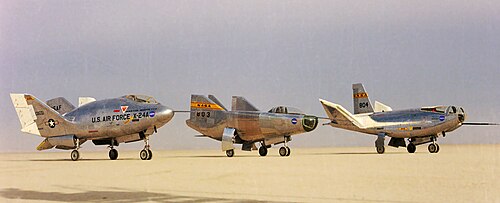
The United States was not alone in this research. Between 1965 and 1978, the Soviet Union developed the Mikoyan-Gurevich MiG-105 (also known as the EPOS), an experimental passenger orbital aircraft. Later, the European Space Agency (ESA) validated the concept with the Intermediate eXperimental Vehicle (IXV), which performed the first successful re-entry of a lifting body spacecraft in February 2015.
Aerospace Applications and the Space Shuttle
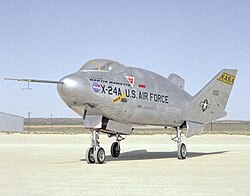
Despite their potential, lifting bodies present complex challenges regarding internal configuration, structural integrity, and flight control. These difficulties led NASA to choose a delta-wing design for the Space Shuttle instead of a pure lifting body. The delta wing provided a better landing envelope and more flexibility in choosing landing sites, which is critical when dealing with unpredictable weather and the need for extremely long runways.
However, the data gathered from lifting body tests—specifically high-speed landing approaches with steep descent angles—was instrumental in modeling the Space Shuttle's flight and landing profiles. Other aerospace programs have continued to explore the design, including the Lockheed Martin X-33, the X-38, and the joint Russian-European Kliper spacecraft. For many missions, the lifting body offers the ideal trade-off between maneuverability and thermodynamics.
Modern Systems and Commercial Spaceflight
The lifting body concept remains relevant in the 21st century. The Dream Chaser, developed by Sierra Nevada Corporation (SNC), is a VTHL (Vertical-Takeoff, Horizontal-Landing) spaceplane. Designed to carry up to seven people to low Earth orbit, it is currently utilized as a resupply vehicle for the International Space Station, launching via a Vulcan Centaur rocket and landing on conventional runways.
Another notable proposal was the Prometheus by Orbital Sciences in 2010. This "blended lifting-body" vehicle was intended to be a commercial option for carrying crews of four to six astronauts. Although the project was wound down in 2011 after not receiving a NASA CCDev phase 2 award, it demonstrated the ongoing industry interest in compact, reusable spaceplanes.
The Principle of Body Lift in Conventional Aircraft
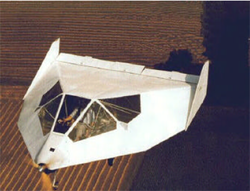
While pure lifting bodies are rare, many conventional aircraft utilize "body lift," where the fuselage contributes to the total lift generated by the vehicle.
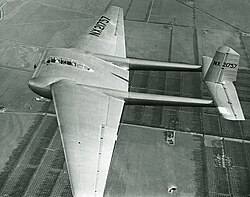
- Early Designs: In the 1930s, Bellanca Aircraft Company used airfoil-shaped fuselages and widened wing struts to generate lift. Similarly, the Gee Bee R-1 Super Sportster used its fuselage to maintain lift during high-banked pylon turns during races.
- Transport Aircraft: Vincent Burnelli developed several aircraft between the 1920s and 1950s focusing on fuselage lift. The Short SC.7 Skyvan also generates a substantial amount of lift from its body, nearly equaling the lift produced by one of its wings.
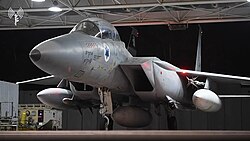
- Military Fighters: The F-15 Eagle features a wide fuselage that is highly efficient at generating lift.
The efficiency of the F-15's body lift was famously proven in 1983 during a training exercise in the Negev desert. An Israeli F-15 collided with a Skyhawk, resulting in the complete loss of one wing. Despite this, the pilot was able to maintain control and land the aircraft safely using a combination of body lift and high engine thrust.
Flight Test Data and Pilot Contributions
The development of lifting bodies required immense bravery from test pilots. Between the early 1960s and mid-1970s, a series of vehicles were tested at the Armstrong Flight Research Center to prove the concept's viability.
| Pilot | M2-F1 | M2-F2 | HL-10 | HL-10 mod | M2-F3 | X-24A | X-24B | Total |
|---|---|---|---|---|---|---|---|---|
| Milton O. Thompson | 45 | 5 | - | - | - | - | - | 50 |
| John A. Manke | - | 10 | 4 | - | - | 12 | 16 | 42 |
| William H. Dana | 1 | - | - | 9 | - | 2 | 19 | 31 |
| Jerauld R. Gentry | 2 | 5 | - | - | 9 | 1 | 13 | 30 |
| Bruce Peterson | 17 | 3 | 1 | - | - | - | - | 21 |
| TOTAL | 80 | 16 | 37 | 36 | 27 | 28 | 36 | 224 |
Lifting Bodies in Popular Culture
The striking, wingless appearance of these vehicles has made them favorites in science fiction. They have appeared in the movie Marooned, the TV series Farscape (as the Farscape-1), and the animated Alien Planet. Gerry Anderson's UFO featured a craft visually similar to the M2-F2, while the game Buzz Aldrin's Race Into Space allows players to use a modified X-24A as a lunar spacecraft.
The 1970s show The Six Million Dollar Man used actual NASA footage in its opening sequence, including the separation of an HL-10 from its B-52 carrier. The show also featured footage of a M2-F2 crash caused by Dutch roll—an unstable oscillation of the aircraft's nose and wings—resulting from control instability and airflow separation.