HL-20 Personnel Launch System: NASA's Vision for a Low-Cost Space Taxi
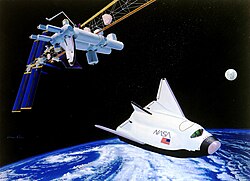
In the mid-1980s, as interest in routine access to space grew, NASA began investigating various Earth-to-orbit transportation systems. One of the most compelling concepts was the Personnel Launch System (PLS), featuring the HL-20 spaceplane. Designed as a compact, efficient complement to the Space Shuttle, the HL-20 was envisioned as a "space taxi" to transport crews and small amounts of cargo to and from low Earth orbit (LEO).
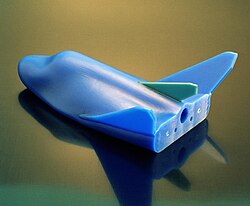
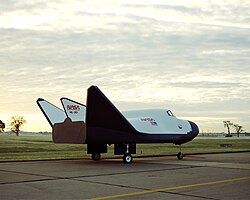
The HL-20 was a lifting body design—a type of spacecraft that uses its shape to generate lift during atmospheric re-entry rather than relying solely on wings. This concept was evolved from earlier lifting-body research, such as the HL-10, and was influenced by designs like the Soviet BOR-4. The goal was to create a vehicle that offered improved safety, lower operational costs, and the ability to land on conventional runways.
Key Facts
- Operator: NASA
- Design Type: Lifting-body crewed spaceplane
- Primary Mission: Crew transport to Space Station Freedom
- Landing Capability: Horizontal runway landings
- Status: Cancelled (No flight hardware built)
- Legacy: Directly influenced the Dream Chaser spacecraft
The PLS Mission Concept
The primary objective of the PLS was to provide assured crewed access to space. During the era of the planned Space Station Freedom, NASA recognized the need for an alternative transportation method should the Space Shuttle become unavailable. By focusing on personnel delivery rather than large payload capacity, the HL-20 could be smaller, more compact, and more cost-effective.
Core Advantages of the HL-20
The design focused on three main pillars:
- Enhanced Crew Safety: By removing the heavy requirements of a large payload bay and main propulsion engines, the vehicle became more manageable. This allowed for the design of robust abort capabilities to recover the crew during critical launch or return phases.
- Affordability: The use of existing technologies and a simplified subsystem approach aimed to keep development and operational costs low.
- Operational Efficiency: The design adopted an aircraft-like maintenance philosophy, aiming for turnaround times of approximately 43 days.
Technical Specifications and Design
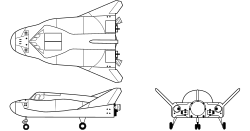
The HL-20 was significantly smaller than the Space Shuttle Orbiter. While the Shuttle was a massive vehicle designed for heavy lifting, the HL-20 was a streamlined craft intended for efficiency. Its design emphasized easy maintenance, utilizing large exterior access panels and replacing complex hydraulic systems with all-electric controls.
| Feature | HL-20 Concept | Space Shuttle Orbiter |
|---|---|---|
| Empty Weight | 23,000 lbs (10 t) | 185,000 lbs (84 t) |
| Primary Function | Crew/Small Cargo Transport | Heavy Payload/Crew Transport |
| Landing Style | Horizontal Runway | Horizontal Runway |
| Maintenance Focus | High (Aircraft-style) | Complex/High Man-hours |
Lifting-Body Advantages
Choosing a lifting-body shape provided significant advantages during re-entry. The shape allowed for higher lift characteristics, meaning the spacecraft could reach a wider range of landing sites. Furthermore, the deceleration loading during entry was projected to be limited to approximately 1.5 G, a critical factor for the safety of crew members who might be injured or deconditioned during long-duration space station stays.
Mission Profile and Safety Features
A typical mission would involve the HL-20 being launched atop an expendable launch vehicle. After reaching orbit, the craft would rendezvous and dock with a space station, such as Space Station Freedom. Following crew exchanges, the HL-20 would descend and perform a horizontal landing on a conventional runway.
Safety was integrated into every aspect of the design. In the event of a launch vehicle emergency, the HL-20 was envisioned to use emergency escape rockets to push the capsule away from the booster. Once clear, three parachutes would deploy to facilitate a water splashdown, with inflatable flotation devices ensuring the hatches remained accessible for crew egress.
The Legacy of the HL-20
Although the HL-20 itself never flew, its design DNA lives on. The Dream Chaser spacecraft, developed by SpaceDev and later Sierra Nevada Corporation, is a direct descendant of the HL-20 lifting-body concept. While the crewed version of Dream Chaser was not selected for NASA's final commercial crew phase, the cargo version was selected for the Commercial Resupply Services 2 (CRS2) program.
Frequently Asked Questions
Did the HL-20 ever fly?
No. The HL-20 was a concept and an engineering research model. While full-scale mockups were built for human factors research, no flight hardware was ever produced.
What is a lifting body?
A lifting body is a spacecraft design where the body itself generates lift through its aerodynamic shape, rather than relying on traditional wings. This is particularly useful for re-entry vehicles.
How does the HL-20 differ from the Space Shuttle?
The HL-20 was much smaller, lighter, and lacked a large payload bay and main engines. It was designed for low-cost crew transport rather than heavy cargo delivery, and it utilized an aircraft-style maintenance approach to reduce costs.
What happened to the HL-20 project?
The project was cancelled, but its research was not lost. The design principles and lifting-body aerodynamics heavily influenced modern spacecraft like the Dream Chaser.
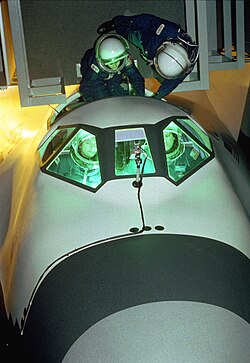
What was the purpose of the full-scale mockup?
The mockup, built by students from North Carolina State University and North Carolina A&T University, was used to study human factors, including how crews would enter and exit the vehicle, habitability, and visibility during docking.