Space Age History: From Sputnik to the New Era of Exploration
The Space Age represents one of the most ambitious chapters in human history, marking the period when humanity first broke the bonds of Earth's gravity to venture into the cosmos. This era encompasses the technological breakthroughs of the Space Race, the scientific rigor of deep-space exploration, and a profound cultural shift that reimagined the future of civilization.
Formally, the Space Age began on October 4, 1957, with the launch of Sputnik 1 and reached a symbolic conclusion in 1975 with the Apollo-Soyuz Test Project. However, the spirit of the age continues today through a new era of commercial competition and international cooperation.
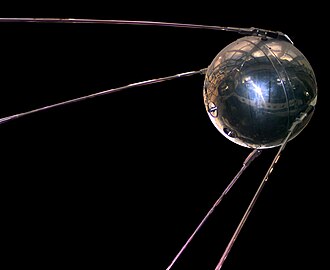
Key Facts
- Start Date: October 4, 1957 (Launch of Sputnik 1).
- The Space Race: A period of intense competition between the Soviet Union and the United States.
- Lunar Milestone: Apollo 11 achieved the first human moon landing on July 20, 1969.
- Modern Shift: Transition from government-only missions to the inclusion of private actors like SpaceX.
- Current Goal: The Artemis program aims to restore human capability to reach the Moon and eventually Mars.
The Dawn of Spaceflight and the Space Race
Before the official start of the Space Age, foundational developments in rocketry laid the groundwork. In June 1944, Germany's V-2 rocket became the first artificial object to cross the Kármán line (the recognized boundary between Earth's atmosphere and outer space). This was followed by the United States capturing the first pictures from space in 1946 and sending fruit flies into space in 1947.
The competition intensified between the Soviet Union and the United States, leading to a series of rapid "firsts." The Soviet Union took an early lead with Sputnik 1, the first artificial satellite, and Yuri Gagarin, the first human in space in 1961. The United States responded with the Apollo program, which saw a massive surge in resources; between 1961 and 1964, NASA's budget increased by nearly 500%, employing roughly 34,000 NASA staff and 375,000 contractors.

The Lunar Peak
The Space Race reached its zenith on July 20, 1969, when the Apollo 11 mission landed Neil Armstrong and Buzz Aldrin on the Moon. While the Soviet Union pursued its own lunar program, internal debates and the death of chief engineer Sergey Korolev in 1966 hindered their progress.
Diversification and Internationalization
While often viewed as a binary struggle between two superpowers, spaceflight diversified early on. By 1962, the first commercial satellite was launched, and by 1965, a third country achieved orbital spaceflight. The launch of Sputnik itself occurred during the International Geophysical Year of 1957, a period of international scientific exchange.
Over time, the focus shifted from competition to cooperation. This evolution is best exemplified by the International Space Station (ISS), governed by the Space Station Intergovernmental Agreement (IGA) signed on January 28, 1998.
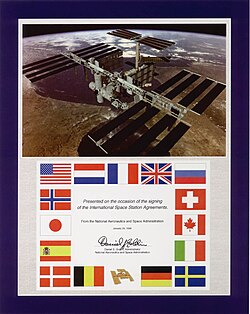
The New Space Competition: 2010s to Present
The landscape of space exploration changed significantly in 2011 when NASA permanently grounded the U.S. Space Shuttle fleet. This created a reliance on Russian spacecraft and the emergence of private companies. SpaceX, for instance, began transporting American astronauts to the ISS, introducing reusable rocket technology to reduce costs.
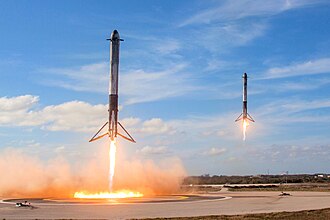
Today, the "New Space" era is characterized by the U.S. military's creation of the Space Force (December 20, 2019) and NASA's development of the Orion capsule. The Artemis program represents the next leap, with Artemis I successfully launching to restore lunar capabilities.
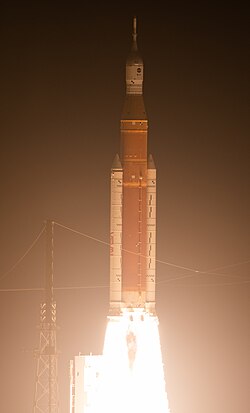
Chronology of Major Space Milestones
| Date | Milestone | Project/Participant | Country |
|---|---|---|---|
| June 20, 1944 | First object beyond Kármán line | V-2 rocket | Germany |
| Oct 4, 1957 | First artificial satellite | Sputnik 1 | Soviet Union |
| Apr 12, 1961 | First human in space | Yuri Gagarin (Vostok 1) | Soviet Union |
| July 20, 1969 | First humans on the Moon | Apollo 11 | United States |
| Nov 20, 1998 | Current operational space station | ISS | International |
| May 30, 2020 | First private crewed orbital flight | SpaceX Crew Dragon | United States |
| Oct 13, 2024 | First catch of a rocket booster | Starship Flight 5 | United States |
Cultural Impact of the Space Age
The fascination with space extended far beyond science, influencing global aesthetics and art. This was evident in Googie architecture and automotive design, such as the rocket-shaped tail lights of the 1959 Cadillac Coupe de Ville. Furniture designers like Eero Saarinen and Verner Panton integrated futuristic themes into their work.
The era also birthed new musical genres, including space age pop, space rock, and space music, reflecting the optimism and mystery of the cosmic frontier.
Frequently Asked Questions
When did the Space Age officially begin?
The Space Age began on October 4, 1957, with the Soviet Union's successful launch of Sputnik 1, the first artificial satellite.
What was the Kármán line?
The Kármán line is the boundary between Earth's atmosphere and outer space, first crossed by a German V-2 rocket on June 20, 1944.
How did the role of private companies change spaceflight?
Private companies like SpaceX have introduced commercial crewed flights and reusable rocket technology, reducing the cost of access to space and providing transport for NASA astronauts.
What is the goal of the Artemis program?
The Artemis program aims to restore American capability to land humans on the Moon and serve as a stepping stone for future crewed missions to Mars.
Who was the first human to travel into space?
Yuri Gagarin of the Soviet Union became the first human in space on April 12, 1961, aboard the Vostok 1 spacecraft.