Articles/Apollo Program: The Historic Journey to the Lunar Surface
Apollo programNASA lunar missionsMoon landing historySaturn V rocketApollo 11
Apollo Program: The Historic Journey to the Lunar Surface
Apollo Program: The Historic Journey to the Lunar Surface The Apollo program stands as one of the most ambitious scientific and engineering feats in human history. Orchestrated by NASA (t...
Apollo Program: The Historic Journey to the Lunar Surface
The Apollo program stands as one of the most ambitious scientific and engineering feats in human history. Orchestrated by NASA (the National Aeronautics and Space Administration), this United States-led initiative aimed to achieve the monumental goal of landing humans on the Moon and returning them safely to Earth. Spanning from 1961 to 1972, the program transformed our understanding of the cosmos and the Earth itself.
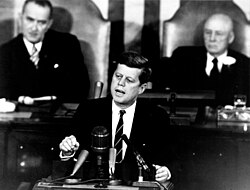
President Kennedy delivers his proposal to put a man on the Moon before a joint session of Congress, May 25, 1961.: President Kennedy delivers his proposal to put a man on the Moon before a joint session of Congress, May 25, 1961.
Key Facts
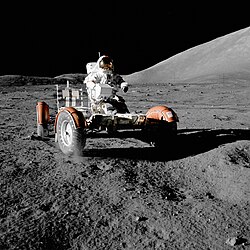
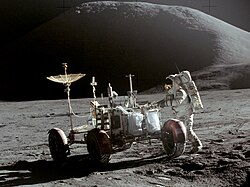
The Apollo 17 Lunar Roving Vehicle
Program Duration: 1961–1972
Primary Goal: Crewed lunar landings
Total Cost: $25.4 billion (1973 value), approximately $257 billion in 2020 dollars
Successful Missions: 32
Notable Failures: Apollo 1 and Apollo 13
First Crewed Flight: Apollo 7 (October 11, 1968)
Last Flight: Apollo 17 (December 7, 1972)
The Path to the Moon
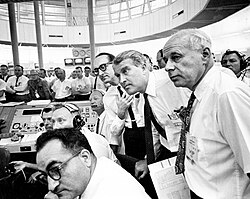
George Mueller, Wernher von Braun, and Eberhard Rees watch the AS-101 launch from the firing room.
The Apollo program was born out of intense political pressure and a drive for technological supremacy. Following President Kennedy's 1961 proposal, NASA underwent massive expansion to develop the necessary infrastructure, including the Manned Spacecraft Center and various launch operations centers.
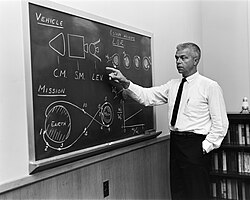
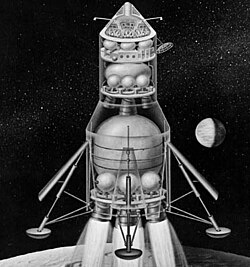
A critical component of the mission's success was determining the most efficient mission profile—the specific flight path and method used to reach the Moon. Engineers debated various configurations, such as Direct Ascent and Earth Orbit Rendezvous, before ultimately adopting the Lunar Orbit Rendezvous (LOR) concept, championed by John Houbolt. This method involved a specialized module descending to the surface while a command module remained in lunar orbit.
John Houbolt explaining the LOR concept: John Houbolt explaining the LOR concept
An early Apollo configuration for Direct Ascent and Earth Orbit Rendezvous, 1961: An early Apollo configuration for Direct Ascent and Earth Orbit Rendezvous, 1961
Spacecraft and Launch Vehicles
To transport astronauts through the vacuum of space, NASA developed a suite of sophisticated vehicles. The primary crewed spacecraft consisted of the Apollo Command and Service Module (CSM) and the Apollo Lunar Module (LM), the latter designed specifically to land on the lunar surface.
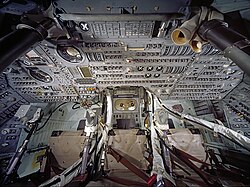
Original cockpit of the command module of Apollo 11 with three seats, photographed from above. It is located in the National Air and Space Museum; the very high resolution image was produced in 2007 by the Smithsonian Institution.: Original cockpit of the command module of Apollo 11 with three seats, photographed from above. It is located in the National Air and Space Museum; the very high resolution image was produced in 2007 by the Smithsonian Institution.
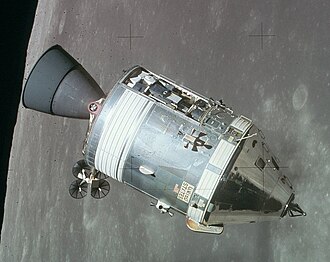
Apollo 15 CSM Endeavour in lunar orbit: Apollo 15 CSM Endeavour in lunar orbit
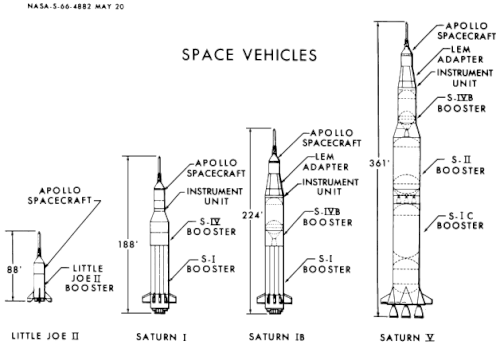
Launching these massive spacecraft required unprecedented power. The development of the Saturn V rocket provided the necessary thrust for lunar missions. Other vehicles in the development pipeline included the Little Joe II, Saturn I, and Saturn IB.
Four Apollo rocket assemblies, drawn to scale: Little Joe II, Saturn I, Saturn IB, and Saturn V: Four Apollo rocket assemblies, drawn to scale: Little Joe II, Saturn I, Saturn IB, and Saturn V
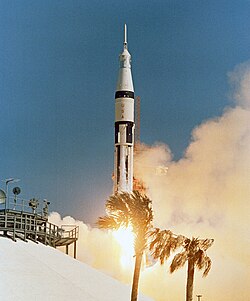
A Saturn IB rocket launches Apollo 7, 1968: A Saturn IB rocket launches Apollo 7, 1968
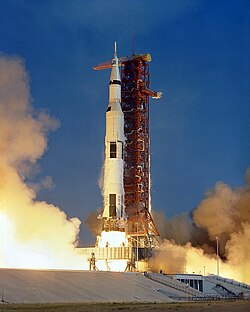
A Saturn V rocket launches Apollo 11, 1969: A Saturn V rocket launches Apollo 11, 1969
Development and Challenges
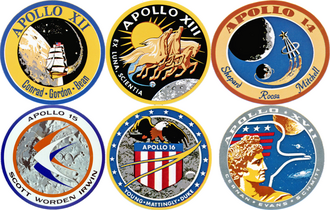
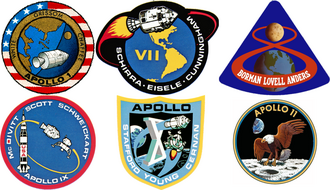
Apollo production crewed lunar landing mission patches. Click on a patch to read the main article about that mission.
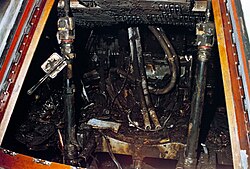
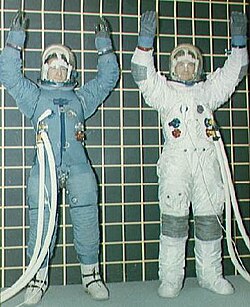
The road to the Moon was not without tragedy. The program faced significant setbacks, most notably the Apollo 1 fire, which resulted in the loss of the crew during a pre-launch test. This event led to critical redesigns of the spacecraft, including improvements to the Block II spacesuit and cabin safety protocols.
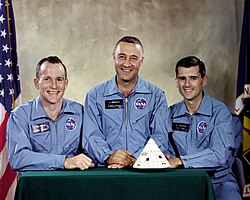
Apollo 1 crew: Ed White, command pilot Gus Grissom, and Roger Chaffee: Apollo 1 crew: Ed White, command pilot Gus Grissom, and Roger Chaffee
Charred Apollo 1 cabin interior: Charred Apollo 1 cabin interior
Block II spacesuit in January 1968, before (left) and after changes recommended after the Apollo 1 fire: Block II spacesuit in January 1968, before (left) and after changes recommended after the Apollo 1 fire
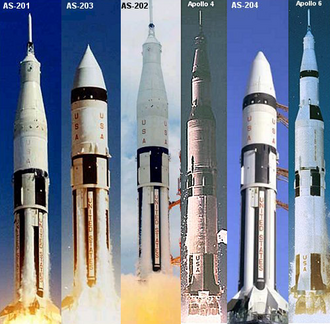
Following the fire, NASA conducted extensive uncrewed development missions to test the Saturn V and the Lunar Module. These tests paved the way for the first crewed flight, Apollo 7, which successfully tested the CSM systems in Earth orbit in October 1968.
Apollo uncrewed development mission launches. Click on a launch image to read the main article about each mission.: Apollo uncrewed development mission launches. Click on a launch image to read the main article about each mission.
Apollo crewed development mission patches. Click on a patch to read the main article about that mission.: Apollo crewed development mission patches. Click on a patch to read the main article about that mission.
Lunar Landings and Scientific Legacy
The program reached its zenith with the successful lunar landings. From the historic first steps of Apollo 11 to the final mission of Apollo 17, astronauts explored the lunar landscape, utilizing the Lunar Roving Vehicle (LRV) to traverse the terrain.
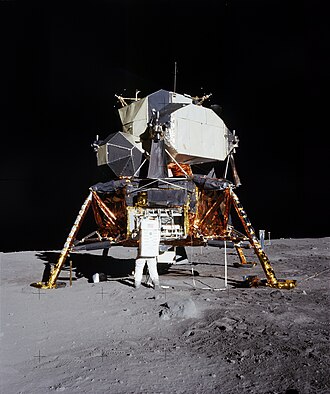
Apollo 11 Lunar Module Eagle (and Buzz Aldrin) on the Moon, photographed by Neil Armstrong: Apollo 11 Lunar Module Eagle (and Buzz Aldrin) on the Moon, photographed by Neil Armstrong
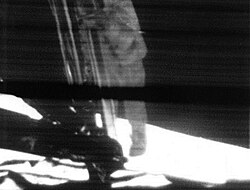
Neil Armstrong descends the LM's ladder in preparation for the first steps on the lunar surface, as televised live on July 20, 1969.: Neil Armstrong descends the LM's ladder in preparation for the first steps on the lunar surface, as televised live on July 20, 1969.
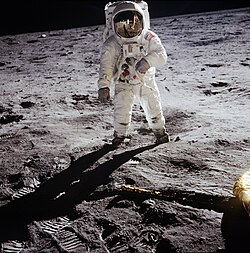
Buzz Aldrin (pictured) walked on the Moon with Neil Armstrong, on Apollo 11, July 20–21, 1969.: Buzz Aldrin (pictured) walked on the Moon with Neil Armstrong, on Apollo 11, July 20–21, 1969.
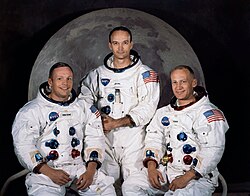
Apollo 11 crew, from left: Commander Neil Armstrong, Command Module Pilot Michael Collins, and Lunar Module Pilot Buzz Aldrin: Apollo 11 crew, from left: Commander Neil Armstrong, Command Module Pilot Michael Collins, and Lunar Module Pilot Buzz Aldrin
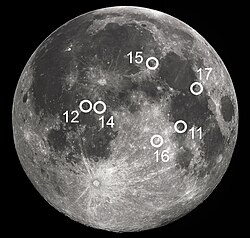
Apollo landings on the Moon, 1969–1972: Apollo landings on the Moon, 1969–1972
Lunar Roving Vehicle used on Apollos 15–17.: Lunar Roving Vehicle used on Apollos 15–17.
One of the most significant scientific achievements was the collection of lunar samples. These specimens, including the massive "Big Muley" sample from Apollo 16, provided invaluable data about the Moon's composition. In total, 382 kilograms of lunar material were returned to Earth.
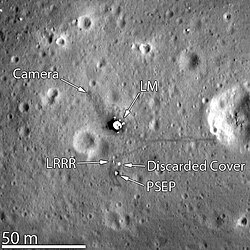
Tranquility Base, imaged in March 2012 by the Lunar Reconnaissance Orbiter: Tranquility Base, imaged in March 2012 by the Lunar Reconnaissance Orbiter
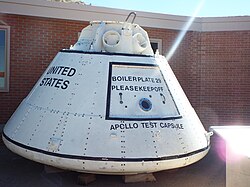
An Apollo boilerplate command module is on exhibit in the Meteor Crater Visitor Center in Winslow, Arizona.: An Apollo boilerplate command module is on exhibit in the Meteor Crater Visitor Center in Winslow, Arizona.
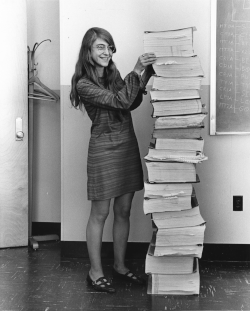
The legacy of Apollo extends beyond geology. The program drove advancements in navigation software—notably the work of Margaret Hamilton and her MIT team—and left an indelible mark on global culture, inspiring countless documentaries and films.
Margaret Hamilton standing next to the navigation software that she and her MIT team produced for the Apollo project: Margaret Hamilton standing next to the navigation software that she and her MIT team produced for the Apollo project
The Blue Marble photograph taken on December 7, 1972, during Apollo 17. "We went to explore the Moon, and in fact discovered the Earth." —Eugene Cernan: The Blue Marble photograph taken on December 7, 1972, during Apollo 17. "We went to explore the Moon, and in fact discovered the Earth." —Eugene Cernan
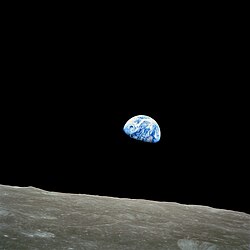
Earthrise, the iconic 1968 image from Apollo 8 taken by astronaut William Anders: Earthrise, the iconic 1968 image from Apollo 8 taken by astronaut William Anders
Program Summary Table
Apollo Program Overview
Category
Details
Organization
NASA
Primary Vehicles
Apollo CSM, Apollo LM
Primary Launch Vehicles
Saturn I, Saturn IB, Saturn V, Little Joe II
Success Rate
32 Successes, 2 Failures, 1 Partial Failure
Launch Sites
Kennedy Space Center, Cape Kennedy, White Sands
Frequently Asked Questions
What was the primary purpose of the Apollo program?
The primary purpose was to conduct crewed lunar landings and return astronauts safely to Earth.
How much did the Apollo program cost?
The program cost $25.4 billion in 1973 dollars, which is approximately $257 billion when adjusted for 2020 values.
Which Apollo missions were considered failures?
Apollo 1 and Apollo 13 are recorded as failures, while Apollo 6 is noted as a partial failure.
What was the largest lunar sample collected?
The largest sample collected during the program was sample 61016, known as "Big Muley," from the Apollo 16 mission.
What rockets were used to launch Apollo missions?
The program utilized the Little Joe II, Saturn I, Saturn IB, and the Saturn V launch vehicles.