Moon Landings: The History of Human and Robotic Lunar Arrivals
A lunar landing refers to the arrival of either a crewed or robotic spacecraft on the surface of the Moon. This monumental feat of engineering has evolved from early, high-risk impact attempts to sophisticated soft landings—maneuvers designed to touch down without significant damage—and eventually to human footsteps on the lunar dust. From the intense competition of the Cold War to the modern era of commercial and international lunar exploration, the history of reaching the Moon is a testament to human ingenuity.
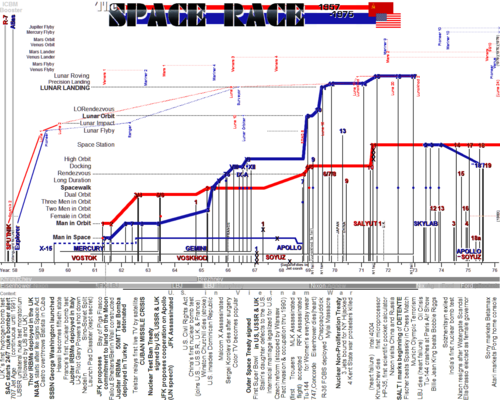
Key Facts
![A still frame from a video transmission, taken moments before Neil Armstrong became the first human to step onto the surface of the Moon, at 02:56 UTC on 21 July 1969. An estimated 500 million people worldwide watched this event, the largest television audience for a live broadcast at that time.[1][2]](/images/3b/19/3b19ccab845d7e28f65d10d01b41b9c83793edca6d005d6580e2a1e382cb25a3.jpg)
- First human-made object to touch the Moon: Luna 2 in 1959.
- First crewed Moon landing: Apollo 11 in 1969.
- Total crewed landings: Six successful missions conducted by the U.S. Apollo program between 1969 and 1972.
- First far side landing: China's Chang'e 4 in 2019.
- First soft landing: Soviet Luna 9 in 1966.
The Era of Uncrewed Exploration
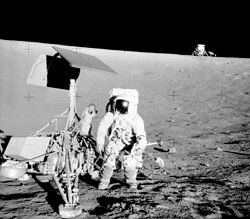
Before humans could walk on the Moon, robotic probes paved the way. The early years were characterized by trial and error, with many missions resulting in impacts (crashing into the surface) or failing to reach the Moon entirely due to booster malfunctions.
Early Soviet and U.S. Missions
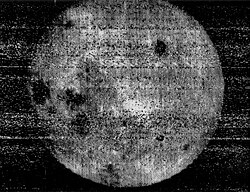
Between 1958 and 1965, both the Soviet Union and the United States launched numerous missions to test the limits of rocketry. The Soviet Luna series saw significant milestones, such as Luna 2 becoming the first human-made object to impact the Moon in 1959, and Luna 3 providing the first images of the Moon's far side in October 1959.
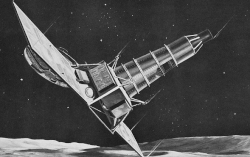
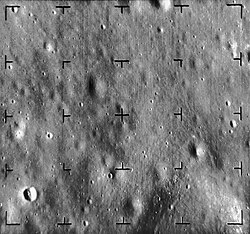
The United States utilized the Pioneer and Ranger programs during this period. While many early Pioneer missions failed, the Ranger program eventually achieved success with Ranger 7, 8, and 9, which returned thousands of high-resolution photos before their planned impact with the lunar surface.
The Achievement of Soft Landings
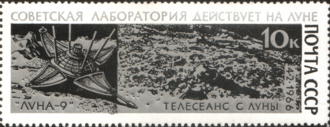
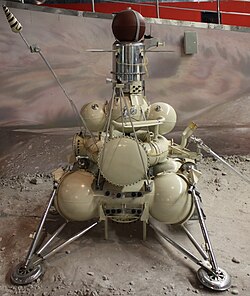
A major technological leap occurred with the development of soft landings. The Soviet Union achieved the first successful soft landing with Luna 9 in 1966, providing the first close-up views of the lunar surface. The U.S. followed with the Surveyor program, which successfully landed several probes between 1966 and 1968, using robotic arms and scientific instruments to study the soil.
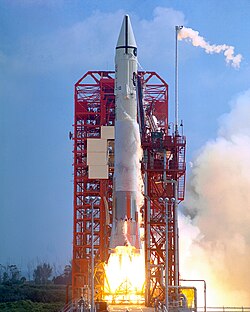
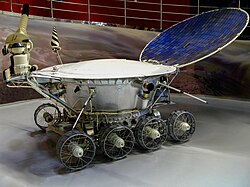
The Soviet Union also pioneered lunar mobility and sample returns. The Lunokhod rovers allowed for remote exploration of the surface, while missions like Luna 16, Luna 20, and Luna 24 successfully returned lunar soil samples to Earth.
Human Moon Landings: The Apollo Program
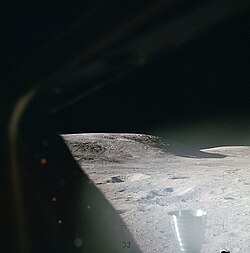
The pinnacle of lunar exploration was reached through the Apollo program, which conducted six crewed landings between 1969 and 1972. These missions transformed our understanding of the Moon through direct human observation and extensive scientific sampling.
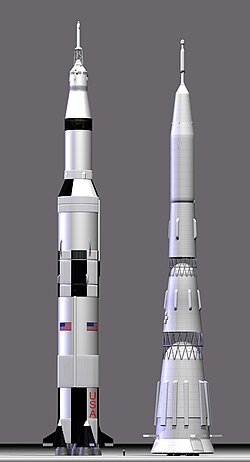
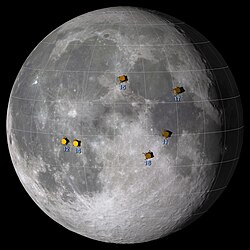
The Apollo Missions at a Glance
The Apollo missions utilized the Lunar Module (the specialized craft designed to descend to and ascend from the surface) to transport astronauts to various landing sites, including the Sea of Tranquility and the Ocean of Storms.
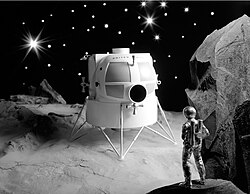
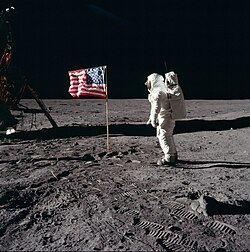
Astronauts performed Extravehicular Activities (EVA), commonly known as spacewalks, to collect samples and set up experiments. The duration of these stays and the amount of time spent on the surface varied significantly between missions.
| Mission | Lander Name | Landing Date | Landing Site | Crew |
|---|---|---|---|---|
| Apollo 11 | Eagle | 20 July 1969 | Sea of Tranquility | Armstrong, Aldrin |
| Apollo 12 | Intrepid | 19 Nov 1969 | Ocean of Storms | Conrad, Bean |
| Apollo 14 | Antares | 5 Feb 1971 | Fra Mauro | Shepard, Mitchell |
| Apollo 15 | Falcon | 30 July 1971 | Hadley Rille | Scott, Irwin |
| Apollo 16 | Orion | 21 April 1972 | Descartes Highlands | Young, Duke |
| Apollo 17 | Challenger | 11 Dec 1972 | Taurus–Littrow | Cernan, Schmitt |
Modern Lunar Exploration
After a long hiatus following the Apollo era, lunar exploration has seen a resurgence in the 21st century. This new era includes sophisticated missions from China, India, Japan, and private commercial entities.
New Frontiers: Far Side and South Pole
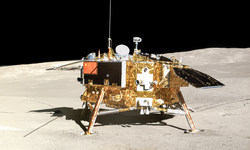
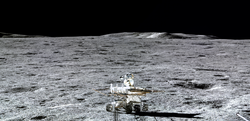
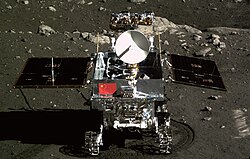
A significant milestone was reached in 2019 when China's Chang'e 4 became the first spacecraft to land on the far side of the Moon. This mission utilized the Chang'e 4 lander and the Yutu-2 rover to conduct science in a region previously inaccessible to direct communication with Earth.
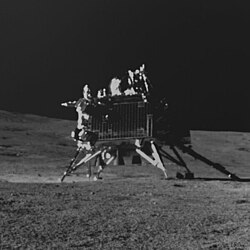
Recent missions have also targeted the lunar south pole, such as India's Chandrayaan-3, which successfully deployed the Vikram lander near the pole, marking a new chapter in international lunar science.
Commercial and International Efforts
The landscape of lunar exploration is no longer limited to superpowers. Commercial companies and smaller nations are now contributing to lunar science. From the Yutu rovers to the Sora-Q mini rover and the recent successes of various international landers, the Moon is becoming a busy destination for global scientific inquiry.


Looking forward, international cooperation and competition continue to shape the future, with frameworks like the Artemis Accords and the International Lunar Research Station representing different approaches to long-term lunar presence.

Frequently Asked Questions
What was the first successful soft landing on the Moon?
The first successful soft landing was achieved by the Soviet Union's Luna 9 mission on January 31, 1966.
How many humans have walked on the Moon?
A total of 12 humans walked on the Moon during the six successful Apollo missions conducted by the United States between 1969 and 1972.
What is the difference between a hard landing and a soft landing?
A hard landing (or impact) occurs when a spacecraft hits the surface with enough force to cause significant damage or destruction. A soft landing uses propulsion and landing gear to touch down gently, allowing the spacecraft to remain functional.
Has anyone ever landed on the far side of the Moon?
Yes, China's Chang'e 4 mission achieved the first successful landing on the far side of the Moon in 2019.
What was the purpose of the Apollo missions?
The Apollo missions were designed to land humans on the Moon, conduct scientific exploration, and return them safely to Earth.