Soup Kitchen History: From Ancient Traditions to Modern Relief
Throughout human history, societies have recognized a fundamental moral obligation to feed the hungry. From the spiritual beliefs of Ancient Egypt—where helping the needy was seen as a way to justify oneself in the afterlife—to the modern urban center, the act of providing food has been a cornerstone of social stability. Because soup is one of the most economical and simple ways to deliver nutrition to large groups, it has become the primary vehicle for mass hunger relief.
Ancient and Medieval Foundations
Long before the modern era, various cultures established formal systems for feeding the poor. In the Ayyubid dynasty, Takiyyas emerged as soup kitchens that doubled as shelters and religious centers. A notable example is the Abrahamic hospice in the Old City of Hebron, established in 1279 CE by Sultan Qalawun, which remains operational today.
Similarly, the Christian church has provided nourishment to the hungry since the time of St Paul, often utilizing soup by the early Middle Ages. Between the 14th and 19th centuries, the Ottoman Empire expanded this tradition through Imarets (Islamic soup kitchens). While soup and bread were the staples, these institutions sometimes served rice, meat, fruit, and sweet puddings.
The Shift Toward Modern Relief
Historically, social historian Karl Polanyi noted that pre-industrial societies relied on redistribution, reciprocity, and autarky (economic self-sufficiency), meaning communities generally shared food to avoid collective starvation. However, as markets became the dominant economic force in the 19th century, overall food security rose, but the poorest segments of society faced increased insecurity. This gap necessitated more formal methods of food provision.
The modern soup kitchen was pioneered in the 1790s by Sir Benjamin Thompson, an American loyalist refugee known as Count Rumford. An inventor and aide-de-camp to the Elector of Bavaria, Rumford advocated for hunger relief through widely read pamphlets.
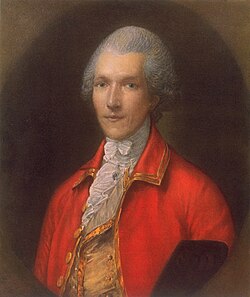
Rumford's principles gained significant traction in Great Britain during the Industrial Revolution. While technological growth increased general prosperity, it disrupted traditional lifestyles and worsened conditions for the poor. By the late 18th century, Rumford-style kitchens were prevalent across England, Wales, and Scotland; in London alone, approximately 60,000 people were fed daily.
Legal Challenges and the Irish Famine
Despite their utility, soup kitchens faced criticism for potentially encouraging dependency or attracting vagrants. This led to the Poor Law Amendment Act 1834 in Britain, which made soup kitchens and other forms of aid illegal, except within workhouses.
This restriction was temporarily lifted during the devastating Irish famine of the 19th century. To combat a disaster that may have claimed one million lives, the British government passed the Temporary Relief Act (the Soup Kitchen Act) in February 1847. This allowed soup kitchens to operate outside workhouses to relieve an overwhelmed Poor Law system.
While restrictions on mainland Britain eventually relaxed, soup kitchens never regained their early 19th-century prevalence. By the 1850s, economic conditions improved for many, and later efforts were heavily regulated by groups like the Charity Organization Society. Even into the early 20th century, critics like journalist Bart Kennedy condemned the degrading nature of the intake questions and the long queues associated with these services.
The Evolution of Food Relief in the United States
In the U.S., early efforts were often localized. In Baltimore, Maryland, Mayor Thorogood Smith and a citizens' committee established a facility in the winter of 1804-1805 that served 1,000 quarts of soup daily. This evolved into the Baltimore Economical Soup Society during the panic of 1819, which introduced a "pay soup-house" in 1820 to allow the needy to maintain their dignity by purchasing low-cost meals.
During the Civil War, individual philanthropy surged. For example, in 1861, Celeste Revillon Winans converted a church into a large soup house. By the 1870s, various civic and religious groups, such as the Ladies' Relief Association, operated multiple houses simultaneously.
The 1880s saw the rise of the "breadline," originating from New York City bakeries distributing unsold goods. This ad-hoc approach eventually led to the Scientific Charity Movement. The Charity Organization Society (COS) acted as a clearinghouse, investigating cases to identify the "deserving poor" and coordinating efforts to promote self-sufficiency over simple handouts.
The Panic of 1893 tested these systems, as massive unemployment forced the creation of emergency kitchens by benevolent societies and citizens' committees.
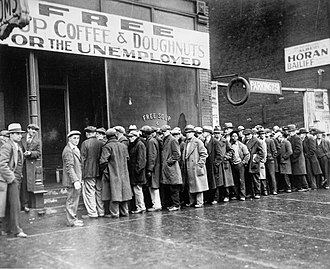
Soup kitchens became iconic symbols of the Great Depression. In Chicago, mobster Al Capone even sponsored a kitchen to improve his public image. This era of private charity shifted in 1933 with President Franklin D. Roosevelt's New Deal. Federal programs like the Federal Emergency Relief Administration (FERA) and the Civil Works Administration (CWA) replaced direct food charity with government-funded employment and cash relief.
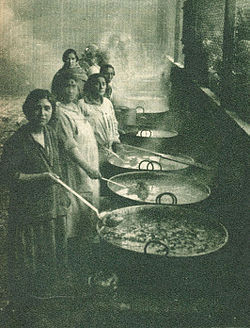
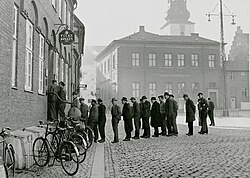
Following World War II, federal programs reduced the need for soup kitchens in advanced economies. However, the scaling back of welfare in the 1980s under President Ronald Reagan led to a resurgence of grassroots agencies. A 2002 government survey revealed that over 90% of food banks and 80% of emergency kitchens in the US were established after 1981. Today, organizations like Catholic Charities USA in Colorado Springs continue this legacy, serving 600–700 people daily since 1985.
Key Facts
- Ancient Origins: Feeding the hungry was a spiritual requirement in Ancient Egypt and later formalized in Ayyubid Takiyyas and Ottoman Imarets.
- Modern Pioneer: Count Rumford (Sir Benjamin Thompson) established the principles of the modern soup kitchen in the 1790s.
- Industrial Impact: In late 18th-century London, Rumford-style kitchens fed roughly 60,000 people daily.
- Legal Shifts: The UK's Poor Law Amendment Act 1834 banned most aid outside workhouses, though the 1847 Soup Kitchen Act provided a temporary exception for the Irish famine.
- US Transition: The New Deal shifted the US safety net from private food charity to government-funded work relief.
- Modern Resurgence: Most US food banks and emergency kitchens were established after 1981 following welfare reductions.
| System/Entity | Era/Region | Primary Characteristic |
|---|---|---|
| Takiyyas/Imarets | Ayyubid/Ottoman | Religious-based shelters and kitchens |
| Rumford Kitchens | Late 18th Century | Scientific, mass-scale hunger relief |
| Scientific Charity (COS) | Late 19th Century | Case investigation to find "deserving poor" |
| New Deal Programs | 1930s USA | Government-funded work and cash relief |
| Modern Food Banks | Post-1981 USA | Grassroots and agency-led hunger relief |
Frequently Asked Questions
Who is considered the father of the modern soup kitchen?
Sir Benjamin Thompson, also known as Count Rumford, is credited with establishing the principles of the modern soup kitchen in the 1790s while serving the Elector of Bavaria.
Why were soup kitchens made illegal in Britain in 1834?
Under the Poor Law Amendment Act 1834, they were banned because critics believed they encouraged dependency and attracted vagrants to local areas, pushing aid instead into workhouses.
What was the "Scientific Charity Movement"?
It was a late 19th-century effort to centralize relief. Rather than giving handouts, organizations like the Charity Organization Society investigated individual needs to ensure aid went to the "deserving poor" and promoted self-sufficiency.
How did the New Deal change food relief in the United States?
The New Deal shifted the social safety net from private, direct-food charity to government-funded assistance and employment through agencies like FERA and the CWA.
Why did soup kitchens increase in the US during the 1980s?
The rise in grassroots hunger relief agencies, including food banks and emergency kitchens, was a response to the scaling back of federal welfare provision during the Reagan administration.