Drought: Causes, Environmental Impacts, and Global Risks
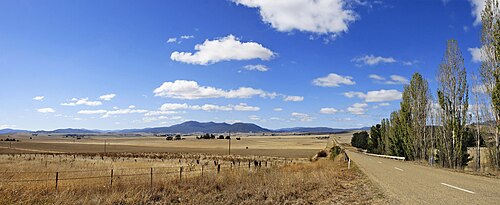
A drought is a prolonged period of drier-than-normal conditions that can last for days, months, or even years. While often viewed simply as a lack of rain, drought is a complex climatic phenomenon that disrupts ecosystems, cripples agriculture, and destabilizes local economies. In tropical regions, annual dry seasons naturally increase the risk of drought, which in turn elevates the danger of devastating wildfires.
The severity of these conditions is often amplified by heat waves, which increase evapotranspiration—the process by which water is transferred from the land to the atmosphere by evaporation from the soil and other surfaces and by transpiration from plants. This process strips moisture from forests and vegetation, creating vast amounts of dry fuel for wildfires.
Key Facts
- Duration: Droughts can range from short-term events to multi-year crises.
- Climate Link: Dendrochronological studies (tree-ring analysis) indicate that droughts have become more extreme and less predictable since 1900 due to climate change.
- Global Risk: Approximately 2.4 billion people live in the Himalayan river basins, where retreating glaciers threaten food and water supplies.
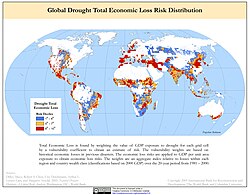
- Economic Impact: Droughts cause significant losses in agriculture, livestock, hydropower, and river navigation.
- Social Consequences: Severe droughts can lead to mass migration, social unrest, and conflict over natural resources.
The Drivers of Drought
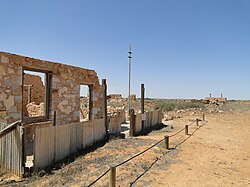
Droughts are not caused by a single factor but result from a combination of atmospheric, oceanic, and human-induced drivers.
Precipitation Deficiency and Seasonal Cycles
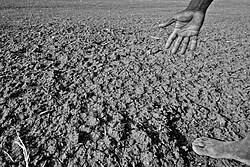
The most direct cause is a general deficiency in precipitation. In many parts of the world, the natural cycle of dry seasons provides a baseline of water stress that can easily transition into a full-scale drought if rains fail to return.
El Niño–Southern Oscillation (ENSO)
The El Niño–Southern Oscillation, a recurring climate pattern involving changes in the temperature of waters in the central and eastern tropical Pacific Ocean, significantly alters global weather patterns, often triggering droughts in specific regions while causing floods in others.
Climate Change and Human Activity
Climate change has increased the frequency and intensity of extreme weather. Human activities, including deforestation and poor land management, exacerbate these effects by increasing soil erosion and altering vegetation patterns, which can lead to a feedback loop of further drying.
![There will likely be multiplicative increases in the frequency of extreme weather events compared to the pre-industrial era for heat waves, droughts and heavy precipitation events, for various climate change scenarios.[46]](/images/37/82/3782111e248c8278c0ad0ad1f0a05b27c6d53c5a296648e56d5ad66c76d5fc27.webp)
Environmental and Economic Consequences
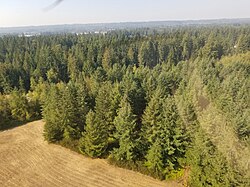
The impacts of drought are generally categorized into three spheres: environmental, economic, and social.
Environmental Degradation
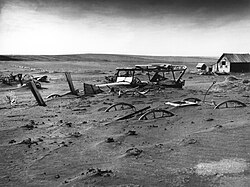
Environmental effects include the drying of wetlands, loss of biodiversity, and the emergence of Dust Bowls—areas where severe erosion and drought turn fertile land into dust. This often leads to massive dust storms in regions already suffering from desertification.
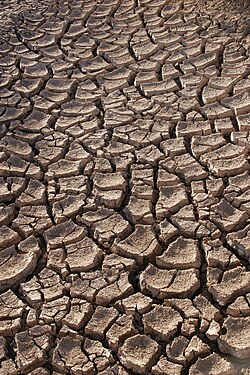
Wildlife is also severely impacted, leading to habitat damage and unusual animal behaviors, such as snake migrations that increase the frequency of human snake-bites.
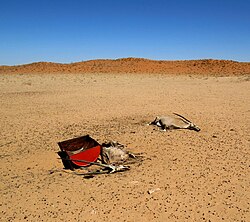
Economic Disruptions
The economic toll of drought is vast, primarily affecting the following sectors:
- Agriculture: Crop failure and livestock death lead to widespread food insecurity.
- Energy: Reduced water flow through hydroelectric dams lowers electricity production.
- Industry: Water shortages disrupt industrial manufacturing and public water supplies.
- Transport: Lower river levels hinder navigation and the transport of goods.

Social and Health Impacts
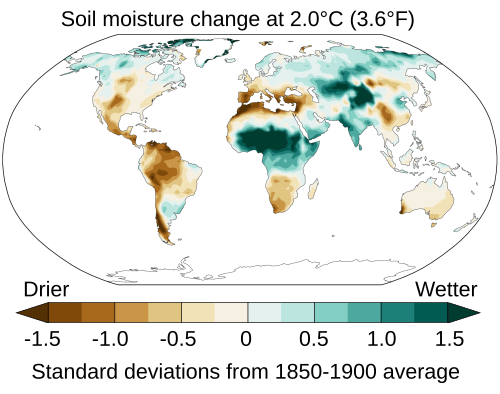
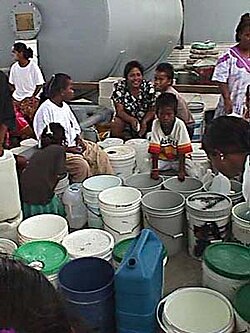
When drought persists, the crisis moves beyond economics into a humanitarian disaster. The loss of fertile soils and water sources often triggers mass migration, creating internal displacement and international refugees.
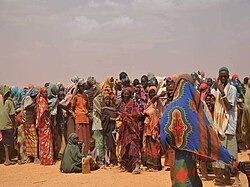
In extreme cases, the competition for dwindling natural resources, such as potable water and arable land, can lead to social unrest and open warfare.
Regions at High Risk
| Region | Primary Risks & Examples |
|---|---|
| Amazon Basin | Experienced one of its worst droughts in 100 years in 2005. |
| Australia | The Millennial drought (ended 2010); increasing frequency of severe events. |
| East Africa | The 2020–2022 Horn of Africa drought surpassed the 2010–2011 event in severity. |
| Himalayan Basins | Threatens water/food for 2 billion people; affects India, China, Pakistan, Bangladesh, Nepal, and Myanmar. |
| North America | Historical Dust Bowl (1930s) and recurring crises in California. |
Historical Context
Droughts have shaped human history since antiquity. They are among the earliest documented climatic events, appearing in the Epic of Gilgamesh and the Biblical accounts of Joseph in Egypt. Evidence suggests that drought influenced the migration of hunter-gatherers in Chile around 9,500 BC and may have played a role in the exodus of early humans out of Africa approximately 135,000 years ago.
Frequently Asked Questions
What is the difference between a dry season and a drought?
A dry season is a predictable, annual period of low rainfall common in tropical climates. A drought is an abnormal, prolonged period of drier-than-normal conditions that persists beyond the typical seasonal cycle.
How does climate change affect drought frequency?
Climate change increases global temperatures, which enhances evapotranspiration and alters precipitation patterns. This makes droughts more extreme, less predictable, and more frequent compared to the pre-industrial era.
Why does drought lead to wildfires?
Drought dries out soil and vegetation. When combined with heat waves, this removes moisture from forests and grasslands, turning plants into highly flammable fuel that can ignite easily.
Which global populations are most at risk from water scarcity?
People living in the drainage basins of the Himalayan rivers are particularly vulnerable. Specifically, over 500 million people in India rely on the Ganges for drinking water and irrigation, and retreating glaciers threaten the water supply for 2 billion people worldwide.
Can human activity cause drought?
While drought is primarily a climatic event, human activities like deforestation and overgrazing lead to soil erosion and vegetation loss. This reduces the land's ability to retain moisture, exacerbating the effects of a drought and potentially accelerating desertification.