SM U-86: The History and Controversies of a WWI German Submarine
During the First World War, the German Empire deployed a formidable fleet of submarines, known as U-boats, to disrupt Allied shipping. Among these was SM U-86, a Type U 81 submarine. Built for endurance and firepower, U-86 became one of the more active vessels of its class, though its legacy is forever marred by actions that violated international law.
Technical Specifications and Construction
SM U-86 was ordered on June 23, 1915, and constructed by the Germaniawerft shipyard in Kiel. The vessel was laid down on November 5, 1915, launched the following year on November 7, 1916, and officially commissioned into service on November 30, 1916.
The submarine was designed with a dual-hull structure, featuring a pressure hull—the reinforced inner cylinder that protects the crew from deep-sea pressure—and an outer casing. It was powered by two shafts and propellers, utilizing different engines for surfaced and submerged travel to maximize efficiency and range.
General Characteristics
| Feature | Surfaced | Submerged |
|---|---|---|
| Displacement | 808 t (795 long tons) | 946 t (931 long tons) |
| Speed | 16.8 knots | 9.1 knots |
| Range | 11,220 nmi (at 8 knots) | 56 nmi (at 5 knots) |
| Power | 2 × 2,400 PS | 2 × 1,200 PS |
Key Facts
- Type: Type U 81 submarine.
- Builder: Germaniawerft, Kiel (Yard number 256).
- Armament: Four 50 cm torpedo tubes (two bow, two stern) and one 10.5 cm SK L/45 deck gun.
- Combat Record: 12 patrols, sinking 31 merchant ships and 2 auxiliary warships.
- Total Tonnage Sunk: 117,583 GRT (Gross Register Tonnage).
- Fate: Surrendered November 20, 1918; scuttled in the English Channel in 1921.
Operational History and Notable Engagements
SM U-86 served as part of the IV Flotilla from February 21, 1917, until the end of the war on November 11, 1918. Over the course of 12 patrols, the submarine was commanded by three different officers: Kptlt. Friedrich Crüsemann, Kptlt. Alfred Götze, and Oblt.z.S. Helmut Patzig.
While the vessel was successful in sinking numerous merchant ships, it is most remembered for two specific incidents in 1918. On July 1, 1918, U-86 torpedoed the USS Covington (formerly the SS Cincinnati), which sank the following day. The Covington was noted as the 17th largest ship sunk or damaged by U-boats during the entire war.
The Sinking of HMHS Llandovery Castle
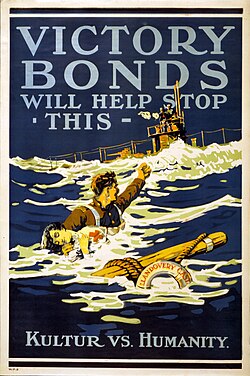
The most controversial event in the history of SM U-86 occurred on June 27, 1918. Under the command of Helmut Patzig, the submarine sank the HMHS Llandovery Castle, a Canadian hospital ship, off the coast of Ireland. This action was a direct violation of international law and the standing orders of the Imperial German Navy.
The tragedy extended beyond the initial sinking. As the crew entered lifeboats, U-86 surfaced and intentionally ran down almost all of them, while firing upon those remaining in the water. Of the 258 people on board, including fourteen nursing sisters, only 24 survived in a single lifeboat to testify about the events.
Post-War Justice and Legal Aftermath
Following the cessation of hostilities, the actions of the U-86 crew were scrutinized. Captain Helmut Patzig and two of his lieutenants were arraigned for war crimes. However, Patzig managed to avoid conviction by fleeing to the Free City of Danzig. His trial was eventually stopped on March 20, 1931, due to the Laws of Amnesty.
Lieutenants Ludwig Dithmar and Johan Boldt did not escape trial. Both were convicted and sentenced to four years in prison, although they were released after serving only four months.
Frequently Asked Questions
What was the primary role of SM U-86?
SM U-86 was a Type U 81 submarine used by the German Empire during World War I for naval patrols and the sinking of enemy merchant and auxiliary warships.
Why was the sinking of the Llandovery Castle significant?
It was a grave violation of international law because the Llandovery Castle was a hospital ship. Furthermore, the crew of U-86 attacked the survivors in lifeboats, resulting in 234 deaths.
Who commanded SM U-86 during its most controversial mission?
Oblt.z.S. Helmut Patzig was the commander during the sinking of the HMHS Llandovery Castle and the USS Covington.
What happened to the submarine after the war?
SM U-86 surrendered on November 20, 1918, and was eventually scuttled in the English Channel in 1921.
Were any crew members punished for the war crimes?
Yes, Lieutenants Ludwig Dithmar and Johan Boldt were convicted and sentenced to four years in prison, though they served only four months. Captain Patzig avoided sentencing by fleeing to Danzig.