Kingdom of Prussia: The Rise and Fall of a German Powerhouse
The Kingdom of Prussia (1701–1918) was a dominant German state that evolved from a modest electorate into the primary engine of German unification. Based in the Margraviate of Brandenburg with its capital in Berlin, Prussia transformed the political landscape of Central Europe through military discipline, strategic diplomacy, and territorial expansion.
Governed by the House of Hohenzollern, Prussia rose to prominence by balancing its role as a vassal of the Holy Roman Empire with its sovereign ambitions in the east. Its journey from a regional power to the leader of the German Empire is a study in the transition from absolute monarchy to a complex imperial state.
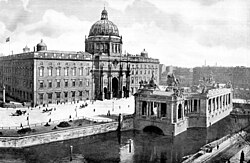
Key Facts
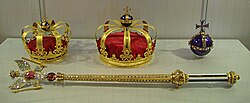
- Duration: 1701 to 1918.
- Dynasty: Ruled by the House of Hohenzollern.
- Capital: Berlin (with Königsberg serving as capital from 1806–1809).
- Peak Influence: Led the unification of Germany in 1871.
- Government: Transitioned from an absolute monarchy to a semi-constitutional monarchy after 1848.
- Legacy: The legal predecessor to the modern Federal Republic of Germany.
The Foundations of Prussian Power
The roots of the kingdom lie in Brandenburg-Prussia, a personal union formed when the electors of Brandenburg inherited the Duchy of Prussia in 1618. Under Frederick William, known as "The Great Elector," the state began its ascent as a military power.
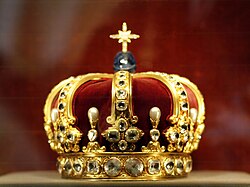
The formal transition to a kingdom occurred on January 18, 1701, when Frederick III crowned himself Frederick I. This was made possible by the Crown Treaty of 1700, granted by Emperor Leopold I in exchange for an alliance against France during the War of the Spanish Succession. Because the Duchy of Prussia sat outside the Holy Roman Empire, Frederick could claim royal status without violating imperial law.
Expansion and the Era of Frederick the Great
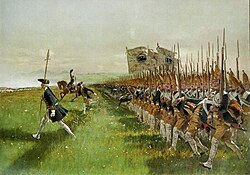
Prussia's status as a European great power was cemented under Frederick II, better known as Frederick the Great. His reign was marked by the Silesian Wars and the Seven Years' War (1756–1763), where Prussia successfully resisted a coalition of Austria, Russia, France, and Sweden.
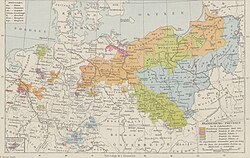
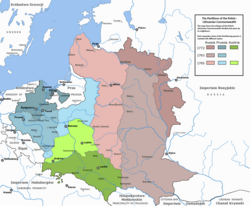
Throughout the 18th century, Prussia aggressively expanded its borders. This included the acquisition of East Frisia, Bayreuth, and Ansbach. Most significantly, Frederick played a pivotal role in the Partitions of Poland (1772, 1793, and 1795), annexing vast territories from the Polish–Lithuanian Commonwealth to connect East Prussia with Pomerania.
Conflict and Recovery: The Napoleonic Era
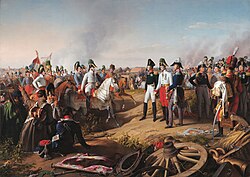
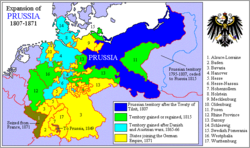
The rise of Napoleon Bonaparte brought a severe crisis. Following a crushing defeat at the Battle of Jena–Auerstedt in 1806, Prussia was forced to sign the Treaties of Tilsit in 1807. The kingdom lost approximately half of its territory, including lands gained from the partitions of Poland, which were reorganized into the Duchy of Warsaw.
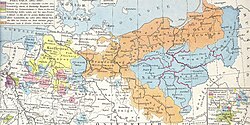
However, Prussia recovered in the aftermath of the Napoleonic Wars. The Congress of Vienna in 1815 redistributed territories, allowing Prussia to regain influence and establish itself as a leading member of the newly formed German Confederation.
The Path to German Unification
By the mid-19th century, Prussia sought to unify the German states under its own hegemony, often clashing with Austria. The Zollverein (German Customs Union) established in 1834 gave Prussia economic leverage by excluding Austria from trade agreements.
Following the failed revolutions of 1848, Prussia took a more aggressive approach to unification. The Austro-Prussian War of 1866 resulted in the collapse of the German Confederation and the creation of the North German Confederation, a military alliance led by Prussia.
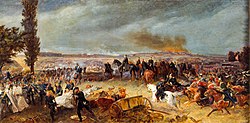
![Aftermath of the Austro-Prussian War (1866): Prussia Prussian allies: Italy and 14 German states[25] Austrian allies: 11 German states[26]](/images/12/f1/12f171df0b32a3c8bcf8cf70353601ecebd7212a998d4fca88e4db841868da36.webp)
The final step occurred during the Franco-Prussian War (1870–1871). The victory over Napoleon III sparked a wave of nationalism that united the remaining German states. On January 18, 1871, the German Empire was proclaimed, with the Prussian King serving as the German Emperor.
The Imperial Era and Dissolution
Within the German Empire, Prussia remained the dominant force, controlling two-thirds of the territory and three-fifths of the population. The Imperial German Army was essentially an expanded version of the Prussian military, and the House of Hohenzollern held the imperial crown hereditarily.
Despite this power, internal tensions existed. While the Empire allowed universal male suffrage for those over 25, Prussia maintained a three-class franchise, where voting power was weighted by tax contributions. This disparity created a political rift between the imperial and provincial governments.
The end of the kingdom came with the German Revolution of 1918–1919. Following the defeat in World War I, Wilhelm II abdicated on November 28, 1918. The Kingdom of Prussia was transformed into the Free State of Prussia, and the entity was eventually abolished entirely in 1947.
Prussia at a Glance
| Category | Details |
|---|---|
| Capital | Berlin |
| Ruling House | Hohenzollern |
| Key Leaders | Frederick I, Frederick the Great, Wilhelm I, Wilhelm II |
| Major Conflicts | Seven Years' War, Napoleonic Wars, Austro-Prussian War, Franco-Prussian War |
| Population (1713–1797) | 1.5 million to 8.7 million |
| Official Languages | German, Neo-Latin (until 1806) |
Frequently Asked Questions
How did Prussia become a kingdom?
Frederick III was allowed to elevate Prussia to a kingdom through the Crown Treaty of 1700. In exchange for an alliance against France, Emperor Leopold I permitted him to crown himself Frederick I on January 18, 1701, as the Duchy of Prussia was outside the Holy Roman Empire's jurisdiction.
What was the role of the Zollverein?
The Zollverein was a customs union established in 1834. By creating a trade zone that included most German states but excluded Austria, Prussia increased its economic influence and laid the groundwork for political unification.
Who was the most influential Prussian leader?
While many were influential, Frederick the Great is often cited for establishing Prussia as a European great power through military victory in the Seven Years' War and strategic territorial expansion.
What happened to Prussia after World War I?
Following the abdication of Wilhelm II in 1918, the kingdom was replaced by the Free State of Prussia. This entity existed until 1947, when it was formally abolished.
What was the "three-class franchise"?
The three-class franchise was a Prussian voting system where voters were divided into three groups based on the amount of taxes they paid. This ensured that the wealthy elite held disproportionate political power compared to the general population.