Site Classification for Abandoned and Historic Communities
Identifying the current state of a settlement is essential for historians, urban explorers, and preservationists. By categorizing sites based on their physical condition and remaining population, we can better understand the trajectory of a community's decline or its transition into a historic landmark. These classifications range from fully erased landscapes to thriving, albeit diminished, communities.
Key Facts
- Barren sites are those that no longer exist physically or have been reclaimed by nature.
- Neglected sites are characterized by structural failure, such as roofless ruins.
- Abandoned sites maintain standing structures but lack a permanent resident population.
- Semi abandoned sites feature a mix of occupied and vacant buildings.
- Historic communities remain active but operate at a fraction of their peak population.
Levels of Site Degradation
Barren Sites
A barren site represents the final stage of erasure. These are locations that are no longer in existence, having been destroyed or covered by water. In some cases, the land has simply reverted to pasture. At most, a visitor might find a few foundations or footings that are difficult to locate.
Neglected Sites
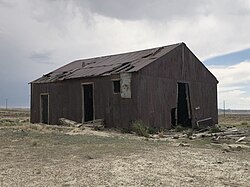
Neglected sites are defined by significant structural decay. In these areas, the landscape is often dominated by rubble or roofless building ruins. While some houses or buildings may still be standing, the majority have lost their roofs, leaving them exposed to the elements.
Stages of Human Departure
Abandoned Sites
An abandoned site is one where buildings and houses remain standing, but the general population has departed. These sites are entirely devoid of residents, with the sole exception of a possible caretaker. In some instances, the site has vanished entirely except for one or two landmark structures, such as an old grocery store or a church.
Semi Abandoned Sites
Semi abandoned sites exist in a state of transition. While buildings and houses are still standing, they are largely abandoned. A small population of residents remains, living alongside many vacant structures.
Historic Communities
A historic community is a settlement that remains a busy, functioning community despite a significant loss in scale. While these areas are smaller than they were during their boom years, they maintain a social fabric. Typically, the population has decreased dramatically, often falling to one-fifth or less of its peak size.
Site Classification Summary
| Classification | Structural State | Population Status |
|---|---|---|
| Barren | Destroyed, submerged, or pasture | None |
| Neglected | Rubble and roofless ruins | None |
| Abandoned | Standing buildings | None (except caretaker) |
| Semi Abandoned | Standing buildings | Small population |
| Historic Community | Standing buildings | Active but significantly reduced |
Frequently Asked Questions
What is the difference between a neglected site and an abandoned site?
The primary difference is structural integrity. A neglected site is characterized by ruins and roofless buildings, whereas an abandoned site still has standing buildings despite having no permanent population.
Can a barren site have any remaining structures?
Generally, no. Barren sites are considered no longer in existence, though they may occasionally contain a few foundations or footings that are difficult to find.
What defines a semi abandoned site?
A semi abandoned site is one where buildings are still standing and a small population of residents remains, though many of the buildings are vacant.
How much population loss is required for a community to be considered a historic community?
A historic community is typically one where the population has decreased dramatically, often to one-fifth or less of its population during its boom years.
What happens when a site is covered with water?
When a site is covered with water, it is classified as a barren site because it is no longer in existence as a terrestrial settlement.