Sir Philip Game: A Legacy of Military and Civil Leadership
Sir Philip Game was a distinguished figure of the early 20th century whose career spanned the highest echelons of military command, colonial governance, and civil law enforcement. From the battlefields of the First World War to the political turmoil of the Great Depression in Australia and the strategic policing of London during World War II, Game's life was defined by a steadfast commitment to duty and constitutional order.
Key Facts
- Military Rank: Reached the rank of Air Vice-Marshal in the Royal Air Force (RAF).
- NSW Governorship: Served as the 26th Governor of New South Wales from 1930 to 1935.
- Police Leadership: Served as the Commissioner of Police of the Metropolis (London) from 1935 to 1945.
- Constitutional Role: Dismissed the government of Premier Jack Lang in May 1932.
- Major Honors: Recipient of the GCB, GCVO, GBE, KCMG, and DSO.
Early Life and Military Distinction
Born in Streatham, Surrey, on March 20, 1876, Philip Woolcott Game was educated at Charterhouse School before entering the Royal Military Academy Woolwich. He earned his commission in 1895 and began his career with the Royal Artillery, seeing early action during the Second Boer War.
When the First World War broke out in 1914, Game served on the front lines in France, notably participating in the Battle of Neuve Chapelle. His bravery and staff expertise led to his transfer to the Royal Flying Corps in 1916, where he served as the chief staff officer to General Hugh Trenchard. By the end of the war, he held the rank of acting major-general.
Following the creation of the Royal Air Force (RAF) in 1918, Game continued his ascent, serving as the Director of Training and Organisation and later as the Air Officer Commanding RAF India. He eventually reached the rank of Air Vice-Marshal and served as the Air Member for Personnel before retiring from military service on January 1, 1929.
Governor of New South Wales (1930–1935)
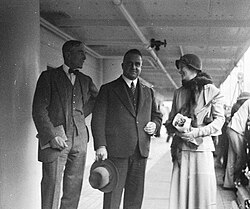
In March 1930, amidst the global economic devastation of the Great Depression, Game was appointed Governor of New South Wales. He arrived in Sydney on May 29, 1930, aboard the RMS Moldavia.
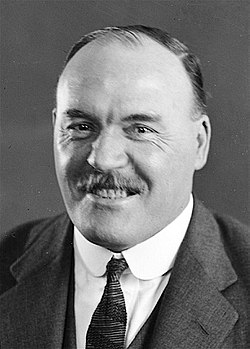
The Conflict with Premier Jack Lang
Game's tenure was marked by a severe constitutional struggle with the Labor government led by Premier Jack Lang. Lang sought to abolish the New South Wales Legislative Council (the state's upper house) to remove obstacles to his legislative agenda. This required the appointment of additional members to the Council to ensure the abolition bills passed.
Game refused these requests, maintaining that a referendum was necessary before the Council could be abolished. This led to a protracted legal battle, including cases in the Supreme Court of New South Wales, the High Court of Australia, and eventually the Judicial Committee of the Privy Council in London, which dismissed Lang's appeal on May 31, 1932.
The Sydney Harbour Bridge Opening
Despite their political clashes, Game and Lang maintained a cordial personal relationship. This was evident during the opening of the Sydney Harbour Bridge in March 1932. While the King expressed displeasure over Lang's intention to cut the ribbon, Game defended the Premier's right to do so.
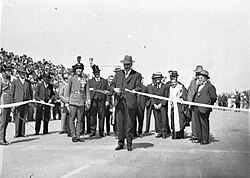
The event was marred by a brief disruption when Francis de Groot, a member of the far-right New Guard, cut the ribbon moments before the official ceremony. The ribbon was quickly reattached, and Lang proceeded to open the bridge with Governor Game looking on.
Dismissal and Departure
The tension between the Governor and the Premier peaked over Lang's financial policies, specifically the Reduction of Interest Bill, which aimed to default on overseas debts to British bondholders. In May 1932, Game exercised his constitutional authority and dismissed the Lang government, forcing a new election. Game completed his term in January 1935, leaving a lasting legacy in the state, including the naming of Lady Game Drive and Sir Philip Game Reserve in Lindfield.
Commissioner of the Metropolitan Police
Upon returning to Britain, Game was appointed Commissioner of Police of the Metropolis in November 1935. He was the last senior armed forces officer to hold this position before the role transitioned to career police officers.
His leadership spanned a tumultuous decade, including the 1936 abdication crisis and the entirety of the Second World War. He was responsible for the security of high-profile events, including the funeral of King George V and the 1937 coronation of King George VI.
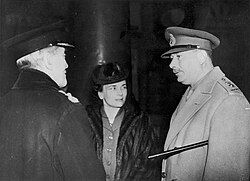
During his tenure, Game introduced innovative measures, such as the experimental use of patrol dogs in Peckham in 1938. He also showed a commitment to youth welfare, helping to establish the Sir Philip Game Boys' Club in Croydon, which opened in 1946.
Summary of Career and Service
| Period | Role/Position | Key Achievement/Event |
|---|---|---|
| 1895–1929 | British Army / RAF | Air Vice-Marshal; served in Boer War and WWI |
| 1930–1935 | Governor of New South Wales | Managed the Lang government crisis and 1932 dismissal |
| 1935–1945 | Metropolitan Police Commissioner | Policed London through WWII and the 1937 Coronation |
Frequently Asked Questions
Why did Sir Philip Game dismiss Premier Jack Lang?
Game dismissed Lang in May 1932 primarily due to the Premier's financial policies, including attempts to default on overseas debts, and the ongoing constitutional conflict regarding the abolition of the Legislative Council.
What was Game's role in the Royal Air Force?
Game rose to the rank of Air Vice-Marshal, serving as the Air Officer Commanding RAF India and as the Air Member for Personnel.
How did Game handle the Sydney Harbour Bridge ribbon controversy?
Game supported Premier Lang's right to cut the ribbon despite the King's disapproval, and he remained composed when Francis de Groot attempted to hijack the ceremony by cutting the ribbon prematurely.
What was Game's contribution to the Metropolitan Police?
Beyond managing security for royal events and the city during World War II, Game is noted for introducing patrol dogs to the force in 1938.
When and where did Sir Philip Game die?
Sir Philip Game died on February 4, 1961, at the age of 84, at his home in Sevenoaks, Kent.