Sir Sefton Brancker: A Pioneer of British Military and Civil Aviation
Sir William Sefton Brancker was a transformative figure in the early days of flight, bridging the gap between military necessity and civilian progress. As a senior officer in both the Royal Flying Corps (RFC) and the Royal Air Force (RAF), and later as a champion of commercial flight, Brancker played a pivotal role in establishing the infrastructure of British aviation.
Key Facts
- Full Name: Sir William Sefton Brancker, KCB AFC.
- Highest Rank: Air Vice-Marshal.
- Key Role: Director of Civil Aviation (appointed May 11, 1922).
- Major Contribution: Promoted municipal airports and civilian air services connecting London to overseas colonies.
- Death: Killed in the R101 airship crash on October 5, 1930.
Early Life and Education
Born in Woolwich, Kent, Sefton Brancker was the eldest son of Colonel William Godeffroy Brancker and Hester Adelaide. He came from an established Anglo-German family, with his father born in Hamburg. Brancker attended Bedford School from 1891 to 1894.
In 1907, he married May Wynne, daughter of Colonel Spencer Field of the Royal Warwickshire regiment, with whom he had one son, also named William Sefton Brancker.
Military Career and the First World War
Brancker's military journey began in 1896 when he joined the Royal Artillery. After serving in the Second Boer War and later in India, he took to the skies for the first time in 1910. His formal entry into aviation was solidified on June 18, 1913, when he received the Royal Aero Club's Aviator's Certificate no. 525.
During the First World War, Brancker rose rapidly through the ranks of the Royal Flying Corps. He served as the Director of Military Aeronautics and was promoted to brigadier general to command the Northern Training Brigade in Birmingham in 1915. By 1916, he had moved to London as the Director of Air Organisation.
His leadership extended to international theaters in 1917, where he served as the General Officer Commanding for the RFC's Palestine and Middle East headquarters. By 1918, promoted to major general, he held the critical roles of Controller-General of Equipment and Master-General of Personnel. On August 23, 1918, he transitioned from the Army to a permanent commission as a major-general in the newly formed Royal Air Force (RAF).
Advancing Civil Aviation
After retiring from the RAF in January 1919 (and later being granted the rank of air vice-marshal in 1924), Brancker shifted his focus to the future of commercial flight. Appointed Director of Civil Aviation on May 11, 1922, he worked tirelessly to integrate aviation into British public life.
Brancker was a visionary who encouraged cities like Manchester to build municipal airports and airfields. He was a strong advocate for civilian air services that would link London with British colonies and dominions. His passion for flight was not merely administrative; he participated in long-distance survey flights alongside aviators such as Alan Cobham.
Between 1921 and 1930, he chaired the Royal Aero Club's (RAeC) Racing Committee. Under his leadership, the RAeC launched the Light Aero Club scheme in 1925, which introduced British flying clubs to advanced aircraft types, including the Avro Avian and the de Havilland Moth.
The R101 Tragedy
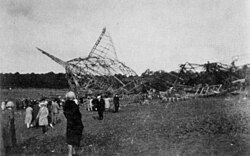
The career of Sir Sefton Brancker came to a tragic end during the maiden voyage of the R101 airship, a massive dirigible intended for travel to India. On October 5, 1930, the airship crashed near Beauvais, France. Brancker perished in the disaster alongside the Air Minister, Lord Thomson.
In a poignant coincidence, the date of the crash marked exactly 20 years to the day since Brancker's first flight in 1910.
Legacy and Honors
Sir Sefton Brancker's contributions to aviation are commemorated through various honors and namesakes. In 1952, British European Airways named a Douglas DC-3 'Pionair' (G-AKNB) after him. Later, in 1996, British Airways named a Boeing 777 (G-ZZZB) "Sir William Sefton Branker" [sic] to honor his work, placing him alongside other pioneers like the Wright brothers and Sir Frank Whittle.
His name also lives on in local geography, with roads named after him in Plymouth and within the Kenmore Park housing estate in Kenton, Harrow.
| Category | Details |
|---|---|
| Military Service | Royal Artillery, Royal Flying Corps, Royal Air Force |
| Key Military Ranks | Brigadier General, Major General, Air Vice-Marshal |
| Civilian Role | Director of Civil Aviation (1922) |
| Major Awards | Knight Commander of the Order of the Bath (KCB), Air Force Cross (AFC) |
| Key Contribution | Development of municipal airports and the Light Aero Club scheme |
Frequently Asked Questions
What was Sir Sefton Brancker's primary role in civil aviation?
As the Director of Civil Aviation starting in 1922, he focused on stimulating public interest in flight, encouraging the construction of municipal airports, and developing air services to connect London with British colonies.
When did Sefton Brancker first fly?
He made his first flight in 1910 while serving in India and was later awarded the Royal Aero Club's Aviator's Certificate no. 525 in June 1913.
How did Sir Sefton Brancker die?
He was killed on October 5, 1930, when the R101 airship crashed near Beauvais, France, during its maiden voyage to India.
Which aircraft have been named in his honor?
A British European Airways Douglas DC-3 'Pionair' (G-AKNB) and a British Airways Boeing 777 (G-ZZZB) were both named in recognition of his contributions to aviation.
What was the Light Aero Club scheme?
Established in 1925 under Brancker's leadership at the Royal Aero Club, this scheme provided British flying clubs with access to improved aircraft types, such as the de Havilland Moth and Avro Avian.