Royal Air Force
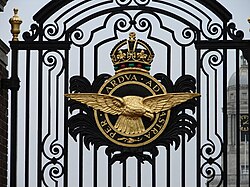
The Royal Air Force (RAF) is the air and space force of the United Kingdom, serving as a primary component of the British Armed Forces. Founded on April 1, 1918, the RAF has spent over a century evolving from its early aviation roots into a sophisticated multi-domain force capable of aerial and space warfare. Guided by the Latin motto "Per Ardua ad Astra" (Through Adversity to the Stars), the RAF maintains a global presence to ensure national security and international stability.
Operating with a dedicated force of over 31,000 active personnel and a diverse fleet of 670 aircraft, the RAF manages a complex infrastructure of stations across the UK and strategic overseas bases. From the legendary dogfights of the Second World War to modern precision strikes and intelligence gathering, the RAF remains at the forefront of aviation technology.
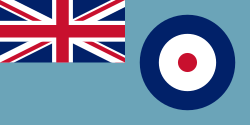
Key Facts
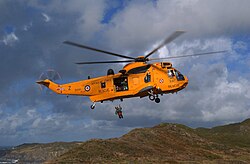
- Founded: April 1, 1918.
- Personnel: 31,080 active, 3,070 reserve, and 1,470 other personnel.
- Head of Armed Forces: King Charles III.
- Chief of the Air Staff: Air Chief Marshal Sir Harvey Smyth.
- Primary Colors: Air force blue and gold.
- Core Role: Aerial and space warfare.
Historical Evolution
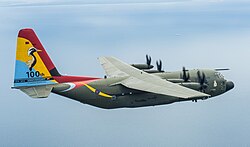
The RAF was established by the Air Force (Constitution) Act 1917, marking the first time a nation created an independent air arm. Throughout the 20th century, the RAF played pivotal roles in global conflicts, most notably during the Second World War, where aircraft like the Spitfire and Hurricane were essential to the defense of Britain.
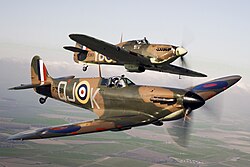
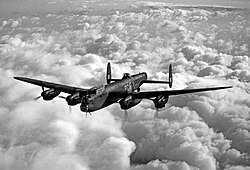
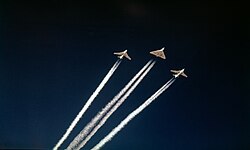
During the strategic bombing campaigns against Germany, the RAF utilized heavy bombers to disrupt enemy infrastructure. Following the war, the RAF transitioned into the Cold War era, developing the V bomber force to handle both conventional and nuclear deterrents.
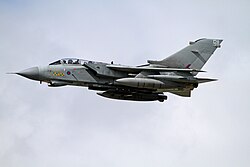
In the post-Cold War era, the RAF shifted toward expeditionary operations. This included significant involvement in the Gulf War, the Bosnian and Kosovo Wars, and more recent engagements in Afghanistan, Libya, and the ongoing campaign against the Islamic State (Operation Shader).
Organizational Structure and Leadership
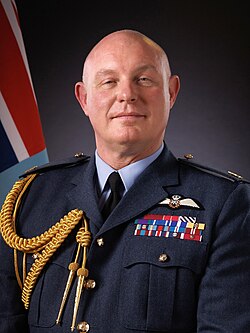
The RAF is led by the Chief of the Air Staff, who is supported by a hierarchy of senior commanders including the Deputy Chief of the Air Staff and the Air and Space Commander. The force is organized into several specialized groups:
- No. 1 Group: Focused on Air Combat.
- No. 2 Group: Dedicated to Air Combat Support.
- No. 11 Group: Responsible for Multi-domain operations.
- No. 22 Group: Oversees Training.
Operational Bases
Front-line operations in the UK are concentrated at eight primary stations. These include RAF Coningsby, Marham, and Lossiemouth for air combat; RAF Waddington for ISTAR (Intelligence, Surveillance, Target Acquisition, and Reconnaissance); and RAF Brize Norton and Northolt for air transport.
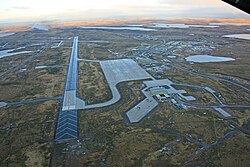
Overseas, the RAF maintains a strategic footprint at RAF Akrotiri (Cyprus), RAF Ascension Island, RAF Gibraltar, and RAF Mount Pleasant in the Falkland Islands.
Modern Fleet and Capabilities
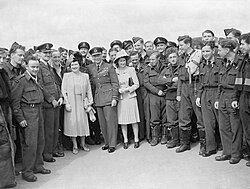
The RAF employs a wide array of aircraft tailored for specific mission profiles, ranging from high-altitude reconnaissance to heavy-lift transport.
Air Combat and Fighter Aircraft
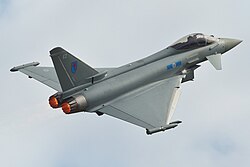
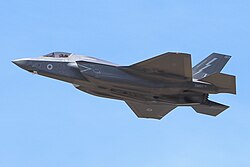
The backbone of the RAF's combat capability consists of the Typhoon FGR4 and the F-35 Lightning II, providing advanced multi-role capabilities and stealth technology.
ISTAR and Patrol
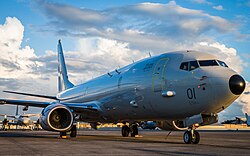
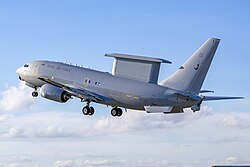
For intelligence and surveillance, the RAF utilizes the Protector RG1, Shadow R1, and the Boeing E-7 Wedgetail. Maritime security is ensured by the Poseidon MRA1.
Air Mobility and Support
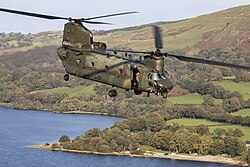
Transport and refueling are handled by the Voyager KC2/3, Atlas C1, and the C-17 Globemaster. For tactical lift and support, the Boeing Chinook remains a staple of the fleet.
Training and Specialized Roles
The RAF maintains a robust training pipeline using aircraft such as the Hawk, Texan, and Phenom. Additionally, the RAF Regiment provides ground-based defense and security.
Ceremonial and Public Presence
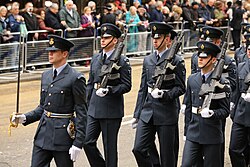
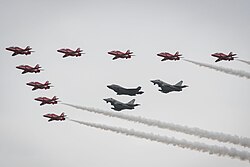
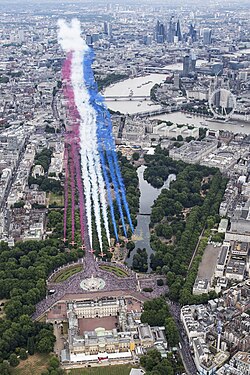
The RAF is well-known for its ceremonial displays, most notably the Red Arrows, the RAF's aerobatic display team. Other significant units include the Battle of Britain Memorial Flight and the King's Colour Squadron.
Summary of RAF Assets and Leadership
| Category | Details |
|---|---|
| Total Personnel | ~35,820 (Active, Reserve, and Other) |
| Total Aircraft | 670 |
| Combat Aircraft | Typhoon FGR4, F-35 Lightning II |
| ISTAR Aircraft | Protector RG1, Shadow R1, E-7 Wedgetail |
| Transport/Tanker | Voyager, Atlas C1, C-17 Globemaster |
| Helicopters | Chinook HC5/6/6A |
| Chief of Air Staff | Air Chief Marshal Sir Harvey Smyth |
Frequently Asked Questions
When was the Royal Air Force founded?
The Royal Air Force was founded on April 1, 1918, following the Air Force (Constitution) Act 1917.
What is the meaning of the RAF motto "Per Ardua ad Astra"?
The Latin motto translates to "Through Adversity to the Stars," reflecting the challenges overcome to achieve excellence in flight.
What are the primary fighter aircraft currently used by the RAF?
The RAF currently operates the Typhoon FGR4 and the F-35 Lightning II for its air combat missions.
What is ISTAR in the context of the RAF?
ISTAR stands for Intelligence, Surveillance, Target Acquisition, and Reconnaissance, referring to the aircraft and systems used to gather critical data for military decision-making.
Where are the RAF's overseas bases located?
The RAF maintains overseas bases in Cyprus (RAF Akrotiri), the Falkland Islands (RAF Mount Pleasant), Gibraltar, and Ascension Island.