Sir Geoffrey Salmond: A Pioneer of British Air Power
Air Chief Marshal Sir Geoffrey Salmond was a towering figure in the early history of British aviation. From his beginnings in the Royal Artillery to his final appointment as the head of the Royal Air Force (RAF), Salmond's career spanned a transformative era of warfare. He was not only a skilled commander during the First World War but also a visionary who helped shape the strategic infrastructure of air power across the Middle East, India, and Great Britain.
Born William Geoffrey Hanson Salmond in Hougham, Kent, on August 19, 1878, he was raised in a military family as the son of Major General Sir William Salmond. His education at Aysgarth School and Wellington College prepared him for a life of service, leading him first to the British Army and eventually to the skies.
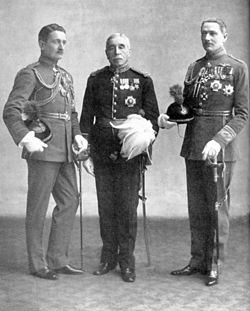
Key Facts
- Highest Rank: Air Chief Marshal.
- Key Command: Served as Chief of the Air Staff in 1933.
- WWI Contribution: Commanded the Royal Flying Corps (RFC) in the Middle East.
- Visionary Work: Proposed an independent Indian Air Force in 1927.
- Notable Operation: Directed the aerial evacuation of British staff from Kabul (1928–1929).
- Military Transition: Moved from the Royal Artillery to the RFC and finally the RAF.
Early Military Career and the Royal Artillery
Salmond began his professional journey at the Royal Military Academy Woolwich, receiving his commission into the Royal Artillery on June 23, 1898. His early years were defined by active service in global conflicts, including the Second Boer War, where he participated in the relief of Ladysmith and operations at Tugela Heights. He also served in China during the Boxer Rebellion.
Beyond combat, Salmond demonstrated a keen interest in international affairs, spending time studying Japanese in 1905. By 1911, he had furthered his professional military education by attending the Staff College, Camberley, setting the stage for his transition into the emerging field of aviation.
Leadership in the Royal Flying Corps
Salmond earned his Royal Aero Club Aviator's Certificate in February 1913 and joined the reserve of the Royal Flying Corps (RFC)—the air arm of the British Army—shortly after. When the First World War broke out, he was quickly deployed to France, eventually commanding No. 1 Squadron RFC in 1915. Under his leadership, the squadron operated over the Western Front, participating in critical engagements such as the Battle of Neuve Chapelle, the Battle of Hill 60, and the Battle of Aubers Ridge.
Command in the Middle East
In July 1916, Salmond was promoted to temporary brigadier general and given command of the RFC in the Middle East. This was a massive responsibility, as he coordinated air cooperation for forces in East Africa, Salonika, Mesopotamia, and Palestine. He was particularly noted for his role in General Allenby's conquest of Palestine.
Salmond was also a pioneer of long-distance aviation. He envisioned a "Cape-to-Cairo" airway across Africa, establishing a chain of aerodromes that would later be used by other pioneering aviators. In 1918, he achieved a remarkable feat by flying from Cairo to Delhi in less than two days.
Rise Within the Royal Air Force
Following the war, Salmond transitioned into the newly formed Royal Air Force (RAF). He held several high-level administrative and strategic roles, including Director-General of Supply and Research (later Air Member for Supply and Research) from 1922 to 1926.
Strategic Influence in India and Afghanistan
In December 1926, Salmond became the Air Officer Commanding India. During this tenure, he proved to be a forward-thinker by submitting a report in 1927 advocating for the creation of an independent Indian Air Force—a proposal that predated the actual formation of the IAF by five years.
He also demonstrated his operational expertise in late 1928 and early 1929, when he directed the complex aerial evacuation of British embassy staff and other personnel from Kabul, Afghanistan.
Final Commands and Legacy
Salmond returned to England in 1931 to lead the Air Defence of Great Britain, overseeing both fighter and bomber defenses. On April 1, 1933, he reached the pinnacle of his career, succeeding his brother, Sir John Salmond, as Chief of the Air Staff. However, his tenure was tragically short; he fell ill almost immediately and died of cancer on April 27, 1933, at the age of 54.
Summary of Service and Honors
| Period | Role/Command | Key Achievement/Location |
|---|---|---|
| 1898–1913 | Royal Artillery | Boer War & Boxer Rebellion |
| 1915–1916 | OC No. 1 Squadron RFC | Western Front (WWI) |
| 1916–1922 | RFC Middle East | Palestine & Cairo-Delhi flight |
| 1922–1926 | Air Member for Supply and Research | RAF Administration (UK) |
| 1926–1931 | Air Officer Commanding India | Kabul Airlift & IAF Proposal |
| 1931–1933 | Air Defence of Great Britain | National Defense Strategy |
| 1933 | Chief of the Air Staff | Highest RAF Command |
Frequently Asked Questions
What was Sir Geoffrey Salmond's most visionary proposal?
In 1927, while serving as Air Officer Commanding India, Salmond advocated for the creation of an independent Indian Air Force, a vision that was realized five years later.
Which major conflicts did Sir Geoffrey Salmond participate in?
He saw active service in the Second Boer War, the Boxer Rebellion in China, and the First World War.
What was the significance of the Kabul evacuation?
Between late 1928 and early 1929, Salmond directed the evacuation of British embassy staff and others from Kabul using aircraft, demonstrating the strategic utility of air transport for diplomatic emergencies.
How did Salmond contribute to aviation infrastructure in Africa?
He laid out an airway from Cairo to South Africa by clearing a chain of aerodromes in Central Africa, facilitating the first flights to South Africa by aviators like Sir Pierre van Ryneveld and Sir Christopher Brand.
How long did he serve as Chief of the Air Staff?
Sir Geoffrey Salmond served as Chief of the Air Staff for only a few days in April 1933 before falling ill and passing away from cancer.