Sir Alfred Gaselee: A Distinguished Career in the British Indian Army
General Sir Alfred Gaselee was a prominent military figure of the late 19th and early 20th centuries, whose career spanned several decades of service within the British Indian Army. From his early commissions in the 1860s to his eventual rise to the rank of full General, Gaselee played a pivotal role in various colonial campaigns and international expeditions, most notably leading British forces during the Boxer Uprising in China.
Key Facts
- Full Name: Sir Alfred Gaselee, GCB, GCIE.
- Service Period: 1863–1908.
- Highest Rank: General.
- Major Commands: 1st Battalion 5th Gurkha Rifles and the Northern Army, India.
- Key Conflicts: Second Anglo-Afghan War and the Boxer Uprising.
- Honors: Knight Grand Cross of the Order of the Bath and Knight Grand Cross of the Order of the Indian Empire.
Early Life and Education
Born on June 3, 1844, in Little Yeldham, Essex, Alfred Gaselee was the eldest son of Sarah Anne Mant and the Reverend John Gaselee, the rector of Little Yeldham. His path toward a military career began in 1853 at Felsted School, followed by professional training at the Royal Military College, Sandhurst, which he entered in 1861.
Military Ascent and Indian Campaigns
Gaselee's active service began on January 9, 1863, when he was commissioned as an ensign in the 93rd regiment, later known as the Sutherland Highlanders. His early career was defined by operations on the North-West Frontier of India. By 1867, he had transferred to the Bengal staff corps and joined the 4th Punjab infantry.
Throughout the 1860s and 1870s, Gaselee gained significant operational experience. He served as an assistant to the director-general of transport during the expedition to Abyssinia, where he was present for the capture of Magdala on April 13, 1868. He also participated in the Jowaki expedition between 1877 and 1878.
During the Second Anglo-Afghan War, Gaselee served as a deputy assistant quartermaster-general. In this capacity, he accompanied Lord Roberts on the strategic march from Kabul to the relief of Kandahar, a feat that contributed to his promotion to brevetted major in 1881.
Command and Honors
As he rose through the ranks, Gaselee took command of the 1st battalion, 5th Gurkha Rifles in 1892. His leadership during the Isazai expedition, the Waziristan field force (1894–5), and the Tirah campaign (1897–8) earned him the title of Knight Commander of the Order of the Bath (KCB) in 1898. By 1901, he held the dual roles of quartermaster-general of the Army in India and brigadier-general commanding the Bundelkhand district.
The Boxer Uprising and the Gaselee Expedition
In the summer of 1900, Gaselee was appointed to lead the British contingent of the international expeditionary force during the Boxer Uprising in China. He was promoted to major-general on July 3, 1900.
The force he led became known as the Gaselee Expedition. This naming occurred because the Eight-Nation Alliance—a coalition of international powers—refused to allow the Japanese general Yamaguchi Motomi to lead the force, despite Motomi being the highest-ranking officer present. For his leadership during this conflict, Gaselee was created a Knight Grand Commander of the Order of the Indian Empire (GCIE) in July 1901.
Final Years and Legacy
Following his return from China, Gaselee's career continued to ascend. He was appointed Commander-in-Chief of the Bengal Command in 1903 (promoted to lieutenant-general) and reached the rank of full general on June 30, 1906. His final major appointment was as the General Officer Commanding-in-Chief of the Northern Army in India in 1907.
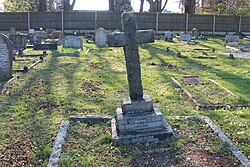
Gaselee retired from active service in November 1908. In 1909, he received the Knight Grand Cross of the Order of the Bath (GCB). He passed away at his home in Guildford on March 29, 1918, at the age of 73.
Summary of Service
| Category | Details |
|---|---|
| Service Years | 1863–1908 |
| Key Ranks | Ensign → Major-General → General |
| Major Conflicts | Second Anglo-Afghan War, Boxer Uprising |
| Key Commands | 1st Bn 5th Gurkha Rifles, Northern Army (India) |
| Primary Honors | GCB, GCIE |
Frequently Asked Questions
Why was the expedition in China called the Gaselee Expedition?
It was named after Sir Alfred Gaselee because the Eight-Nation Alliance would not permit the highest-ranking officer, Japanese General Yamaguchi Motomi, to lead the force.
Which military units did Sir Alfred Gaselee serve in?
He began his career with the 93rd regiment (Sutherland Highlanders), later served with the 4th Punjab infantry, and eventually commanded the 1st battalion, 5th Gurkha Rifles.
What were Gaselee's most significant honors?
He was awarded the Knight Grand Cross of the Order of the Bath (GCB) and the Knight Grand Cross of the Order of the Indian Empire (GCIE).
Where was Sir Alfred Gaselee buried?
He was buried at Mount Cemetery in Guildford following his death in 1918.
What role did he play in the Second Anglo-Afghan War?
He served as a deputy assistant quartermaster-general and accompanied Lord Roberts on the march from Kabul to the relief of Kandahar.