Sir Henry Macandrew: The Cavalry Commander of the Sinai and Palestine Campaign
Major-General Sir Henry Macandrew was a distinguished officer of the British Indian Army whose career spanned the late 19th and early 20th centuries. A specialist in cavalry and intelligence, Macandrew played a pivotal role in some of the most significant engagements of the Boer War and the First World War, eventually leading the 5th Cavalry Division through a grueling and successful advance across the Middle East.
Key Facts
- Full Name: Sir Henry John Milnes Macandrew, KCB, DSO.
- Primary Command: 5th Cavalry Division during the Sinai and Palestine campaign.
- Major Achievements: Led the capture of Acre and Haifa and the advance on Damascus.
- Military Reach: His division covered 600 miles (970 kilometers) in just 38 days.
- Death: Died in 1919 in Aleppo, Syria, due to an accidental petrol explosion.
Early Military Career and the Boer War
Born on August 7, 1866, in Inverness, Scotland, Macandrew began his military journey in 1884 as a lieutenant in the Cameron Highlanders. He soon transitioned to the British Indian Army, joining the 5th Bengal Cavalry in 1888. His early experience included the Tirah campaign (1897–1898), where he served as a transport officer and earned the India Medal.
By 1900, Macandrew was deployed to South Africa for the Boer War. Serving as a staff officer, he participated in several critical engagements, including the battles of Paardeberg, Poplar Grove, Driefontein, and Doornkop. His efficiency in intelligence and staff work during this conflict caught the attention of Major-General Douglas Haig, who later appointed Macandrew as his brigade major in India between 1903 and 1905.
The Western Front: Challenges and Command
At the outbreak of the First World War in 1914, Macandrew was deployed to France. He initially served as a General Staff Officer Grade 1 (GSO1) and later as the Brigadier General General Staff (BGGS)—essentially the chief of staff—for the Indian Cavalry Corps. During this period, he participated in the Battle of Neuve Chapelle.
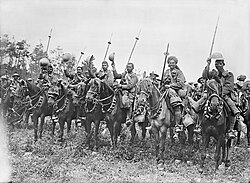
Macandrew was a firm believer in the utility of cavalry, often disagreeing with the prevailing view that the war would be won solely through trench warfare (the defensive system of deep ditches used to protect soldiers). This conviction, along with professional disagreements with his superiors, led to a period of fluctuating commands. By May 1916, he was promoted to temporary Major-General and given command of the 2nd Indian Cavalry Division, leading them through the Battle of the Somme and the Battle of Cambrai.
The Sinai and Palestine Campaign
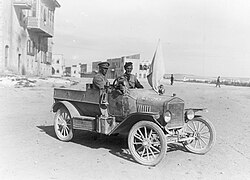
In 1918, as the British Army restructured its forces, Macandrew was transferred to the Middle East to lead the newly formed 5th Cavalry Division. Under the overall command of General Sir Edmund Allenby, Macandrew's division became a spearhead for the Egyptian Expeditionary Force (EEF).
The Battle of Sharon and the Coast
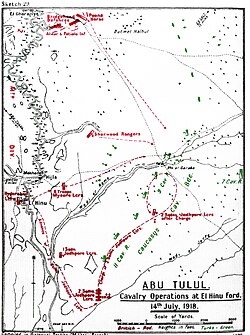
During the Battle of Sharon, Macandrew's division was hidden in orange groves to maintain secrecy before launching a decisive charge to cut off the retreat of the Ottoman Seventh and Eighth Armies. Following this, Macandrew successfully captured the port of Acre and the city of Haifa, securing vital supply lines for the British army.
The Advance on Damascus and Beyond
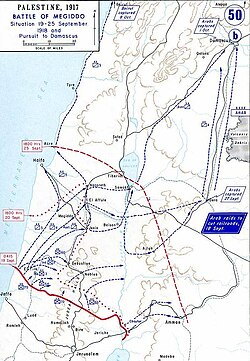
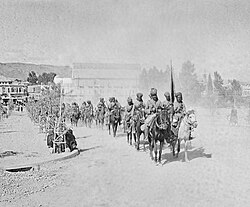
The 5th Cavalry Division then embarked on a rapid pursuit of retreating Ottoman forces. Moving through the Golan Heights, Macandrew's troops captured thousands of enemy soldiers near Al-Kiswah and occupied Rayak and Zahle. Despite the toll of disease on other units, Macandrew's division remained the healthiest and strongest column, eventually occupying Homs.
The Pursuit to Haritan
The campaign culminated in the pursuit toward Haritan. Despite being heavily outnumbered—at one point facing a force seven times the size of his own—Macandrew maintained his position until reinforcements arrived. The hostilities finally ceased with the signing of the Armistice of Mudros on October 31, 1918.
Summary of Service
| Period | Conflict/Role | Key Locations/Battles | Notable Outcome |
|---|---|---|---|
| 1897–1898 | Tirah Campaign | India | Awarded India Medal |
| 1900–1902 | Boer War | South Africa | Awarded DSO |
| 1914–1917 | First World War | Western Front (France) | Commanded 2nd Indian Cavalry Division |
| 1918–1919 | Sinai & Palestine | Damascus, Haifa, Aleppo | Captured Acre and Haifa; Knighted |
Death and Legacy
Sir Henry Macandrew was knighted in 1919 for his services. However, his life came to a tragic end shortly thereafter. While stationed at Aleppo, Syria, he was killed by wounds sustained in an accidental explosion of petrol fumes. He is buried in the Beirut War Cemetery.
Frequently Asked Questions
What was Sir Henry Macandrew's primary role in WWI?
He served as a high-ranking cavalry commander, leading the 2nd Indian Cavalry Division on the Western Front and the 5th Cavalry Division during the Sinai and Palestine campaign.
How far did the 5th Cavalry Division travel under his command?
The division covered approximately 600 miles (970 kilometers) in a span of thirty-eight days during their advance through Ottoman territory.
What was Macandrew's view on cavalry in the First World War?
Unlike many of his contemporaries, Macandrew believed that the correct utilization of cavalry was essential for victory and disagreed with the notion that the war would be won exclusively through trench warfare.
How did Sir Henry Macandrew die?
He died on July 16, 1919, in Aleppo, Syria, following an accidental explosion involving petrol fumes.
Which major cities did Macandrew help capture in the Middle East?
He was instrumental in the capture of Acre, Haifa, and the advance that led to the occupation of Damascus and Homs.