Major: The Role and History of the Rank in the British Army and Royal Marines
In the hierarchy of the United Kingdom's armed forces, the rank of Major (abbreviated as Maj) serves as a critical link between company-grade officers and senior field leadership. Utilized by both the British Army and the Royal Marines, the Major is classified as a field officer, a rank group responsible for tactical command and operational management.
Positioned above a captain and below a lieutenant colonel, the rank is identified by a crown insignia. In the broader context of the UK's defense structure, it holds a NATO rank code of OF-3, ensuring standardization with international allies.
Key Facts
- Service Branches: British Army and Royal Marines.
- Insignia: A crown.
- NATO Code: OF-3.
- Equivalent Ranks: Lieutenant commander (Royal Navy) and Squadron leader (Royal Air Force).
- Typical Command: A sub-unit consisting of 120 or fewer personnel.
- Career Timeline: Usually attained after 8 to 10 years of commissioned service.
Rank Equivalencies and Hierarchy
To maintain operational cohesion across different branches of the military, the UK employs a system of equivalent ranks. While the title "Major" is specific to the Army and Marines, other branches use different terminology for the same level of authority and responsibility.
| Service Branch | Rank Title | NATO Code |
|---|---|---|
| British Army / Royal Marines | Major | OF-3 |
| Royal Navy | Lieutenant commander | OF-3 |
| Royal Air Force | Squadron leader | OF-3 |
Historical Evolution of the Rank
The Napoleonic Era and Early Structure
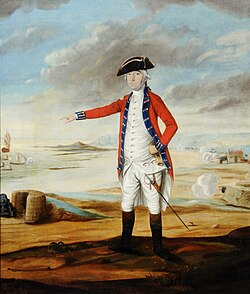
During the Napoleonic wars, infantry battalions typically employed two majors: a "senior major" and a "junior major." The senior major functioned as the second-in-command of the battalion. These officers were frequently tasked with commanding detachments consisting of two or more companies that had been split from the main body of the force. To this day, the second-in-command of a regiment or battalion continues to hold the rank of major.
Reorganization and World War I
The early 20th century brought significant structural changes. On October 1, 1913, General Sir Ivor Maxse implemented a reorganization scheme. Regular battalions shifted from an eight-company structure to a four-company system. Under this new arrangement, each company was commanded by a major and comprised four platoons.
The First World War also saw a shift in how rank was displayed. Initially, majors wore cuff badges. However, these made officers highly conspicuous to snipers in the trenches. Consequently, some officers began wearing jackets similar to those of the enlisted men, moving their rank badges to the shoulders. While initially discouraged outside of combat zones, this practice received official sanction in 1917 and became permanent in 1920 when cuff badges were abolished.
Transition in the Royal Air Force
The Royal Air Force (RAF) briefly utilized the rank of major from April 1, 1918, to July 31, 1919. On August 1, 1919, the rank was superseded by the title of squadron leader, which remains the RAF equivalent today.
Modern Role and Responsibilities
The scope of a major's authority has evolved over the last century. By World War I, majors often commanded independent batteries, squadrons, and companies, though those within a battalion were still frequently led by captains. Following World War II, the rank of major became the standard for officers commanding all companies, squadrons, and batteries.
In the 21st-century British Army, the rank is typically achieved after approximately eight to ten years of commissioned service. A major's primary responsibility is often the command of a sub-unit, typically overseeing 120 or fewer junior officers and soldiers.
Frequently Asked Questions
What is the insignia for a Major in the British Army?
The insignia for a major is a crown.
Who is the immediate superior to a Major?
The next higher rank is a lieutenant colonel.
How does the rank of Major compare to the Royal Air Force?
The equivalent rank in the Royal Air Force is a squadron leader.
How many years of service are typically required to become a Major?
Officers in the British Army normally attain the rank of major after around eight to 10 years of commissioned service.
What is the typical command size for a modern Major?
A common role for a major is commanding a sub-unit of 120 or fewer junior officers and soldiers.