General Sir Neville Lyttelton: A Legacy of British Military Command
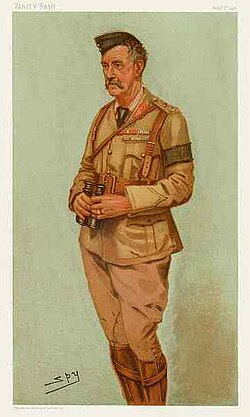
General Sir Neville Lyttelton was a distinguished officer of the British Army whose career spanned nearly five decades of imperial conflict and administrative reform. From the frontiers of Canada to the battlefields of South Africa, Lyttelton rose through the ranks to hold some of the most prestigious commands in the British Empire, including Chief of the General Staff and Commander-in-Chief in Ireland.
Key Facts
- Service Years: 1865–1912.
- Major Conflicts: Fenian Raids, Anglo-Egyptian War, Mahdist War, and the Second Boer War.
- Highest Rank: General.
- Key Commands: Commander-in-Chief Ireland, Chief of the General Staff, and Commander-in-Chief South Africa.
- Honors: Knight Grand Cross of the Order of the Bath (GCB) and Knight Grand Cross of the Royal Victorian Order (GCVO).
Early Life and Commission
Born on October 28, 1845, in Hagley, Worcestershire, Neville Lyttelton was the son of the 4th Baron Lyttelton and Mary Lyttelton. After being educated at Eton College, he began his military journey in January 1865 when he was commissioned into the Rifle Brigade, an elite infantry regiment known for its skirmishing tactics.
His early career took him to Canada, where he participated in defeating the Fenian raids (insurgencies by Irish-Americans) in 1866. By 1867, he served as secretary to the Oregon Boundary Commission. His rise through the junior officer ranks was steady, reaching the rank of captain in 1877 and major in 1882, while also serving as private secretary to Hugh Childers, the Secretary of State for War.
Combat Experience and Imperial Campaigns
Lyttelton's operational experience expanded significantly during the Anglo-Egyptian War of 1882. Serving as an Aide-de-Camp to Sir John Adye, he saw action at the Battle of Tel el-Kebir. His performance earned him a mention in despatches and the Order of Osmanieh from the Ottoman Empire.
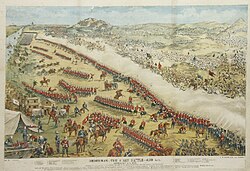
Throughout the 1880s and 1890s, Lyttelton held various administrative and leadership roles, including military secretary positions in Gibraltar and Bombay. He eventually took command of the 1st and 2nd Battalions of the Rifle Brigade. In September 1898, while holding the temporary rank of brigadier general, he led the 2nd Brigade during the Battle of Omdurman in the Mahdist War.
The Second Boer War
The Second Boer War (1899–1902) marked a pinnacle of Lyttelton's field command. He led the 4th Brigade in South Africa and later commanded the 2nd and 4th Divisions. He played a critical role in the Battle of Spion Kop and the Battle of Vaal Krantz, which contributed to the Relief of Ladysmith.
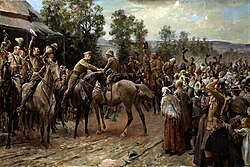
Lord Roberts praised Lyttelton in his despatches, noting his tactical knowledge, resourcefulness, and coolness under fire. Following the war, Lyttelton was appointed Commander-in-Chief of forces in the Transvaal and Orange River Colony, and eventually took command of all forces in South Africa, including the Cape Colony. During this period, he and his wife, Katharine Sarah Stuart-Wortley, worked to improve relations with the Boer community.
High Command and Later Career
In 1904, Lyttelton was appointed Chief of the General Staff and became a member of the newly created Army Council. This restructuring followed the Esher Report, which abolished the post of Commander-in-Chief of the Forces to modernize military administration. However, his tenure coincided with the Haldane Reforms—a series of sweeping changes designed to create a professional expeditionary force and a territorial army. Some historians, such as Edward M. Spiers, suggest Lyttelton lacked the leadership necessary to drive these reforms effectively.
Lyttelton's final active posting was as Commander-in-Chief, Ireland, from 1908 until his retirement in August 1912. In his retirement, he continued to serve the state as a member of the Mesopotamia Commission (1916/17) and as the Governor of the Royal Hospital Chelsea, a position he held until his death on July 6, 1931.
Summary of Service
| Period/Date | Role/Rank | Key Event/Location |
|---|---|---|
| 1865 | Commissioned Officer | Rifle Brigade |
| 1866 | Junior Officer | Fenian Raids (Canada) |
| 1882 | Aide-de-Camp | Battle of Tel el-Kebir |
| 1898 | Brigadier General | Battle of Omdurman |
| 1899–1902 | Division Commander | Second Boer War (South Africa) |
| 1904 | Chief of the General Staff | Army Council / Haldane Reforms |
| 1908–1912 | Commander-in-Chief | Ireland |
Frequently Asked Questions
Which major battles did General Lyttelton participate in?
General Lyttelton saw action at the Battle of Tel el-Kebir during the Anglo-Egyptian War, the Battle of Omdurman during the Mahdist War, and the battles of Spion Kop and Vaal Krantz during the Second Boer War.
What was Lyttelton's role during the Haldane Reforms?
He served as the Chief of the General Staff and a member of the Army Council during the implementation of the Haldane Reforms, which aimed to establish a new expeditionary force and territorial force.
How did Lord Roberts describe Lyttelton's leadership?
Lord Roberts described him as an excellent commander in the field, noting his considerable tactical knowledge, resourcefulness, and coolness under fire.
What was his final appointment before and after retirement?
His final active appointment was Commander-in-Chief, Ireland. Following his retirement in 1912, he served as the Governor of the Royal Hospital Chelsea.
Who was Neville Lyttelton's spouse and family?
He married Katharine Sarah Stuart-Wortley in 1883, and they had three daughters: Lucy Blanche, Hilda Margaret, and Mary Hermione.