Sir Frederick Sykes: Pioneer of British Military Aviation and Statesman
Sir Frederick Hugh Sykes was a pivotal figure in the evolution of British air power, transitioning from a traditional cavalry officer to a visionary leader in military aviation. His career spanned the turn of the 20th century, bridging the gap between the horse-mounted warfare of the Second Boer War and the high-altitude strategic battles of the First World War. Beyond his military achievements, Sykes left a lasting mark as a politician and colonial administrator.
Key Facts
- Military Rank: Air Vice-Marshal.
- Key Command: Second Chief of the Air Staff (1918–1919).
- Legacy: Approved the RAF motto, Per Ardua ad Astra.
- Political Service: Conservative MP for Sheffield Hallam and later Central Nottingham.
- Colonial Role: Governor of Bombay (1928–1933).
- Early Aviation: Obtained Royal Aero Club certificate No. 96 in June 1911.
Early Military Career and the Boer War
Born on July 23, 1877, in Addiscombe, Surrey, Frederick Sykes began his professional life as a clerk and worked on a tea plantation in Ceylon before entering military service. He enlisted as a trooper in the Imperial Yeomanry Scouts during the Second Boer War. His early service was marked by hardship; he was captured and forcibly marched across South Africa before being abandoned and returning to British forces.
After being commissioned into Lord Roberts' Bodyguard in 1900, Sykes suffered a severe chest wound that led to his return to Great Britain. He later secured a regular commission as a second lieutenant in the 15th Hussars in 1901, serving in the West African Regiment before returning to the 15th Hussars in 1904.
The Rise of Military Aviation
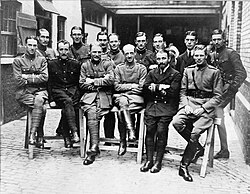
Sykes's trajectory changed in 1904 when he earned a ballooning certificate while attached to the Balloon Section of the Royal Engineers. His fascination with flight grew, leading him to take flying lessons at Brooklands and earn his Royal Aero Club certificate in 1911. Recognizing the strategic value of aerial reconnaissance—the use of aircraft to gather intelligence on enemy movements—he joined a sub-committee of the Committee of Imperial Defence to investigate aircraft utility.
In May 1912, Sykes was appointed Officer Commanding the Military Wing of the Royal Flying Corps (RFC). In this capacity, he oversaw the recruitment and training of early pilots. Notably, he approved the suggestion of J. S. Yule for the motto Per Ardua ad Astra ("Through struggle to the stars"), which remains the official motto of the Royal Air Force (RAF) today.
Leadership During the First World War
At the start of the First World War in 1914, Sykes served as the Chief of Staff for the RFC in France. Despite his organizational contributions, he faced internal friction regarding seniority and command structures. After a brief period as the commander of the RFC in the Field, he returned to the role of Chief of Staff due to the preferences of Lord Kitchener.
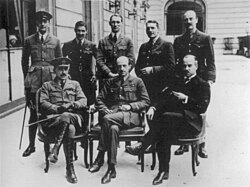
By 1915, Sykes transitioned to the Royal Naval Air Service (RNAS), where he became the air commander for the Gallipoli campaign in the Eastern Mediterranean. His leadership led to the sinking of several Turkish ships. He later returned to the War Office to organize the Machine Gun Corps and manage manpower planning, eventually serving on the British section of the Allied War Council at Versailles.
Chief of the Air Staff
The pinnacle of his military career came on April 13, 1918, when he was appointed Chief of the Air Staff. He worked tirelessly to establish the newly formed RAF. However, his tenure ended in early 1919 after a disagreement with Winston Churchill over the future size and scale of the air force. Sykes proposed a large-scale air force that Churchill deemed unrealistic, leading to the reinstatement of Sir Hugh Trenchard and Sykes's early retirement.
Political Life and Later Years
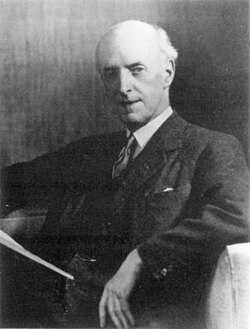
Following his retirement from active service, Sykes served as the Controller of Civil Aviation until 1922. He then entered politics as the Conservative MP for Sheffield Hallam, a seat he held until 1928. His career then took him to India, where he served as the Governor of Bombay from 1928 to 1933.
Sykes returned to public and business life in Britain but returned to Parliament during the Second World War, representing Central Nottingham from 1940 until 1945. In his final years, he resided at Conock Manor in Wiltshire.
Summary of Service and Honors
| Period | Role/Position | Organization |
|---|---|---|
| 1899–1902 | Trooper / Officer | Imperial Yeomanry / Lord Roberts' Bodyguard |
| 1901–1912 | Lieutenant / Captain | 15th Hussars |
| 1912–1914 | Commandant, Military Wing | Royal Flying Corps |
| 1915–1916 | Air Commander (Gallipoli) | Royal Naval Air Service |
| 1918–1919 | Chief of the Air Staff | Royal Air Force |
| 1922–1928 | Member of Parliament | House of Commons (Sheffield Hallam) |
| 1928–1933 | Governor of Bombay | British Colonial Administration |
Frequently Asked Questions
What was Sir Frederick Sykes's contribution to the RAF motto?
While serving as the Officer Commanding the Military Wing of the Royal Flying Corps, Sykes solicited suggestions for a motto and approved J. S. Yule's phrase, Per Ardua ad Astra, which was later adopted by the Royal Air Force.
Why did Sykes leave the position of Chief of the Air Staff?
Sykes submitted proposals for a large future air force that Winston Churchill, then Secretary of State for Air, considered unrealistic. This led Churchill to reinstate Sir Hugh Trenchard in the role.
What role did Sykes play in the Gallipoli campaign?
Sykes served as the Officer Commanding the Royal Naval Air Service Eastern Mediterranean Station, where he built up air forces that successfully sank several Turkish ships.
Which political seats did Sir Frederick Sykes hold?
He served as the Conservative MP for Sheffield Hallam from 1922 to 1928 and later as the MP for Central Nottingham from 1940 to 1945.
What was Sykes's connection to Bonar Law?
In 1920, Sykes married Isabel Harrington Law, the elder daughter of Bonar Law, who served as the leader of the Conservative Party and later as Prime Minister.