Sir Edward Ellington: Architect of the Modern Royal Air Force
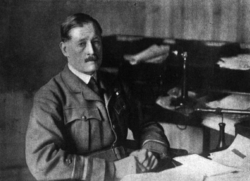
Marshal of the Royal Air Force Sir Edward Leonard Ellington was a pivotal figure in the evolution of British air power. From his early days as a Royal Field Artillery officer to his tenure as Chief of the Air Staff, Ellington's career spanned the most transformative years of aviation. He is best remembered for reorganizing the Royal Air Force (RAF) into the specialized commands that would eventually prove decisive during the Second World War.
Key Facts
- Highest Rank: Marshal of the Royal Air Force.
- Major Contribution: Implemented 'Scheme F' to rapidly expand the RAF to 187 squadrons.
- Structural Legacy: Created the specialized RAF Fighter, Bomber, Coastal, and Training Commands.
- Global Command: Led RAF operations in the Middle East, India, and Iraq.
- Service Span: Served from 1897 to 1940 across the British Army and the RAF.
Early Career and the First World War
Born in Kensington, London, on December 30, 1877, Edward Ellington was educated at Clifton College and the Royal Military Academy Woolwich. He began his military journey on September 1, 1897, when he was commissioned into the Royal Field Artillery. After further studies at the Royal Naval War College in Portsmouth, he transitioned toward the burgeoning field of aviation.
Ellington earned his Royal Aero Club certificate (No. 305) on October 1, 1912, marking his official entry into flight. During the First World War, his expertise was utilized primarily in staff and administrative roles rather than combat flying. He served as a Deputy Assistant Quartermaster-General in France and later held various staff positions with the 2nd Army and the General Staff of the VIII Corps.
By late 1917, Ellington moved into high-level aeronautical management. He became the deputy director-general of military aeronautics and, by January 1918, succeeded Major General John Salmond as the director-general. Following the creation of the RAF in April 1918, he was appointed acting Controller-General of Equipment.
Inter-War Leadership and Global Commands
During the inter-war period, Ellington held a series of prestigious commands across the British Empire. In 1922, he became the Air Officer Commanding RAF Middle East, followed by a posting to RAF India in 1923. While in India, he led the suppression of a Mahsud rebellion on the North West Frontier, an operation known as Pink's War.
His leadership continued in Iraq from 1926 to 1928, where he managed peacekeeping operations following a revolt led by Sheikh Mahmud Barzanji. By 1929, he returned to the UK as the Air Officer Commanding-in-Chief of the Air Defence of Great Britain, a role that set the stage for his most significant structural reforms.
Chief of the Air Staff and 'Scheme F'
Appointed Chief of the Air Staff on May 22, 1933, Ellington faced the growing threat of Nazi Germany. To counter this, he implemented Scheme F, an ambitious expansion plan designed to increase the RAF's strength to 187 squadrons within three years. This plan prioritized a ratio of five bomber squadrons for every two fighter squadrons, reflecting the prevailing military doctrine that emphasized the dominance of strategic bombing.
Beyond numerical growth, Ellington revolutionized the RAF's organizational structure. He dissolved the "Air Defence of Great Britain" command to establish four specialized entities:
- RAF Fighter Command
- RAF Bomber Command
- RAF Coastal Command
- RAF Training Command
These changes ensured that the RAF had dedicated leadership and training for specific operational roles, providing the framework necessary for the air battles of the 1940s.
Final Years and Legacy
In September 1937, Ellington became the Inspector-General of the RAF. In this capacity, he conducted a critical 1938 inspection of the Royal Australian Air Force (RAAF). His report harshly criticized the RAAF's safety standards and operational capabilities, leading to the dismissal of the RAAF Chief of the Air Staff, Air Vice Marshal Richard Williams.
Sir Edward Ellington retired on April 4, 1940, shortly after the outbreak of the Second World War. He passed away on June 13, 1967, at the age of 89 due to coronary thrombosis.
| Period | Key Role/Command | Major Achievement/Event |
|---|---|---|
| 1897–1918 | British Army / Military Aeronautics | Director-General of Military Aeronautics |
| 1922–1928 | Middle East, India, and Iraq | Led Pink's War and Iraqi peacekeeping |
| 1933–1937 | Chief of the Air Staff | Implemented Scheme F and created specialized Commands |
| 1937–1940 | Inspector-General of the RAF | RAAF operational capability audit |
Frequently Asked Questions
What was 'Scheme F'?
Scheme F was an expansion plan implemented by Sir Edward Ellington in the mid-1930s to increase the RAF to 187 squadrons to counter the threat from Germany, emphasizing a heavy ratio of bombers to fighters.
Which RAF commands did Sir Edward Ellington create?
He reorganized the Home RAF commands to create RAF Fighter Command, RAF Bomber Command, RAF Coastal Command, and RAF Training Command.
What was Pink's War?
Pink's War was a military operation conducted by Ellington while he was Air Officer Commanding RAF India to suppress a rebellion by the Mahsuds on the North West Frontier.
How did Ellington influence the Royal Australian Air Force?
As Inspector-General, Ellington's 1938 report on the RAAF's poor safety and operational standards led the Australian Government to dismiss the RAAF Chief of the Air Staff.
When did Sir Edward Ellington retire?
He retired from service on April 4, 1940, shortly after the start of the Second World War.