Sex Organs: Biological Functions, Evolution, and Diversity
A sex organ, also referred to as a reproductive organ, is a specialized biological structure involved in sexual reproduction. These organs constitute the primary sex characteristics of an organism and are essential for producing and transporting gametes (reproductive cells), facilitating fertilization, and supporting the development and birth of offspring. While the fundamental purpose remains the same, the form and function of these organs vary drastically across different species of animals and plants.
Key Facts
- Primary sex organs (gonads) produce gametes and primary sex hormones.
- Secondary sex organs include all other internal and external structures of the reproductive system.
- In humans, the SRY gene typically determines whether a fetus develops male or female sex organs.
- Many non-mammalian vertebrates utilize a cloaca, a single opening for reproductive, digestive, and urinary tracts.
- Plant reproductive organs develop on the gametophyte stage of their life cycle.
Terminology and Classification
To understand reproductive biology, it is necessary to distinguish between different types of organs based on their function and location.
Primary vs. Secondary Sex Organs
The primary sex organs are the gonads. These internal organs diverge into testicles in males or ovaries in females. Gonads are responsible for generating gametes containing inheritable DNA and producing the hormones that regulate sexual development and behavior. All other components of the reproductive system are classified as secondary sex organs.
Internal and External Genitalia
The term genitalia (or genitals) refers specifically to the externally visible sex organs. Internal genitalia are those structures hidden within the body. In general zoology, male genitalia are defined as structures inserted into the female or used to hold the female near her gonopore during sperm transfer. Female genitalia are the parts of the reproductive tract that make direct contact with male genitalia or products, such as sperm or spermatophores, during copulation.
Evolution of Reproductive Organs
The origin of gonads is complex, and evidence suggests they likely evolved independently several times through natural selection. However, the evolution of external genitalia is primarily driven by sexual selection. This process has led to divergent evolution, resulting in a vast array of genital forms and functions across the animal kingdom to optimize mating success.
Sex Organs in Animals
Mammals
In eutherian (placental) mammals, the visible genitals consist of the penis and scrotum for males, and the vulva for females. A key physiological difference is that male placental mammals use a single urethral opening for both urination and ejaculation, whereas females have separate vaginal and urethral openings.
Human reproductive anatomy is highly detailed, consisting of both external and internal structures.


| Category | Male Organs | Female Organs |
|---|---|---|
| External | Penis (foreskin, shaft, glans), Scrotum | Vulva (clitoris, labia majora, labia minora, vestibule) |
| Internal | Testicles, Epididymides, Vasa deferentia, Prostate, Seminal vesicles, Bulbourethral glands | Ovaries, Fallopian tubes, Uterus, Cervix, Vagina, Bartholin's glands, Skene's glands |
Prenatal Development
During early gestation, sex organs originate from a common primordium. The direction of differentiation is determined by the SRY gene, usually located on the Y chromosome. This gene encodes the testis determining factor; its absence allows the gonads to develop into ovaries. Hormones produced by the fetal gonads then trigger the development of internal and external structures. For example, testosterone causes the urogenital folds to fuse into the scrotum and the protuberance to grow into the penis.
Other Vertebrates and Invertebrates
Many vertebrates, including amphibians, birds, reptiles, and monotremes, possess a cloaca—a single posterior orifice for excretion and reproduction. In teleost fish, sex is determined by the genital papilla, a fleshy tube behind the anus.
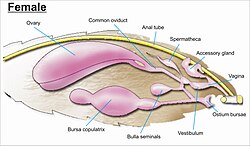
Invertebrates show even greater diversity. Insects have external genitalia for mating and egg deposition, though these may be largely internal. Gastropods (slugs and snails) vary widely, while some planaria are hermaphrodites, possessing both testicles and ovaries to exchange sperm.
Sex Organs in Plants and Fungi
Plant Reproduction
Most plants are hermaphrodites. Their life cycle involves an alternation between a sporophyte and a haploid gametophyte. Sex organs always develop on the gametophyte. In seed plants, such as conifers and flowering plants, the gametophytes are microscopic and contained within pollen grains (male) and ovules (female).
In flowering plants, the stamens produce pollen, while the pistil (or carpel) receives pollen and contains the ovule. Because the actual male and female gametophytes consist of only a few cells within these structures, they are not considered "organs" in the traditional sense.
Fungi
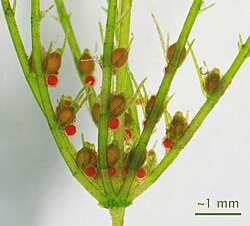
Fungal reproductive organs are called gametangia. These can be identical (isogametangia) or clearly differentiated into male and female types (heterogametangia), the latter being more common.
Frequently Asked Questions
What is the difference between primary and secondary sex organs?
Primary sex organs, or gonads (testicles and ovaries), are responsible for producing gametes and sex hormones. Secondary sex organs are all other structures in the reproductive system that facilitate the transport of gametes or the development of offspring.
How does the SRY gene affect development?
The SRY gene, typically found on the Y chromosome, triggers the differentiation of the common fetal primordium into testes. If the SRY gene is absent, the gonads develop into ovaries.
What is a cloaca?
A cloaca is a single posterior opening used for the digestive, urinary, and reproductive tracts. It is found in birds, reptiles, amphibians, and some mammals like monotremes.
Do plants have sex organs like animals do?
Plants have reproductive structures, but they function differently. In flowering plants, stamens and pistils facilitate reproduction, but the actual sex organs are the microscopic gametophytes located within the pollen and ovules.
What drives the evolution of genital diversity in animals?
While gonads evolved through natural selection, the wide variety of external genital shapes and functions is primarily driven by sexual selection.