Fertilisation: The Biological Fusion of Life
At its most fundamental level, fertilisation—also known as syngamy or impregnation—is the process where two gametes (specialized reproductive cells) fuse to create a zygote. This single cell serves as the foundation for a new individual organism, initiating the complex journey of development through sexual reproduction. While terms like pollination or insemination are often used informally to describe the steps leading up to this moment, they are technically distinct processes that precede the actual fusion of genetic material.
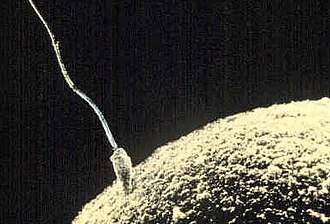
Key Facts
- Fertilisation involves the fusion of haploid gametes to form a diploid zygote.
- In flowering plants, double fertilisation occurs, creating both an embryo and a triploid endosperm.
- Plants use various strategies, including outcrossing (cross-fertilisation) and self-fertilisation.
- Parthenogenesis is a form of reproduction where an unfertilised female gamete produces viable offspring.
- Genetic recombination during fertilisation ensures that offspring are genetically unique from their parents.
Historical Milestones in Reproductive Science
The scientific understanding of how life begins has evolved significantly over the centuries. In 1784, Spallanzani demonstrated that the interaction between a female's ovum and a male's sperm was essential to form a zygote in frogs. By 1827, Karl Ernst von Baer achieved a major breakthrough by observing a therian mammalian egg for the first time. Later, in 1876, German scientist Oscar Hertwig provided a detailed description of the fusion of nuclei in the spermatozoa and ova of sea urchins.
Fertilisation in the Plant Kingdom
Plants employ diverse reproductive strategies to ensure survival. A significant portion of plant species, approximately 48.7%, are either dioecious (having separate male and female individuals) or obligate outcrossers. However, about 42% of flowering plants utilize a mixed mating system, where a single plant may produce both self-fertilised and outcrossed progeny.
The Evolutionary Shift to Self-Fertilisation
The transition from cross-fertilisation to self-fertilisation is a common evolutionary path. While outcrossing helps avoid inbreeding depression, self-fertilisation provides reproductive assurance in environments where pollinators or mates are scarce. For example, Arabidopsis thaliana is predominantly self-fertilising, with an out-crossing rate of less than 0.3% in the wild. Interestingly, even in long-established self-fertilising species, the process of meiosis (cell division that produces gametes) is often maintained, potentially to assist in the efficient repair of DNA damage.
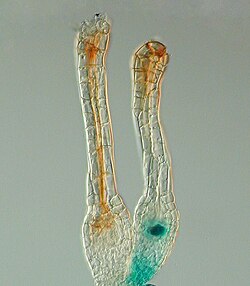
Double Fertilisation in Angiosperms
In flowering plants (angiosperms), a unique process known as double fertilisation occurs. During this event, a haploid male gamete combines with two haploid polar nuclei. This results in the formation of a triploid primary endosperm nucleus, which provides nourishment for the developing embryo.
Fertilisation in Animals
Animal fertilisation varies widely depending on the species and their environment, ranging from external processes in water to highly specialized internal mechanisms in mammals.
Sea Urchins and External Processes
In many marine organisms, such as sea urchins, fertilisation occurs externally. A critical step in this process is the acrosome reaction, where the sperm undergoes changes to facilitate penetration of the egg.
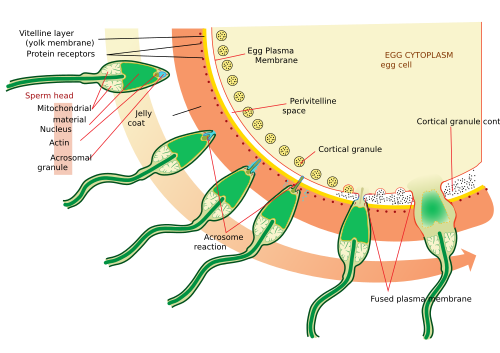
Mammalian Internal Fertilisation
In mammals, fertilisation is an internal process involving complex molecular recognition. The egg is surrounded by a thick extracellular matrix called the zona pellucida. In humans, a glycoprotein known as ZP3 is responsible for sperm-egg adhesion. The sperm's receptor, galactosyltransferase (GalT), binds to the ZP3 to trigger the acrosome reaction. Once the reaction occurs, the sperm is believed to remain bound to the zona pellucida through exposed ZP2 receptors.
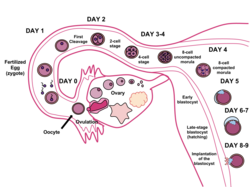
Insects and Other Species
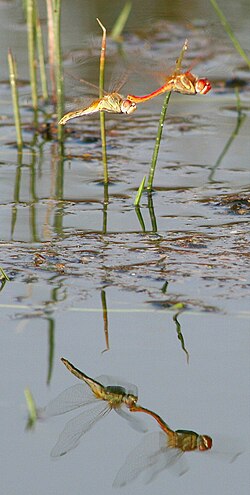
Insects exhibit unique mating behaviors that facilitate fertilisation. For instance, in certain dragonfly species like the Red-veined darter, males may fly "in cop" to prevent other males from mating, with eggs being fertilised one at a time as they are laid.
Genetic Diversity and Recombination
One of the most vital outcomes of fertilisation is genetic recombination. Because meiosis results in the random segregation of genes, each gamete is genetically unique. When these gametes combine, the resulting zygote possesses a new combination of parental chromosomes.
In humans, the mathematical possibilities for genetic diversity are staggering. Even without considering chromosomal crossover, there are approximately $17.6 \times 10^{12}$ possible chromosomally different zygotes for non-sex chromosomes. If crossover events are included, the number of potential genetically different zygotes for a single couple rises to approximately $309 \times 10^{22}$.
Summary of Fertilisation Types and Strategies
| Strategy/Type | Description | Primary Benefit/Mechanism |
|---|---|---|
| Outcrossing | Cross-fertilisation between different individuals. | Avoidance of inbreeding depression. |
| Self-fertilisation | Fertilisation within the same individual. | Reproductive assurance when mates are rare. |
| Parthenogenesis | Development of an embryo from an unfertilised egg. | Reproduction without a male partner. |
| Double Fertilisation | Two sperm nuclei fuse with different cells in the plant. | Formation of both embryo and endosperm. |
Frequently Asked Questions
What is the difference between fertilisation and pollination?
Pollination is the transfer of pollen to a female reproductive organ, which occurs before fertilisation. Fertilisation is the actual fusion of the male and female gametes that follows.
How does double fertilisation work in plants?
In angiosperms, one haploid male gamete fuses with the egg to form the zygote, while another fuses with two polar nuclei to create a triploid endosperm, which serves as a food source.
Can an organism reproduce without fertilisation?
Yes, through a process called parthenogenesis, where an unfertilised female gamete develops into a viable offspring. This is observed in various plants and animals.
Why is genetic recombination important?
Recombination ensures that offspring are genetically distinct from their parents. This diversity is crucial for the survival and adaptation of species within changing environments.
What is the role of the zona pellucida in humans?
The zona pellucida is a thick layer surrounding the egg that facilitates sperm binding and adhesion, specifically through glycoproteins like ZP3, which triggers the acrosome reaction.