Flowers: The Evolutionary Marvels of Plant Reproduction
Flowers, often referred to as blossoms or blooms, serve as the specialized reproductive structures of flowering plants. These complex organs are responsible for the continuation of species through the production of seeds. From the tiniest orchid to massive flowering trees, these structures exhibit immense diversity in size, shape, color, and scent, ranging from a mere 0.1 mm to as large as 1 meter.
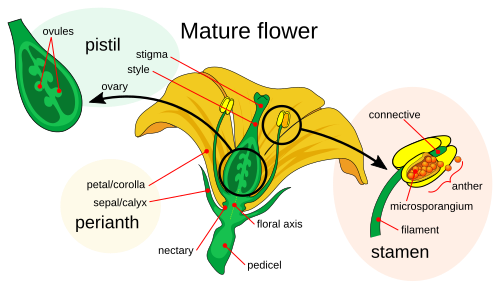
The Anatomy of a Flower
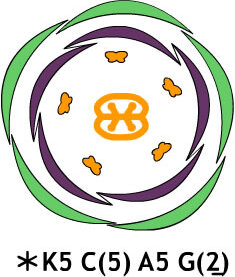
Most flowers are organized into four distinct circular levels arranged around the end of a stalk. Understanding these layers is essential to grasping how plants reproduce.
Floral Layers and Components
- Sepals: Modified leaves that provide support to the developing flower.
- Petals: Often brightly colored to attract various pollinators.
- Stamens: The male reproductive parts where pollen is produced and presented.
- Gynoecia: The female reproductive parts designed to receive pollen and facilitate its movement toward the egg.
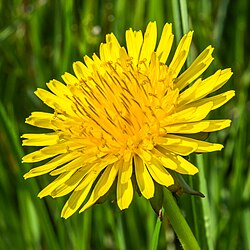
When flowers are not solitary but arranged in a group, they are known as an inflorescence. In some instances, such as in dandelions, many small flowers are grouped so closely together that they appear to be a single flower; this structure is called a pseudanthium.
The Lifecycle: From Pollination to Seed Dispersal
The reproductive journey begins with pollination, the transfer of pollen from the male stamens to the female parts. This can occur through cross-pollination (between different plants) or self-pollination (within the same plant or flower). Pollen is moved by various agents, including animals like birds and insects (biotic pollination) or non-living elements like wind and water (abiotic pollination).
Fertilisation and Development
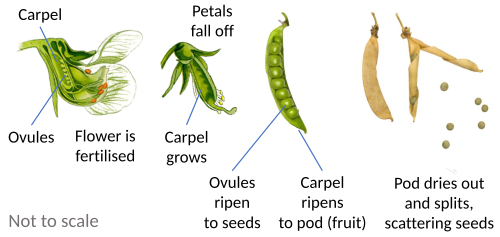
Once pollination is successful, fertilisation occurs. This is the process where male sex cells from the pollen grains fuse with the female sex cells. Following this fusion, the cell undergoes division to become a seed. A seed typically contains an embryo and a food reserve, all protected by a sturdy coat.
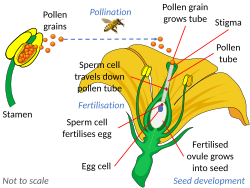
As the seed develops, the female part of the flower transforms into a fruit. While the other floral structures eventually die off, the fruit serves a vital purpose: protecting the developing seeds and aiding in their dispersal. Seeds can be spread far from the mother plant by wind, water, or living creatures—such as birds that consume fruit and distribute seeds through their waste.
Evolutionary History and Taxonomy
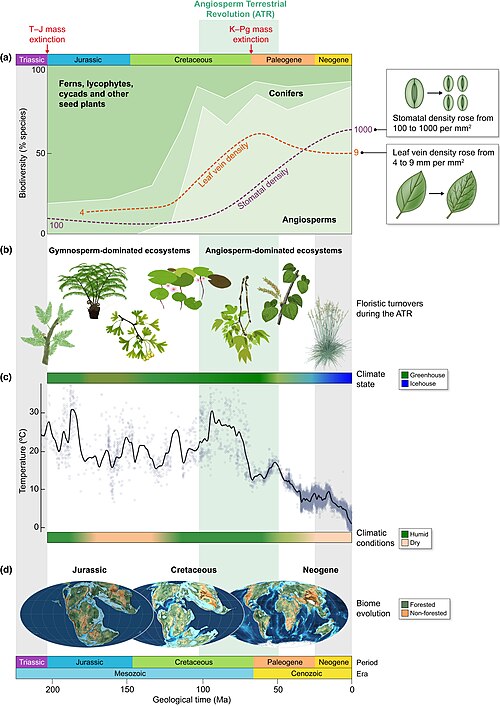
Flowers first appeared during the Jurassic period, approximately 150 to 190 million years ago. While molecular evidence suggests an even earlier origin, the fossil record provides definitive evidence of flowering plants (angiosperms) between 125 and 130 million years ago during the Early Cretaceous. The evolution of flowers marked a major shift in Earth's ecosystems, as their superior reproductive effectiveness allowed them to replace non-flowering plants in many environments.
In the field of taxonomy—the science of classifying and identifying organisms—flower morphology is a primary tool. Carl Linnaeus, a pioneer in this field, published Species Plantarum in 1753, which was the first major work to recognize the importance of flowers in classification. He initially categorized 24 classes of flowering plants based on the characteristics of their stamens.
Summary of Floral Functions and Structures
| Component/Process | Primary Function |
|---|---|
| Sepals | Support and protection of the flower |
| Petals | Attracting pollinators |
| Stamens | Male reproduction (pollen production) |
| Gynoecia | Female reproduction (egg and pollen reception) |
| Pollination | Transfer of pollen to the female part |
| Fruit | Seed protection and dispersal |
Key Facts
- Flowers evolved between 150 and 190 million years ago.
- Angiosperms (flowering plants) dominate most of the world's ecosystems.
- Flower sizes vary wildly, from 0.1 mm to 1 metre.
- Pollination can be biotic (animals/insects) or abiotic (wind/water).
- The fruit is the matured female part of the flower used for seed protection.
Frequently Asked Questions
What is the difference between pollination and fertilisation?
Pollination is the physical transfer of pollen from the male part of a flower to the female part. Fertilisation is the biological process that follows, where the sperm cells from the pollen fuse with the egg cells to create a new organism.
How do flowers help in plant dispersal?
Flowers produce fruits that protect seeds. These fruits can then be moved by wind, water, or animals (who eat the fruit and deposit seeds elsewhere), ensuring the plant species can spread to new locations.
What is an inflorescence?
An inflorescence is a cluster or arrangement of many flowers on a single stem, rather than a single isolated flower.
Why are petals often brightly colored?
Petals are frequently designed with specific colors and structures to attract pollinators, such as insects or birds, which are essential for the pollination process.
When did flowering plants first appear?
While molecular analysis suggests an early appearance, the fossil record shows definitive evidence of flowering plants appearing between 125 and 130 million years ago during the Early Cretaceous.